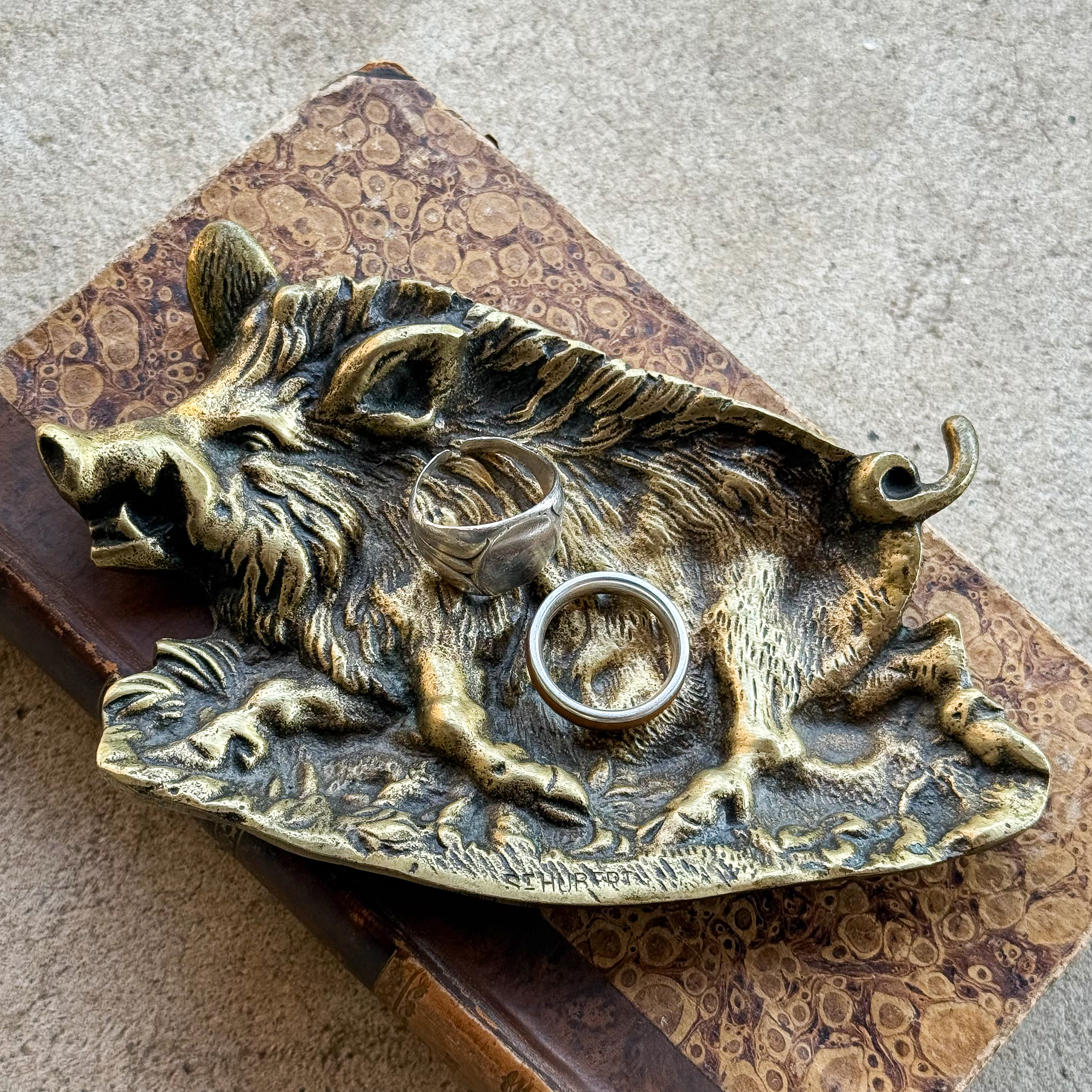
This charming bronze trinket dish, shaped like a wild boar, was crafted during the 1930s. With its detailed and expressive form, it embodies the craftsmanship and aesthetic early 1900s design. The side of the dish is marked “St Hubertus”. The piece also features a ring on the back side, making it also possible to display the piece on the wall.
Whether used as a trinket holder for keys, coins, or jewelry – or even as a small ashtray – this versatile piece is both functional and decorative. It would make a distinctive addition to your desk, side table, or display shelf.
After more than 70 years, the bronze has developed a beautiful oxidized patina that enhances its rugged character and vintage appeal.
This antique archive cabinet was manufactured by Simon Van Doornik & Co. in Hamburg during the 1930s. Crafted from solid oak, it features attractive brass hardware and reflects the practical yet elegant design of early 20th century office furniture. Originally designed as a stackable filing unit, it combines functionality with timeless craftsmanship.
With its warm oak finish and classic appearance, this cabinet would make a beautiful addition to a rustic, industrial, or traditional interior. It is equally suitable as a functional storage piece or as a distinctive decorative item.
After almost a century, the cabinet remains in good antique condition and displays expected signs of age and use. Over the years, the oak has developed a beautiful natural patina that enhances its character and authenticity. As the cabinet was originally intended to be stacked and was therefore open at the top, a previous owner fitted it with a custom-made wooden top in a matching colour, allowing it to be used as a standalone cabinet.
Please examine the photographs carefully, as they form an integral part of the description and condition report.
Measurements:
Width: 25.5 cm
Length: 39 cm
Height: 24 cm
This unusual antique pendant features a beautifully polished canine tooth set in a silver mount. The pendant was given as a personal gift by the owner of a hunting club in Berlin during the 1930s, adding a fascinating piece of personal history to this already distinctive object.
Unfortunately, the exact species the tooth originates from is unknown. Based on its size and shape, I suspect it may have belonged to a large feline, although this cannot be confirmed. Its unknown origin only adds to the mystery and character of the piece.
It would make a truly unique pendant when worn on a necklace, or an intriguing addition to a collection of antique curiosities, hunting memorabilia or natural history objects.
After almost a century, the pendant remains in good antique condition. Over the decades, the silver mount has developed a beautiful natural patina, which enhances its aged appearance and adds to its antique charm and character.
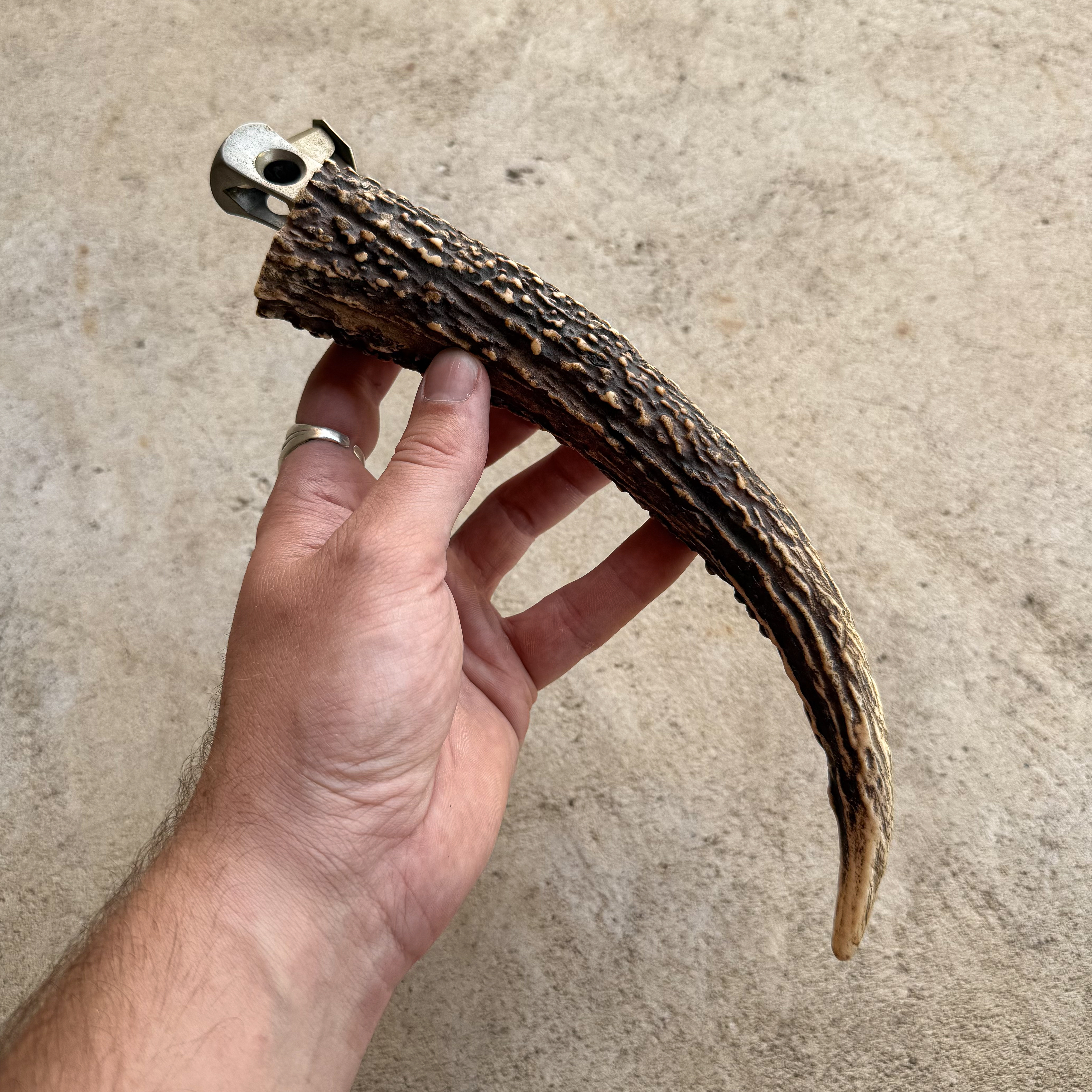
This robust cigar cutter was crafted in Germany in the 1930s. It features a beautifully aged stag horn handle paired with chrome hardware. The combination gives the piece a timeless character and a distinctive vintage appearance.
A wonderful functional object with plenty of character, it would make an excellent gift for a cigar enthusiast or a unique addition to a collection of vintage smoking accessories.
After more than 90 years, the cutter remains in good vintage condition and shows light overall signs of age and use. Over the decades, the stag horn and metal components have developed a warm natural patina that only enhances the piece’s vintage character and charm.
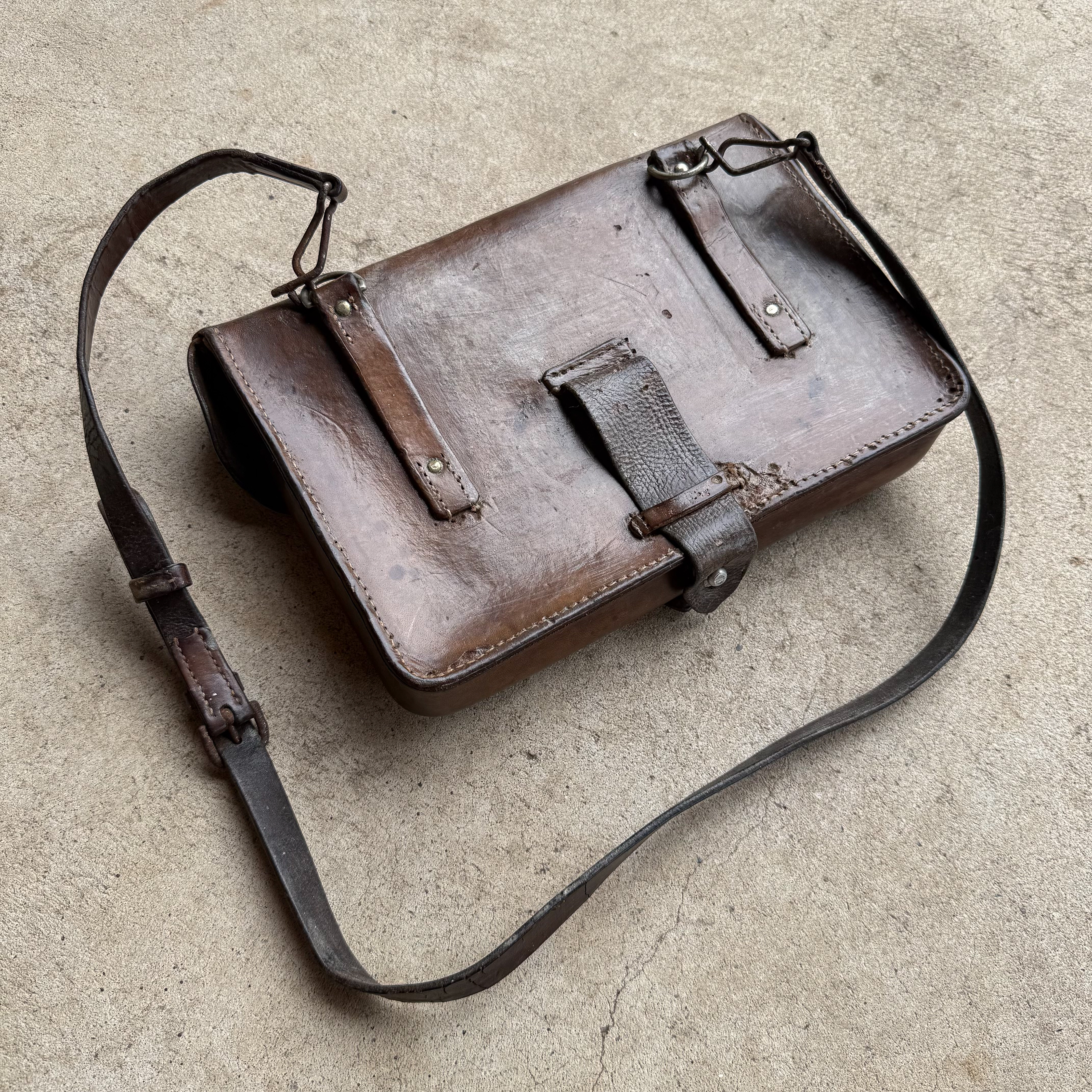
This vintage leather map bag was issued by the Swiss Army in the 1920s and was originally designed to carry and protect military maps and documents. Made from sturdy saddle leather, it was built with durability in mind and intended to withstand years of practical use in the field. We have added a vintage Swiss Army leather strap, making the bag ready to use and wear.
With its compact size and timeless military design, the bag also works beautifully as a small everyday handbag. Its simple, functional appearance makes it a stylish accessory for daily use while retaining all the character of an authentic military piece.
After almost a century, the bag remains in used vintage condition and shows various authentic signs of age and use. The leather has developed a rich natural patina over the decades, giving the bag plenty of character and charm. These marks and imperfections are part of its history and reflect the years of service it has seen.
The leather has been carefully cleaned and treated with leather grease to help preserve and condition it. Despite its age and previous use, the sturdy construction has stood the test of time and the bag remains ready for many more years of use.
Measurements:
Height: 18 cm
Width: 26 cm
Depth: 6.5 cm
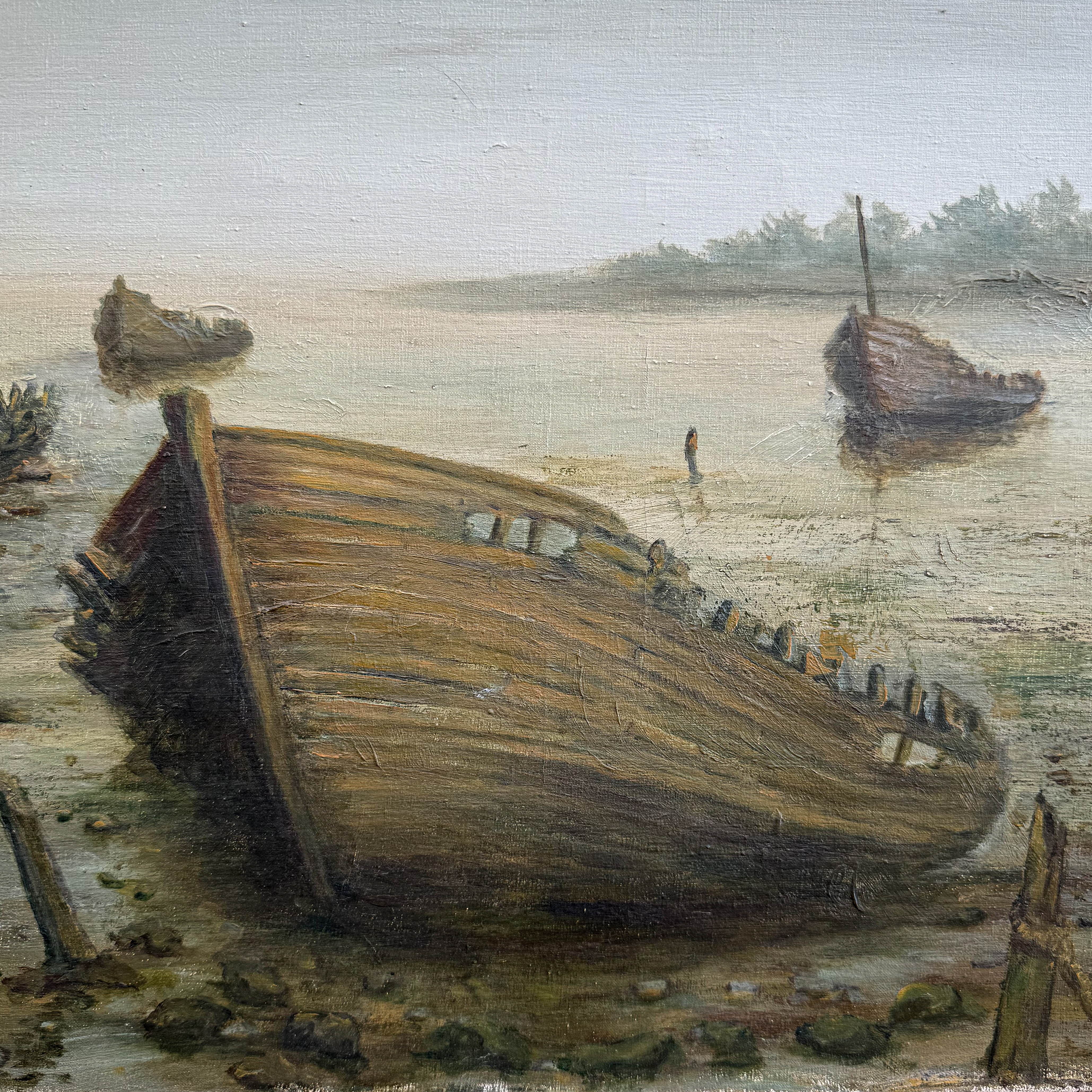
This charming antique oil painting depicts a coastal scene in Brittany, France, at low tide, with several old shipwrecks resting along the shore. The painting is signed by the French artist in the lower right corner, “Chateaugiron.”
The naive and somewhat rough painting style perfectly complements the rustic character of the scene, giving the work a wonderfully atmospheric and authentic appearance. The muted colours and simple composition evoke the rugged beauty of the Breton coastline and give the painting a distinctly nostalgic, early 20th-century feel.
A beautiful decorative piece that would make a wonderful addition to a rustic interior, coastal home, beach house, or collection of French vintage art.
After almost a century, the painting remains in good vintage condition and shows only minor signs of age and wear. Over the decades, the surface has developed a subtle natural patina, which enhances its aged character and adds to its overall charm.
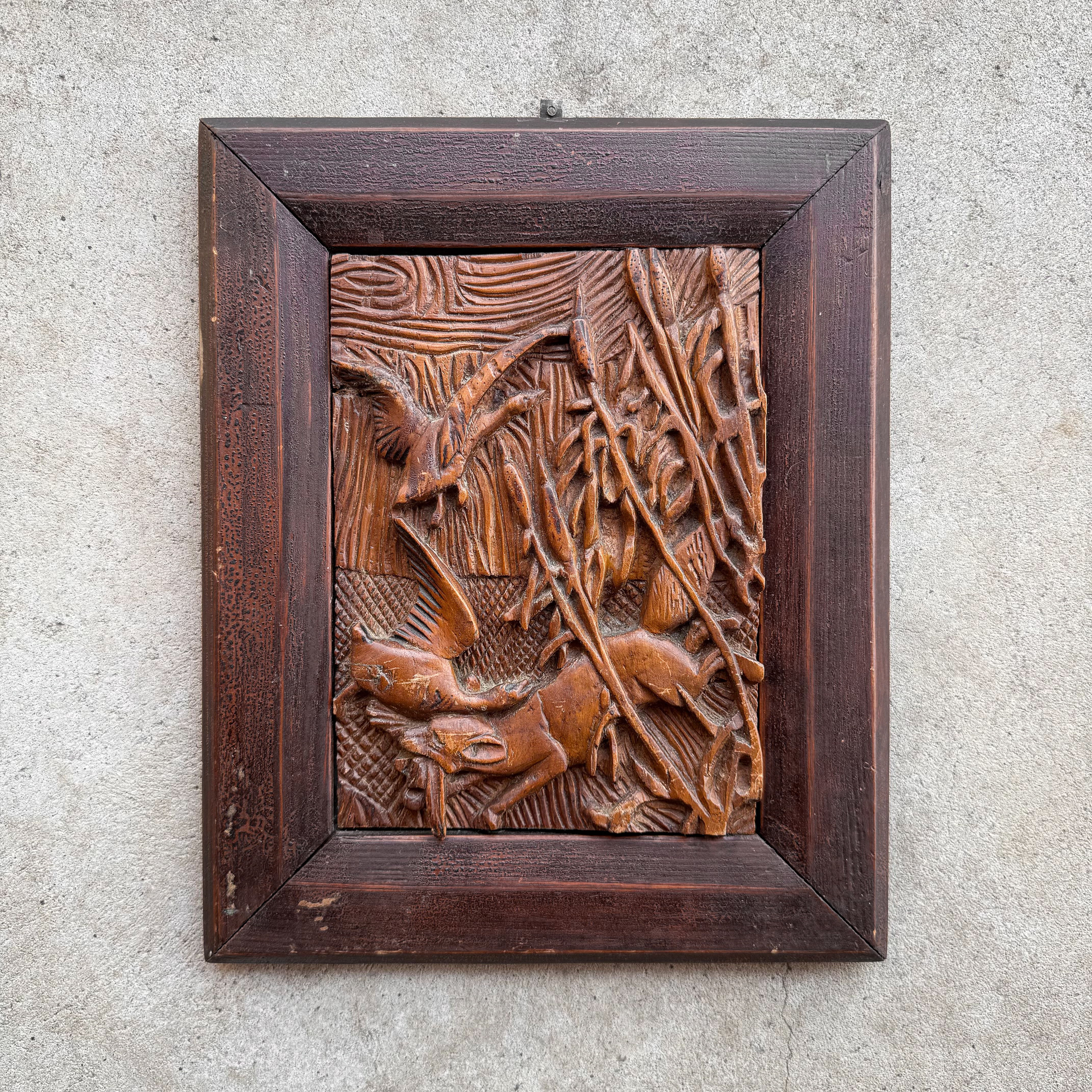
This unique antique bas-relief was hand carved in France in the early 20th century and depicts an idyllic rustic hunting scene featuring a fox and two ducks. The naïve and charming carving style gives the scene a wonderfully folk art character, while the matching wooden frame completes its rustic appearance.
The combination of the hand carved details, hunting subject and naïve craftsmanship makes this a particularly charming decorative piece. It would be a wonderful addition to a cabinet of curiosities, country style interior, rustic home, or collection of antique folk art.
After more than a century, the relief remains in good antique condition while showing various authentic signs of age and use. Over the decades, the wood has developed a beautiful natural patina that only enhances its character and charm. The original varnish has also developed a distinctive network of age-related cracks across the surface, adding further depth and authenticity to its appearance.
Measurements:
Height: 32 cm
Width: 26.5 cm
Depth: 2.2 cm
This rugged leather bag was issued by the French postal service, the PTT (Postes, Télégraphes et Téléphones), in the 1930s. Designed for practical everyday use, it features a spacious main compartment and a smaller front compartment, providing ample room for documents and personal belongings. Multiple sturdy leather straps give the bag its distinctive utilitarian appearance and reflect its original purpose as a working bag.
With its generous size and practical layout, the bag would make an excellent everyday companion, offering enough space for a small laptop, tablet, books, or other essentials. Its authentic postal-service design and beautifully aged leather also make it an appealing piece for collectors of vintage military, postal, and utilitarian items.
After almost a century, the bag remains in worn vintage condition and shows authentic signs of age and use. The leather has developed a rich natural patina over the decades, adding considerably to its character and charm. There are small stitch repairs to both corners underneath the front flap, reflecting the bag’s long history of practical use.
The leather has become somewhat dry and brittle with age, but it remains surprisingly strong and flexible. It should therefore be handled with the care appropriate for a nearly century old leather item. The leather has been treated with leather grease and antique wax to nourish and condition it.
Measurements:
Width: 36 cm
Heigth: 25
Depth: 7.5 cm
Antique early 1900s Dutch tekstbook of Natural History
This fascinating antique book is titled “De Wereld voor de Schepping van de Mensch,” which translates roughly as “The World Before the Existence of Man.” It was published in the Netherlands around 1900 by Dr. B.C. Goudsmit and is a Dutch translation of a work by the renowned French astronomer and author Camille Flammarion.
The book explores the prehistoric world and presents more than 300 beautifully detailed engravings depicting prehistoric landscapes, extinct animals and imagined scenes from a world long before mankind. The illustrations offer a wonderful glimpse into the way prehistoric life and natural history were understood and imagined at the turn of the 20th century.
Adding to its appeal is the beautifully designed Victorian-style cover, which gives the book a particularly decorative and collectible character. It would make a wonderful addition to a cabinet of curiosities, antique library, or collection of natural history and early scientific books.
After more than a century, the book remains in worn antique condition and shows authentic signs of age and use. Over the years, the cover and pages have developed a beautiful aged patina that only adds to its character and charm. Despite its age, the book remains complete, intact and fully readable.
Measurements:
Height: 24.5 cm
Width: 18 cm
Depth: 4 cm
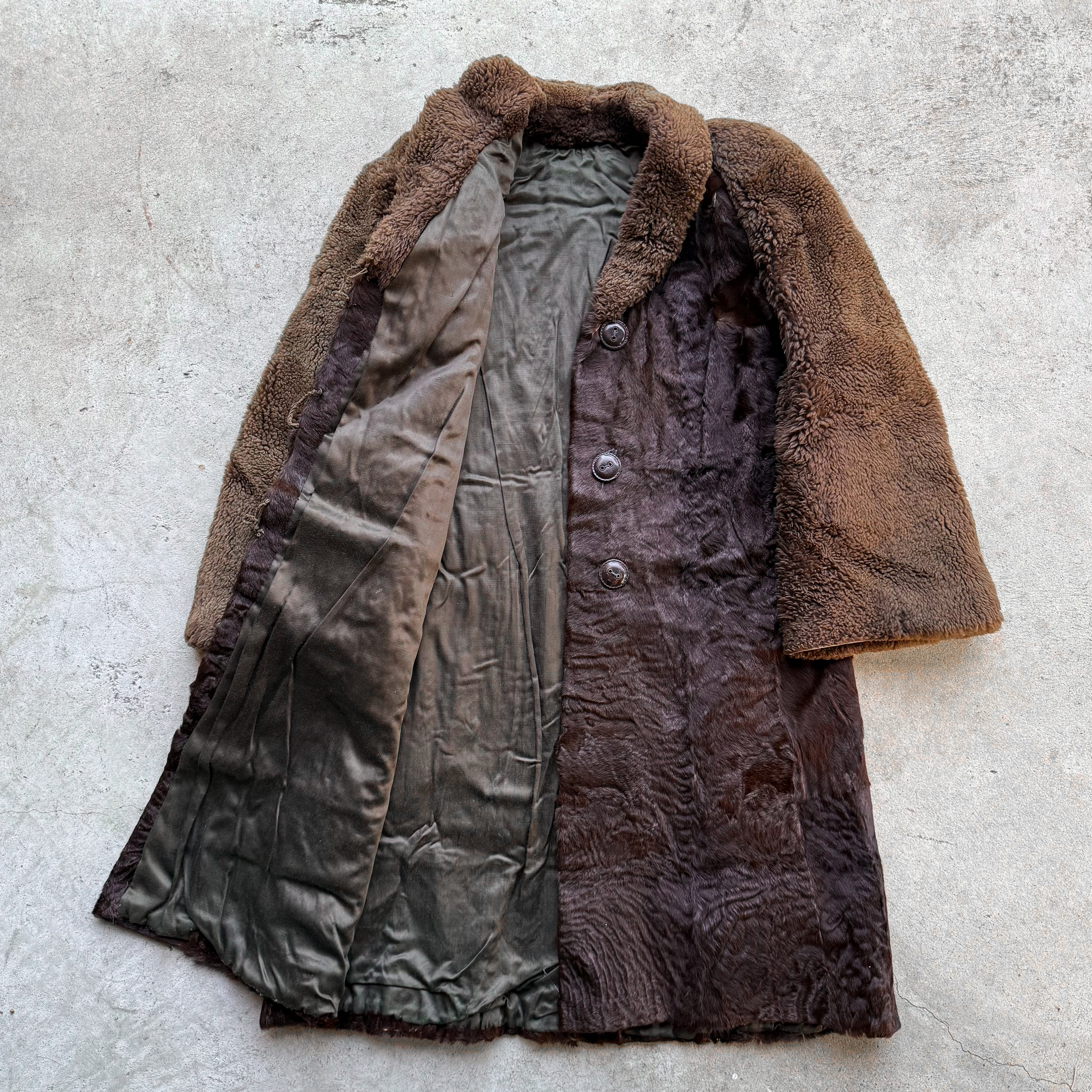
This elegant antique fur coat was made in France and dates from the 1930s. Its distinctive design combines elegance with a slightly rugged character, featuring a luxurious Persianer fur body with contrasting mouton fur sleeves and collar. The combination of textures gives the coat a wonderfully rich and timeless appearance, typical of the craftsmanship and style of the period.
A beautiful statement piece that is not only stylish but also exceptionally warm, making it a wonderful winter coat for anyone who appreciates authentic vintage fashion and beautifully crafted garments.
After almost a century, the coat remains in good vintage condition and retains its original character and charm. It shows authentic signs of age and use consistent with its history, adding to its unique vintage appeal.
Measurements:
Chest width: 50 cm
Back length: 106 cm
Sleeve length: 60 cm
This antique presse-papier was made in France and dates from the early 20th century. Its striking design features a finely cast bronze songbird, depicted lifeless upon a marble base. The imagery evokes the Victorian fascination with mortality and the fragility of life, giving the piece a subtle memento mori character.
Originally intended as a functional desk accessory, this beautiful piece would have been used to hold papers in place, while at the same time serving as a decorative object. Today, its age, materials and unusual subject make it especially appealing to collectors of antiques, natural history and curiosities.
A wonderful addition to display on a desk, within a collection, or as part of a cabinet of curiosities.
After more than a century, the presse-papier remains in good antique condition, showing only minor signs of age and use. Over the decades, the bronze has developed a subtle natural patina, which beautifully enhances its aged character and charm. The marble base also shows the gentle traces of age one would expect from an object of this period.
Measurements:
Length: 16 cm
Width: 9.5 cm
Height: 5.5 cm