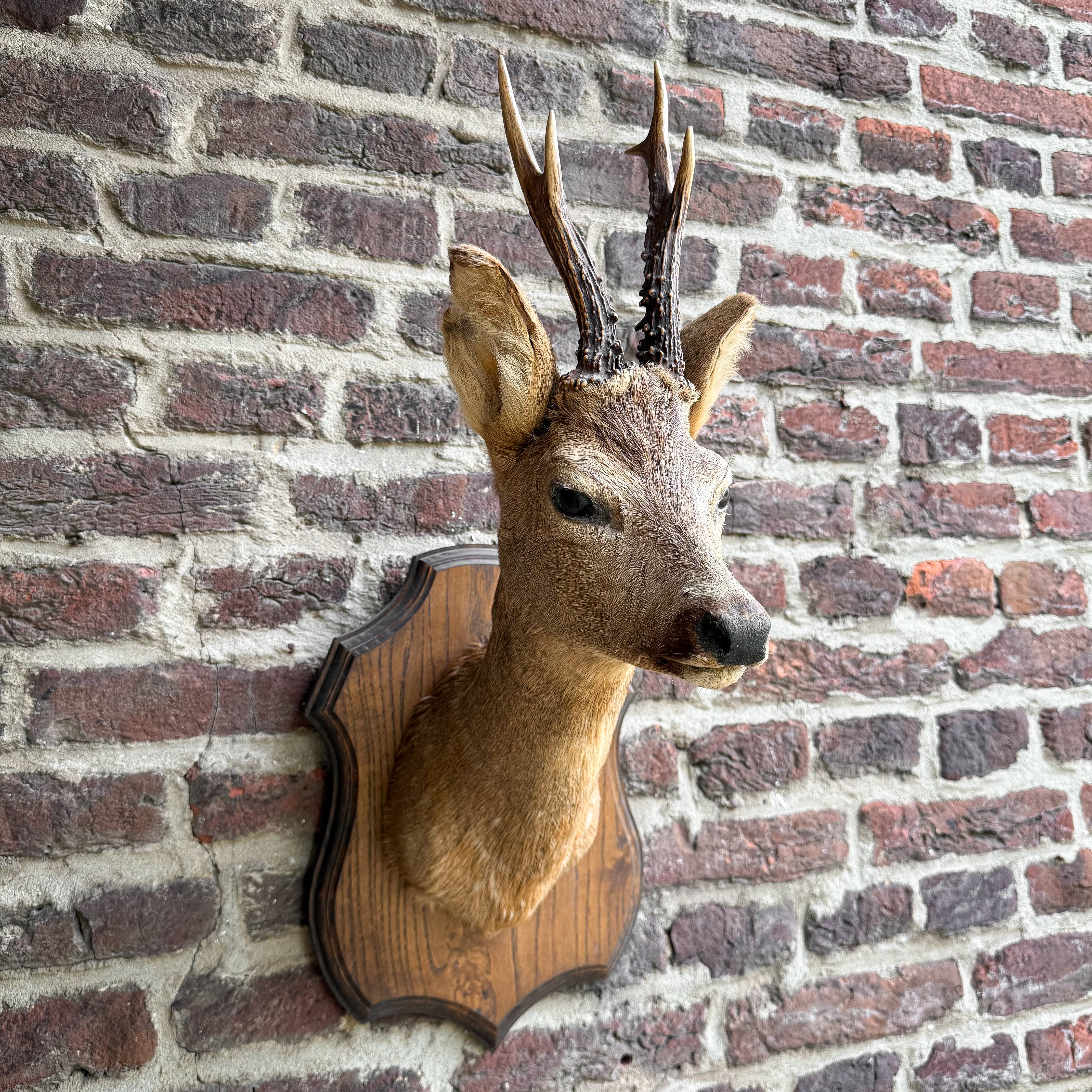
Antique early 1900s red deer antler mount – Cervus elaphus
This impressive antler trophy originates from Germany and dates back to 1911. It is professionally mounted, featuring the upper part of the skull affixed to a classic wooden plaque decorated with hand cut oak leaves – a timeless and traditional presentation. The plaque is marked “Anno 1911 – WE”.
This striking piece would make an ideal addition to any lodge style interior, hunting cabin, or rustic home décor. It would look especially majestic above a fireplace or on a feature wall.
The mount is in worn but stable condition, showing minor signs of age and use. Over the decades, it has developed a beautiful, natural patina that enhances its authentic and historic character.
Measurements:
Width: 36 cm
Heigth: 22 cm
Depth: 48 cm
This charming artwork is painted on a round wooden plaque and depicts a man accompanied by his dog. The back of the plaque features a metal hanging ring, allowing it to be easily displayed on a wall.
A delightful decorative piece, it would make a charming addition to any classic style interior.
After more than a century, the painting remains in good condition, showing signs of age and use. Over time, it has developed a natural patina that enhances its character and charm.
This charming antique compass dates back to the 1920s and features a solid brass case with a folding cover and a transit lock. The compass comes with an original matching 1920s watch chain, making it ideal for attaching to a vest or other garments.
Whether you’re looking for a practical hiking companion, a unique pendant, or a decorative display piece, this compact compass is both functional and full of history.
The compass remains in good working condition and still reliably points north. Over the years, the brass case has developed a beautifully aged patina that adds to its antique appeal and character.
This unique bag–suitcase hybrid, traditionally known as a sac de voyage, was a favored piece of luggage among travelers in France during the 19th century. Ingeniously designed, it combines a structured leather suitcase at the base with a brightly colored Gladstone-style bag on top, allowing fragile items to be stored securely below, while clothing and softer belongings could be carried above.
Both practical and elegant, this piece reflects the charm and craftsmanship of early travel culture. Today, it would make a distinctive addition to any antique collection or serve as a striking decorative element in a rustic or vintage inspired interior.
After more than a century, the bag remains in used condition and shows clear signs of age and wear. Over time, it has developed a rich patina that enhances its authentic character. The outer fabric shows some small tears and holes, consistent with its age and history.
The piece has been generally cleaned, and the leather components have been carefully treated with antique wax, providing a protective layer and a subtle, soft sheen.
Measurements:
Height: 14 / 39 cm
Width: 23 cm
Length: 43 cm
This original helmet was issued by the Swiss fire brigade in the early 1900s and stands as a fine example of early 20th century firefighting equipment.
Its design is both simple and functional, featuring a characteristic brass comb crest along the top, an interior leather liner for a secure and comfortable fit, and a prominent Swiss cross emblem at the front.
A highly decorative and authentic piece, it would make a striking addition to any firefighting collection or serve as a distinctive accent in a rustic or industrial-style interior.
After more than a century, the helmet remains in good antique condition, showing clear signs of age and use. Over time, it has developed a rich, beautiful patina that enhances its character and historical appeal. The surface has been carefully treated with antique wax, providing a protective layer and a subtle, soft sheen.
Measurements:
Height: 22 cm
Width: 19.5 cm
Lenght: 26 cm
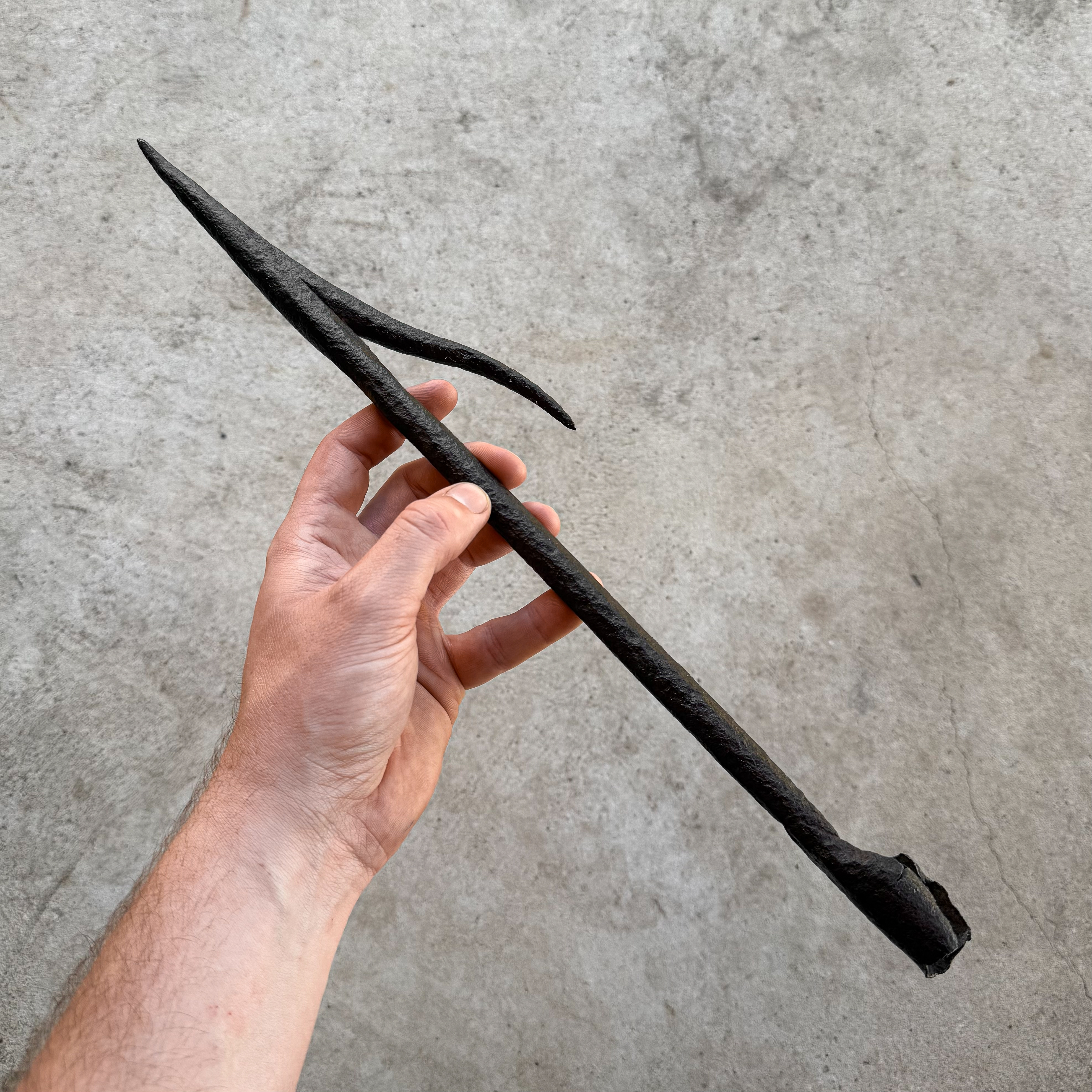
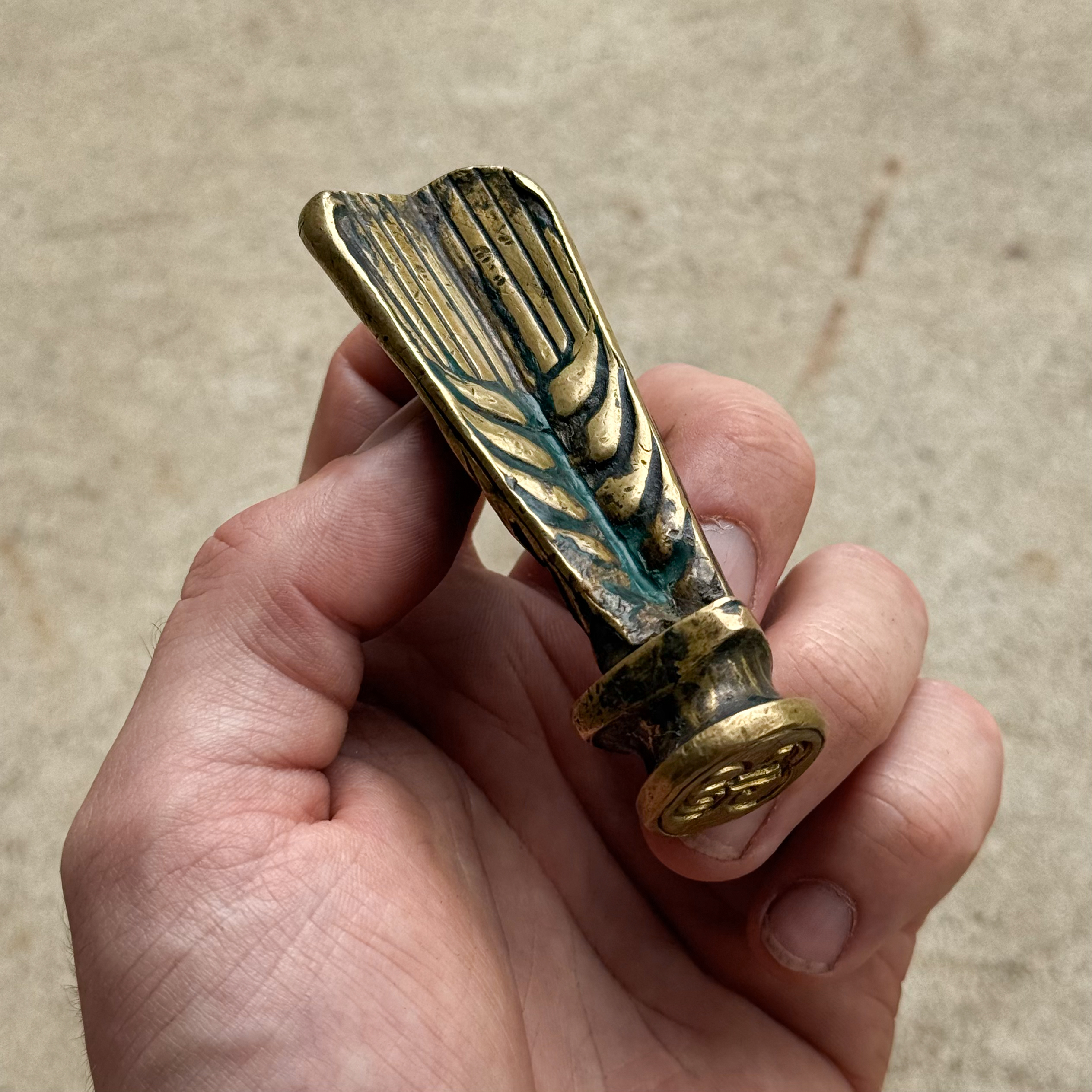
This unique coupe-papier was crafted from a solid piece of bomb shrapnel during World War I. Its elegant design features an engraved monogram on the blade, complemented by a finely detailed serpent intertwined with curling oak leaves at the base.
To cope with the relentless stress and monotony of trench warfare, soldiers often turned to creativity, transforming remnants of the battlefield into expressive handmade objects. Today known as trench art, these pieces were fashioned from discarded military materials such as shell casings, bullets, and other metal fragments. Using only simple tools, soldiers relied on ingenuity and patience, giving each object a raw and deeply human character.
This remarkable artifact carries a strong historical presence and would make a striking addition to any World War I or military collection.
Despite being over a century old, the letter opener remains in good condition, showing expected signs of use. Over time, it has developed a rich, oxidised patina that enhances its authentic character and historical appeal.
This original helmet was issued by the Bavarian fire brigade in the 1920s and is a fine example of early 20th century firefighting equipment.
Its simple yet functional design features a characteristic comb crest on top, along with a leather neck guard and an interior leather liner for a secure and comfortable fit.
A highly decorative and authentic piece, it would make a great addition to any firefighter collection or a rustic or industrial-style interior.
After a century, the helmet remains in good antique condition, showing clear signs of age and use. Over time, it has developed a beautiful patina that enhances its character and historical appeal. The surface has been treated with antique wax, providing a protective layer and a subtle, soft sheen.
Measurements:
Height: 19 cm
Width: 18 cm
Lenght: 23 cm
This antique walking cane dates from the early 1900s and features a shaft crafted from natural thorn wood, paired with a distinctive handle made from red stag antler. The base is fitted with a protective copper ferrule.
The organic form of the antler handle gives each piece a unique character, while the sturdy shaft ensures both durability and balance.
This cane would still make a stylish accessory to complement a classic outfit, but also serves as a striking decorative piece for a collection, study, or rustic interior.
After more than a century, the cane remains in good antique condition, showing expected signs of age and use. Over time, both the wood and antler have developed a beautiful, rich patina that enhances its authentic character and charm.
This rucksack was issued by the Swiss Army in 1942 and is a great example of early WWII era military gear.
The bag features one large main compartment and a smaller front pocket, along with sturdy leather shoulder straps. It is made from durable canvas, with a reinforced base and straps crafted from thick saddle leather.
This rucksack would still make an excellent everyday bag and is also perfectly suited for day hikes or outdoor use.
After nearly 90 years, the bag remains in used condition, showing clear signs of age and use. Over time, both the canvas and leather have developed a beautiful patina, adding to its authentic character. The metal fittings show some surface rust but remain fully functional. Built to withstand years of use, this piece still has plenty of life left.
The canvas has been carefully cleaned, and the leather parts have been treated with leather grease to preserve their condition.
Measurements:
Height: 32 cm
Width: 35.5 cm
Depth: 15 cm
This classic 1950s motorcycle jacket features a timeless short-cut design with several characteristic details, including a wide collar, multiple buttons on the front and small side adjustment straps on the back. It also has a beautiful orange inner lining and a decorative label from the Dutch brand Gelmok.
The jacket would still make a fantastic piece for riding a classic motorcycle, but it would also serve perfectly as a decorative item in a garage, workshop, or vintage inspired interior.
After more than 70 years, the jacket remains in good vintage condition, though it shows natural signs of age and wear. Over time the leather has developed a nicely faded patina, giving it a rugged and authentic character. The button on the upper left front is missing, as well as the left button that secures the collar in place. The leather has been carefully cleaned with saddle soap and treated with leather grease to keep it supple.
Measurements:
Chest width: 44 cm
Shoulder width: 46 cm
Back length: 59 cm
Sleeve length: 66 cm
This rucksack was issued by the Swiss Army in 1939 and is a great example of early WWII era military gear.
The bag features one large main compartment and a smaller front pocket, along with sturdy leather shoulder straps. It is made from durable canvas, with a reinforced base and straps crafted from thick saddle leather.
This rucksack would still make an excellent everyday bag and is also perfectly suited for day hikes or outdoor use.
After nearly 90 years, the bag remains in used condition, showing clear signs of age and use. Over time, both the canvas and leather have developed a beautiful patina, adding to its authentic character. The metal fittings show some surface rust but remain fully functional. Built to withstand years of use, this piece still has plenty of life left.
The canvas has been carefully cleaned, and the leather parts have been treated with leather grease to preserve their condition.
Measurements:
Height: 32 cm
Width: 35.5 cm
Depth: 15 cm
This rugged bag was handmade in France during the 1960s and was used to carry tools. Crafted from sturdy saddle leather, it was built to last a lifetime.
Ideal for daily use, the bag also makes a striking decorative piece in any rustic style interior.
After nearly a century, it shows signs of wear yet remains strong and durable. The rich patina it has developed over the years only enhances its rugged character. It has been carefully cleaned with saddle soap and treated with leather grease and beeswax.
Measurements:
Heigth: 16 cm
Width: 50 cm
Depth: 17 cm