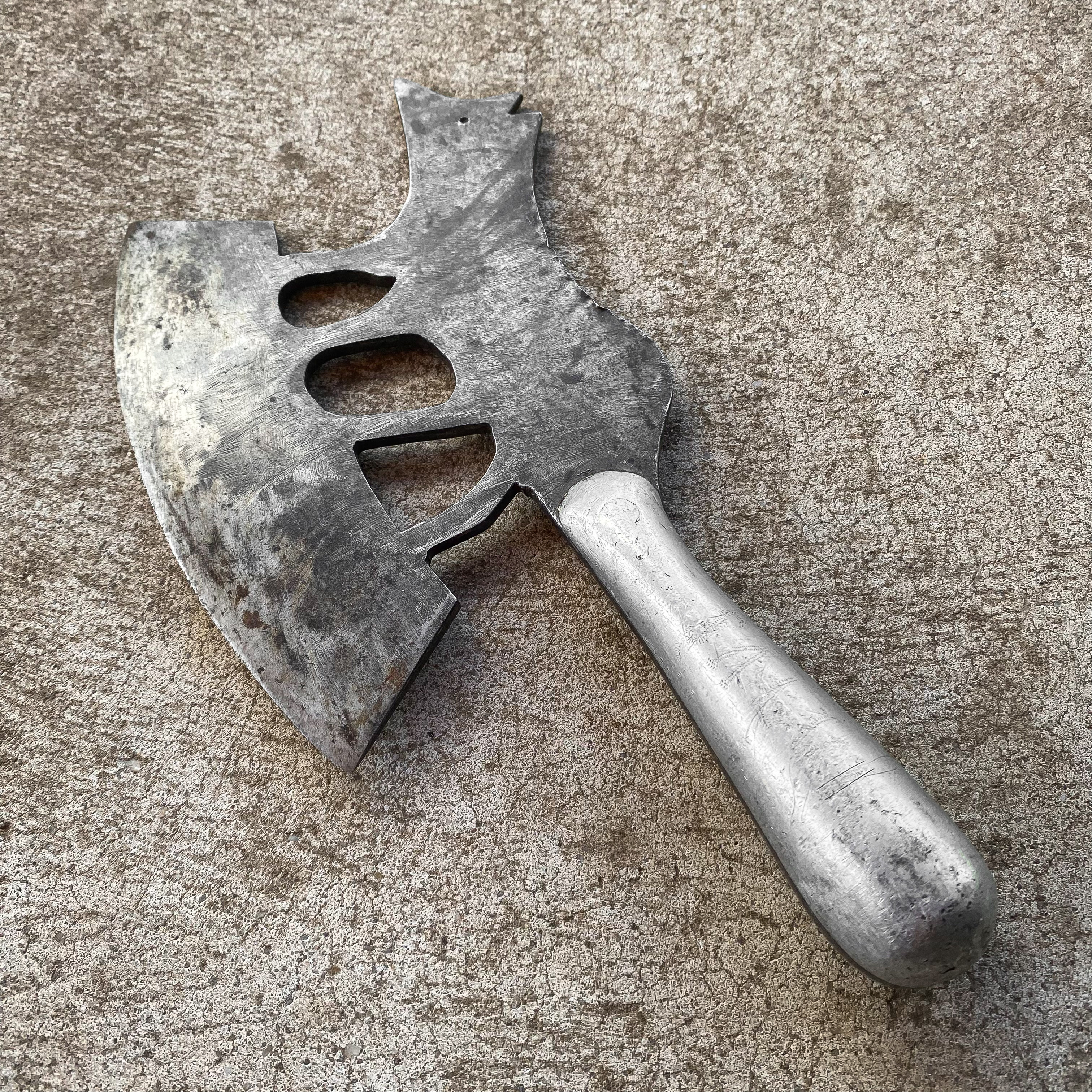
Antique 19th century French folk art butcher cleaver
This rare hand-forged butcher’s cleaver is a true piece of folk art, uniquely shaped like a fox. It features a solid steel handle.
Whether displayed in a kitchen, restaurant, hunting lodge, or country cottage, this piece is sure to catch the eye and spark conversation.
Despite its age, the cleaver remains in good condition and retains its structural integrity. It shows signs of wear consistent with use and time, and has developed a rich, aged patina that only enhances its rustic charm and character.
This charming brass ashtray dates back to the 1930s and is designed in a convenient pocket size, making it perfect for travel. It features a copper lid decorated with a classic anchor, giving it a distinctly nautical character.
Whether as a thoughtful gift for a smoker or a fine addition to a maritime collection, this piece is sure to impress.
After nearly a century, the ashtray remains in good condition. Over the years it has developed a rich, oxidized patina that enhances its vintage charm and authenticity.
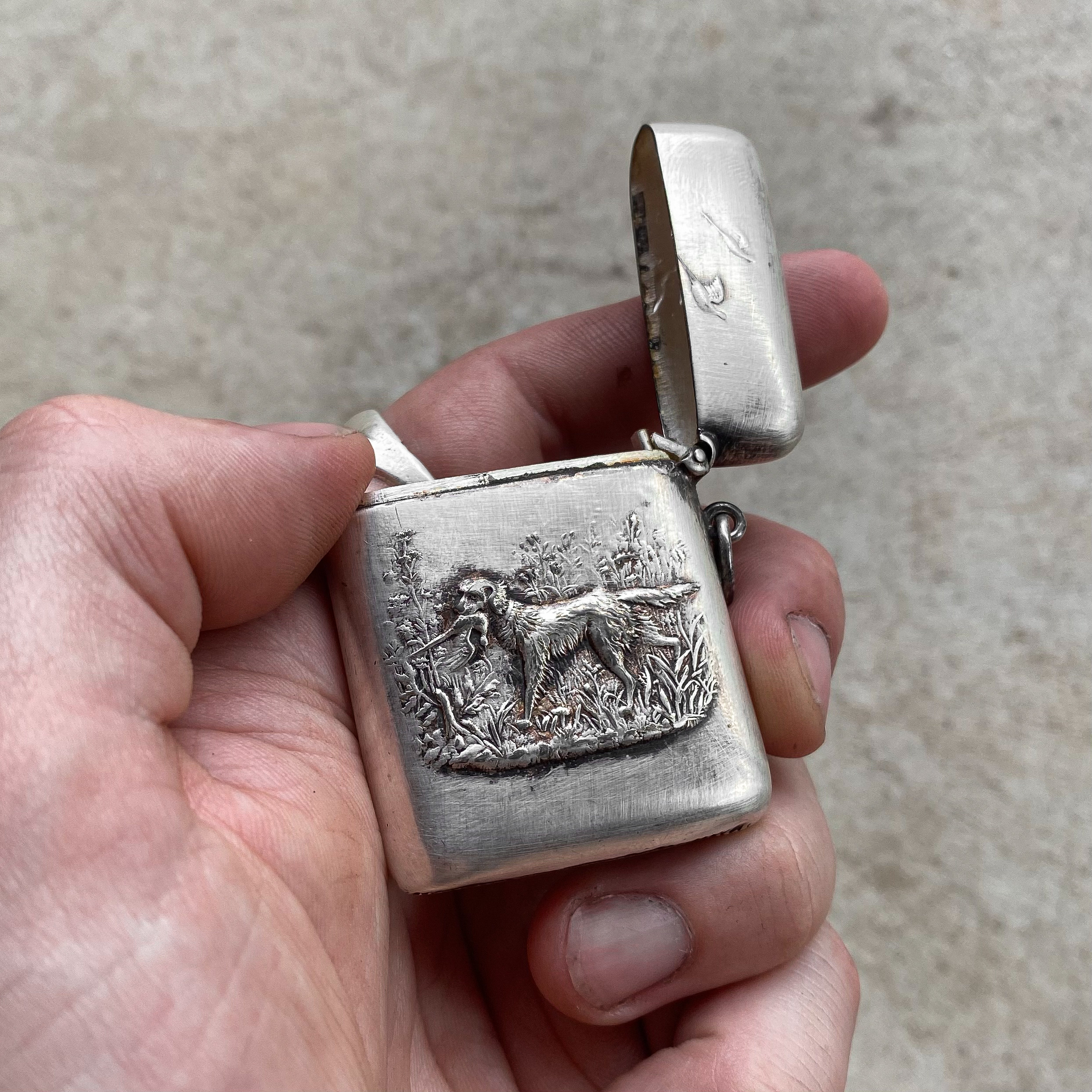
This rare silver-plated match safe, crafted in France during the 1920s, was designed to securely carry matches in one’s pocket. It showcases a finely detailed Art Nouveau design depicting hunting dogs and peasants, reflecting the period’s characteristic elegance and craftsmanship.
A wonderful piece of history, it would make the perfect gift for a hunter, an outdoors enthusiast, or a collector of antique smoking accessories and curiosities.
Even after more than a century, the vesta remains in good condition, with only light signs of wear. Over the years it has developed a rich patina, enhancing its charm and authenticity.
Measurements:
Heigth: 5.5 cm
Width: 4,5 cm
Depth: 1.3 cm
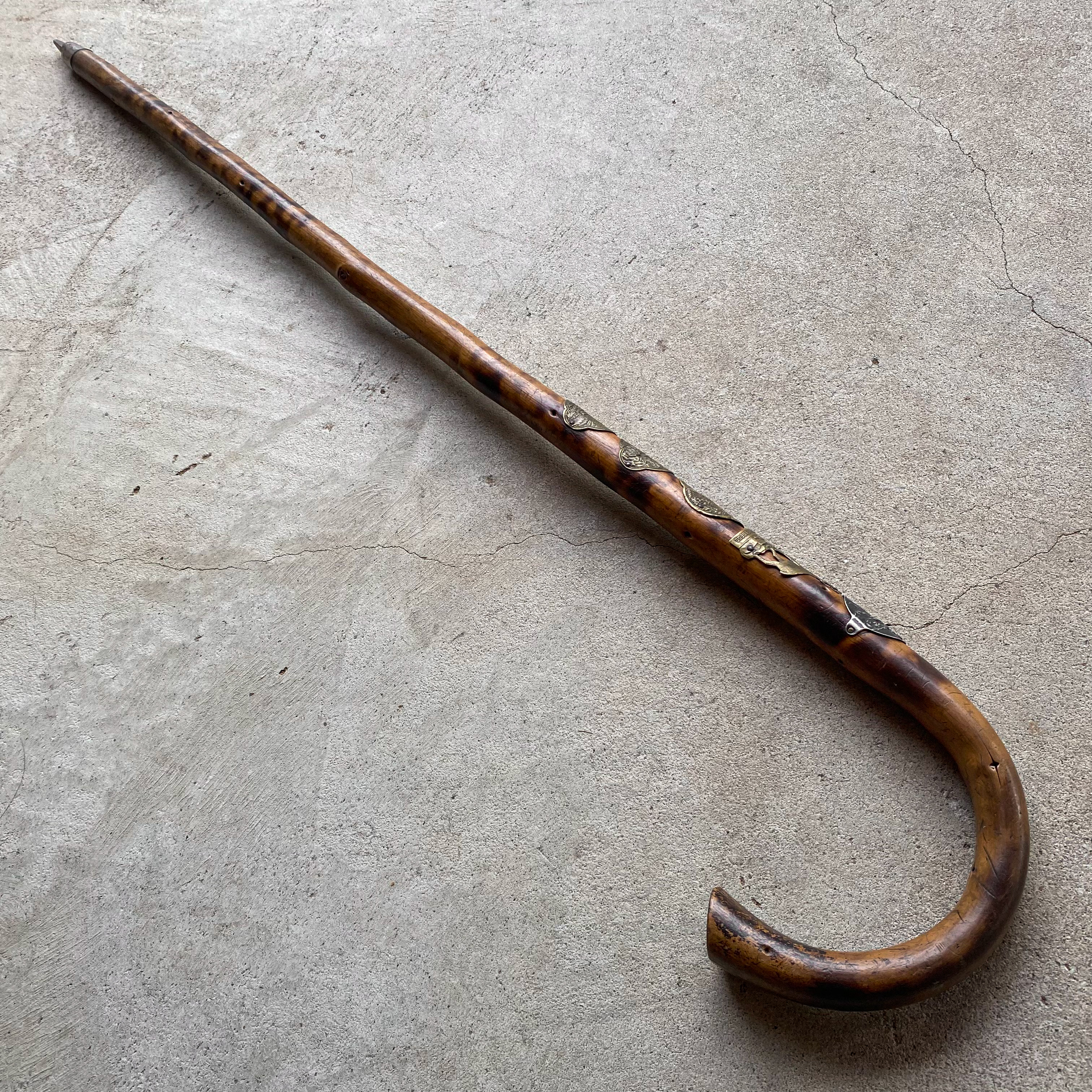
This charming walking stick tells its own story! Handcrafted in Switzerland during the 1930s, it is decorated with four souvenir badges representing the places it has traveled, along with one depicting a protective saint. Each detail reflects the journeys and traditions of a bygone era.
The cane can still be used as a stylish and sturdy walking stick, but it would also make a striking addition to any collection, mountain lodge, or cabin décor.
Despite its age, the piece remains in very good condition with only minor signs of use. Over the decades, the wood has developed a beautiful patina that enhances its character and authenticity, making it a true relic of Alpine history.
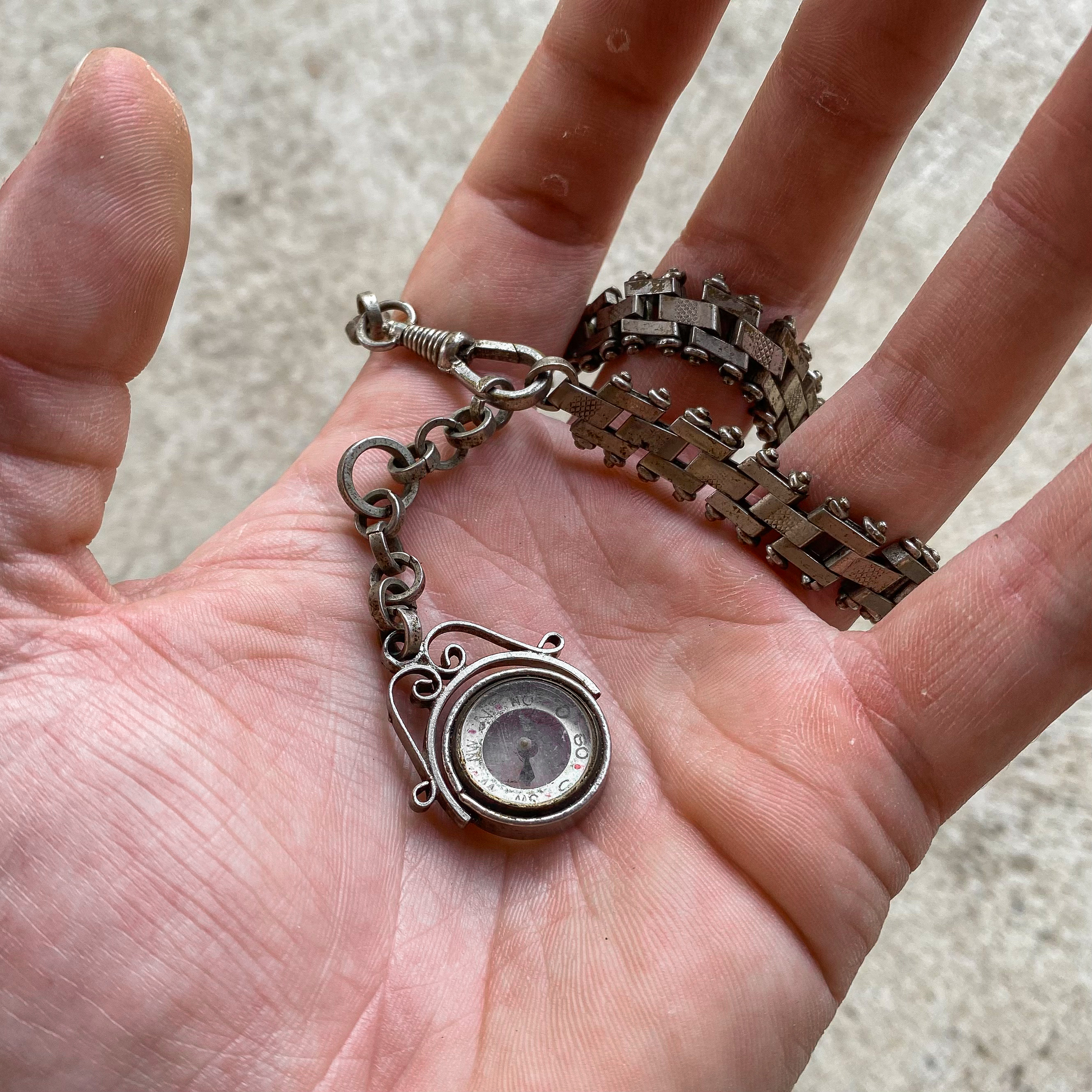
This unique pendant was crafted in Germany during the 1930s. It features a working double sided compass set in a classically shaped holder, suspended from a traditional watch chain. Such pieces elegantly blend function and style, making them both practical and decorative.
It would make a wonderful gift for a lover of classic jewelry, vintage accessories, or objects with a story.
After nearly a century, the pendant is still in good, wearable condition. Naturally, it shows signs of use: both the compass and chain have developed a warm patina over time, while one side of the compass glass bears a few light scratches.
Measurements:
Total length: 29 cm
Diameter compass: 17 mm
These charming embroidery scissors were crafted in France in the early 1900s and feature a beautifully detailed stork shape — a classic and beloved design in traditional needlework tools. The slender beak of the stork cleverly forms the blades, making them both decorative and functional.
They would make a thoughtful gift for any needlework enthusiast, and are equally suited as a nice addition to a cabinet of curiosities or a vintage sewing collection.
After more than a century, both scissors show visible signs of use and wear. The original nickel plating has developed a rich patina over time, enhancing their antique character and timeless appeal.
Antique 19th century oil portait of a bearded nobleman
This captivating oil painting dates back to the 1800s and depicts a distinguished bearded gentleman dressed in traditional period attire. His stately presence and stern expression, combined with the rich, earthy color palette, lend the portrait a timeless and dignified charm. The artwork is executed on canvas and is housed in a classic gilded wooden frame featuring ornate floral detailing.
It would make a striking addition to any traditionally styled interior—whether in a gentleman’s study, a vintage-inspired barbershop, or a cabinet of curiosities.
Despite being well over a century old, the painting remains in solid condition, with wear consistent with age. It has developed a beautiful, warm patina that enhances its antique appeal. The frame shows minor damage, including some small losses in the floral gilded ornamentation, which only adds to its authentic vintage character.
Measurements;
Frame: 36.5 x 42.5 cm
Painting: 24 x 30.5 cm
These rugged leather saddle bags are fine examples of old-school craftsmanship. Made from thick, high-quality saddle leather, they were built to endure heavy use and are sure to last a lifetime.
Originally designed to be worn on each side of a horse’s saddle, these bags are still perfectly functional for equestrian use. Alternatively, they would make an excellent and authentic addition to any vintage or classic motorcycle—bringing both utility and style.
After more than 70 years, the bags remain in solid, usable condition, showing clear signs of wear consistent with their age and purpose. Over time, they have developed a beautiful, natural patina that adds character and highlights the quality of the leather.
These bags are not only practical, but also make for a great decorative piece in a rustic interior or collection of vintage gear.
Measurements:
Heigth: 30 cm
Width: 20 cm
Depth: 8.5 cm
This historic sheepskin jerkin was issued by the Merchant Navy Comforts Service (MNCS) to shipwrecked sailors during World War II. The MNCS was a vital wartime organization dedicated to supporting British merchant seamen who often endured perilous conditions at sea. Volunteers across Britain contributed by knitting warm garments and gathering books, toiletries, and other small comforts to provide relief and dignity to sailors in times of need.
The jerkin is made from thick, insulating sheepskin and is stamped in two places with “PROPERTY OF THE MERCHANT NAVY COMFORTS SERVICE”, marking it as an authentic piece of wartime naval history.
It would make a striking addition to any WWII or maritime collection, and also serves as a bold statement piece for wear or display.
After over 80 years, the jerkin remains in worn but evocative condition, showing signs of heavy use. It has developed a beautifully distressed patina, with visible rips and hand-stitched repairs—all contributing to its authenticity and rugged charm.
Measurements:
Chest width: 53 cm
Back Length: 64 cm
Antique early 1900s American Wirt’s Patent catalogue
This rare antique catalogue showcases a selection of hose carts, reels, and racks designed for firefighting purposes. It was published in 1909 and still features the original company details of S.F. Hayward & Co., based in New York City.
A fascinating piece of firefighting history, it would make a perfect addition to any fire brigade memorabilia collection, historical archive, or cabinet of curiosities.
Despite being over a century old, the catalogue remains in good antique condition. It shows expected signs of age, including light wear, small tears, folds, and a naturally aged patina—all of which add to its authentic vintage charm.
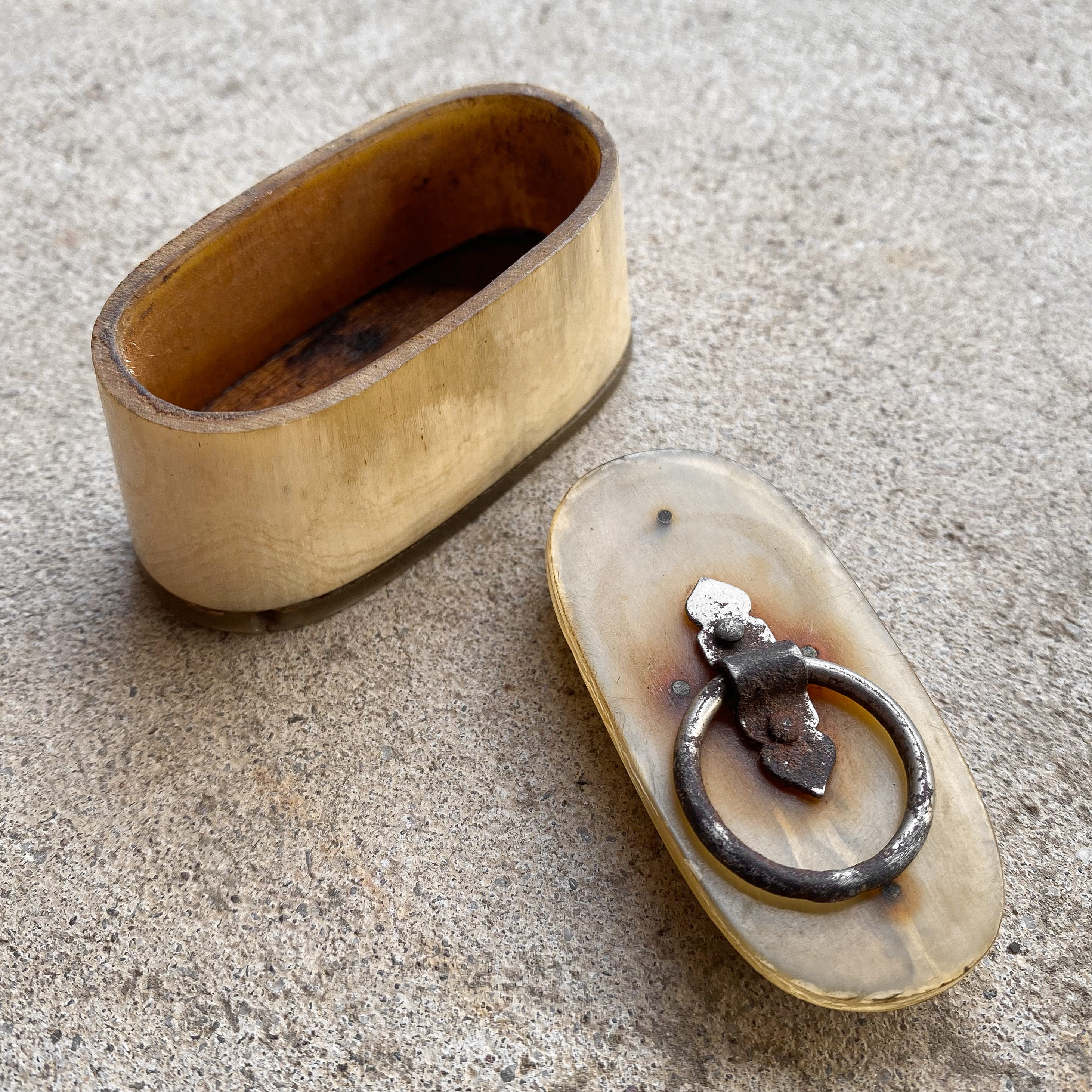
This unique piece of French folk art was handcrafted from cow horn in the 1800s.
It can still be used to store small trinkets, or would make a charming addition to any folk art collection or cabinet of curiosities.
Despite its age, the snuff box remains in good condition. Over the years, it has developed a beautiful natural patina that enhances its character. The metal fittings and top ring show some light oxidation, which only adds to its antique appeal.
Measurements:
Height: 3 cm
Width: 6.5 cm
Depth: 3 cm
This unique medical oddity was recovered from the historic German hospital of Beelitz-Heilstätten, located near Berlin. The hospital is well known for having treated wounded soldiers during both World Wars. Allegedly, Adolf Hitler himself recuperated here after being shot in the leg during World War I.
Crafted from a combination of leather and aluminium, this orthopedic leg brace is a rare example of mid-20th-century medical equipment and offers a striking glimpse into the medical history of that era.
It would make an extraordinary addition to any medical-themed collection, museum display, or cabinet of curiosities.
After more than 70 years, the brace remains in good condition but shows visible signs of age and use—adding to its authentic, timeworn character. The leather has been treated with preservation wax to protect and condition the material.