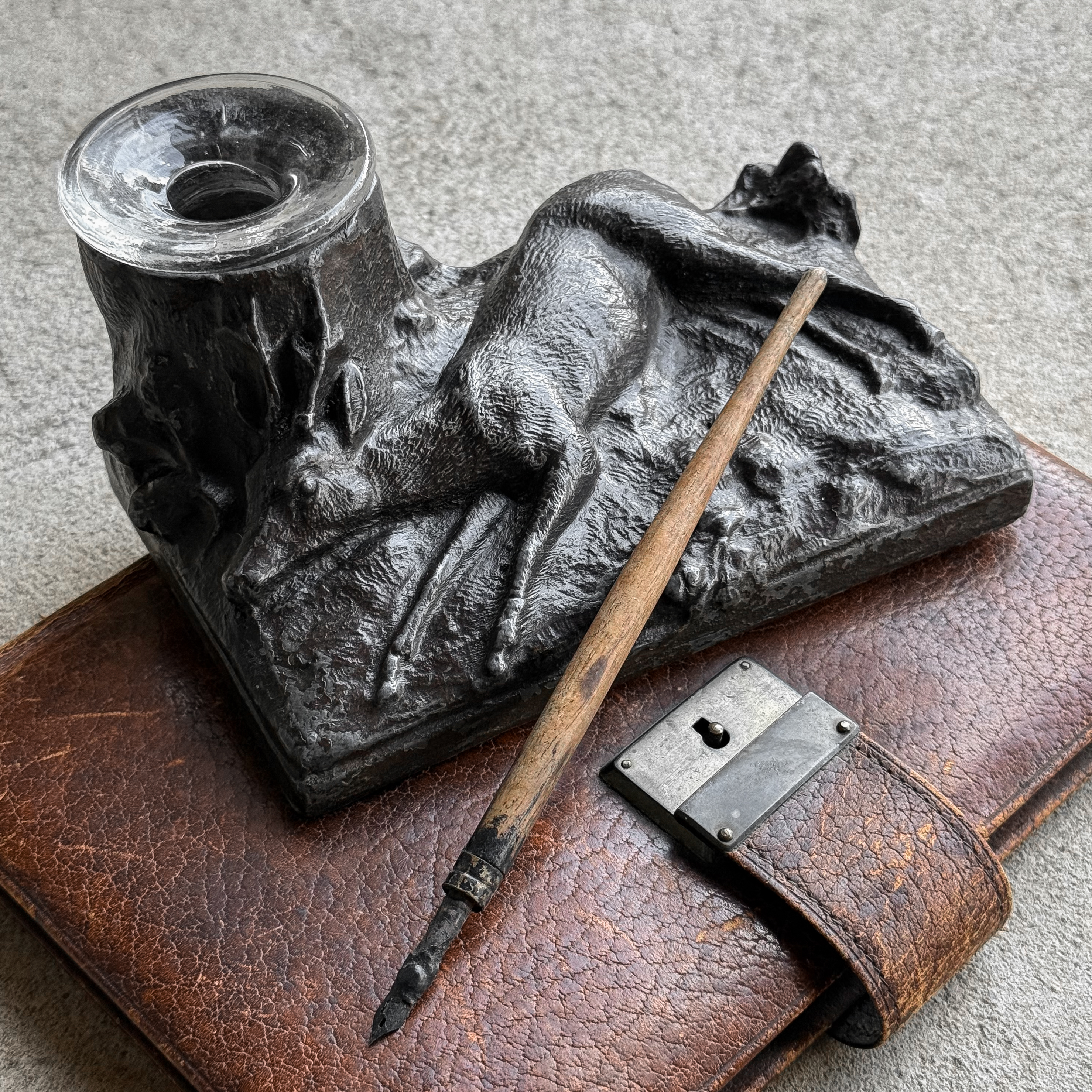
This charming antique inkwell was made in France in the early 20th century. Crafted from patinated pewter, it features an elegant Art Nouveau design inspired by the hunting tradition, depicting a roe buck standing beside a tree trunk. The sculptural pewter mount holds a removable glass ink jar, creating a beautiful combination of decorative metalwork and practical functionality.
With its rustic yet refined appearance, this inkwell would make a wonderful addition to a writing desk, study, library, or cabinet of curiosities. The hunting motif and naturally aged patina give it a particularly atmospheric character, making it as much a decorative object as a piece of functional deskware. A distinctive and decorative piece of early 20th century French deskware, perfect for collectors of antique inkwells, Art Nouveau objects, or hunting-related curiosities.
After more than a century, the inkwell remains in good antique condition and shows the authentic signs of age and use one would expect from an object of this age. The pewter has developed a beautiful, naturally aged patina over the decades, adding depth and character to the piece. The glass ink jar is included.
Measurements:
Length: 14.5 cm
Width: 10.5 cm
Hength: 6.5 cm
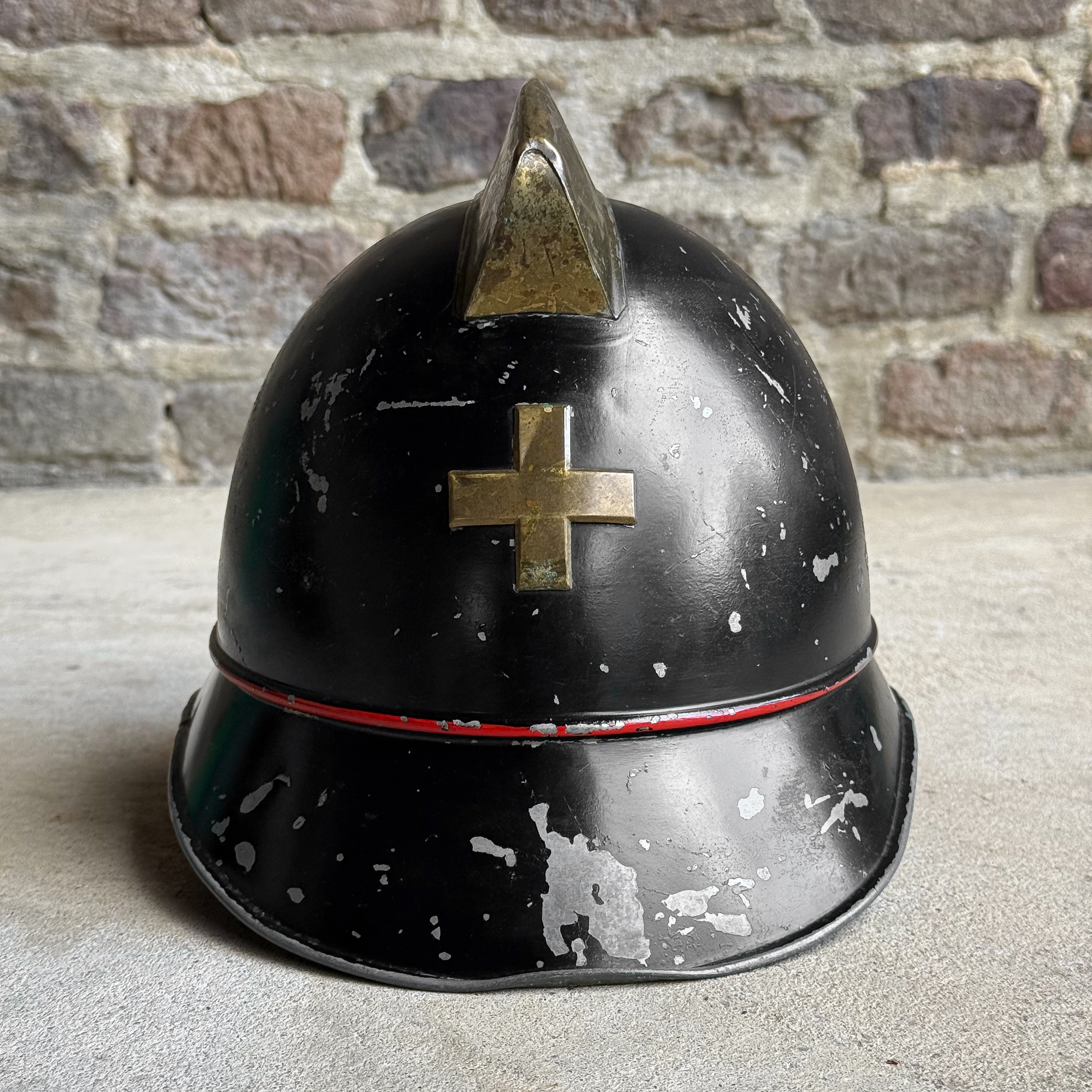
This original helmet was issued by the Swiss fire brigade in the early 1900s and stands as a fine example of early 20th century firefighting equipment.
Its design is both simple and functional, featuring a characteristic brass comb crest along the top, an interior leather liner for a secure and comfortable fit, and a prominent Swiss cross emblem at the front.
A highly decorative and authentic piece, it would make a striking addition to any firefighting collection or serve as a distinctive accent in a rustic or industrial-style interior.
After more than a century, the helmet remains in worn condition, showing clear signs of age and use. Over time, it has developed a rich, beautiful patina that enhances its character and historical appeal. The front rim shows a small dent. The surface has been carefully treated with antique wax, providing a protective layer and a subtle, soft sheen.
Measurements:
Height: 21 cm
Width: 21 cm
Lenght: 28 cm
This charming antique letter opener was hand-carved from wood in the Black Forest region in the early 20th century. It features a finely carved flower motif with a chamois, combining decorative detail with the rustic character typical of Black Forest woodcarving.
A wonderful piece for collectors of antique woodwork, hunting-related objects, or Black Forest curiosities, and a distinctive addition to a cabinet of curiosities or antique desk.
After more than a century, the letter opener remains in good antique condition, with authentic signs of age and use. The wood has developed a warm, natural patina over the years, adding to its character and giving the piece an appealing sense of age.
This charming antique vide-poche was made in France in the early 20th century. Made from brass, it features an elegant decorative design with a little dog sitting in its doghouse in the lower left corner.
A vide-poche, literally meaning “empty pocket”, was traditionally used as a small catch-all dish for keeping everyday pocket items such as coins, keys, or other small personal belongings. Today, it can still be used for storing jewelry, keys, or other small trinkets, while also making a charming decorative object.
It would make a wonderful addition to a cabinet of curiosities, antique interior, or French-inspired collection, and its unusual dog motif makes it particularly appealing to collectors of animal-themed antiques.
After more than a century, the dish remains in good antique condition and shows authentic signs of age and use. Over the decades, the brass has developed a beautiful oxidized patina, adding warmth, character, and charm to the piece.
This unique antique pipe holder was made in the 1930s and features a wonderfully detailed wild boar design. Designed to be mounted on the wall, the piece offers space to display and hang up to four different pipes, combining a practical purpose with a highly decorative appearance.
The striking wild boar motif gives the holder a distinctly rustic and hunting-inspired character. It would make a wonderful addition to a pipe collection, a study, smoking room or cabinet of curiosities, and would also make an unusual gift for a traditional pipe smoker.
After almost a century, the piece remains in good vintage condition and shows only minor signs of age and use. Its authentic aged appearance adds to the charm and character of this unusual 1930s smoking accessory.
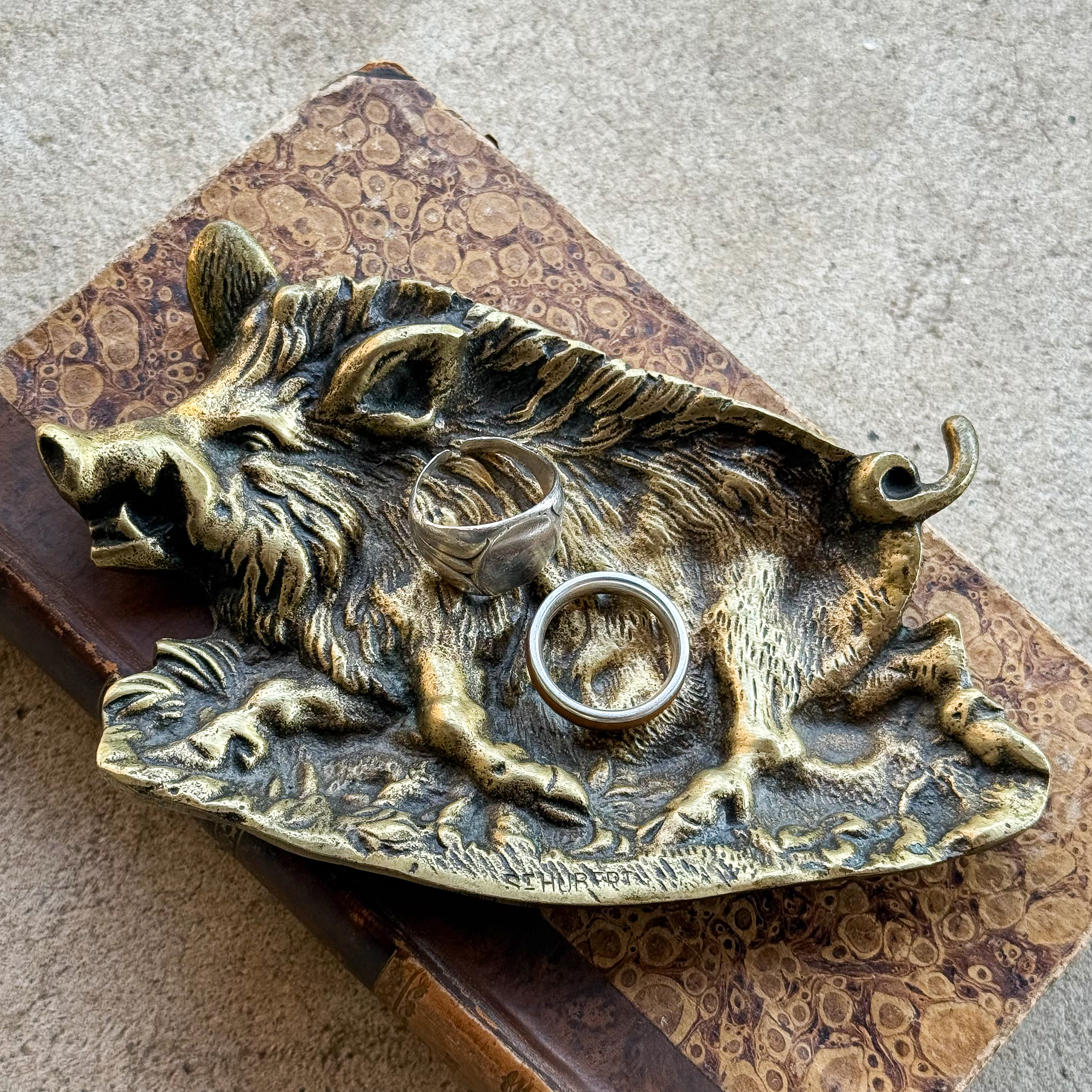
This charming bronze trinket dish, shaped like a wild boar, was crafted in the 1930s. With its detailed and expressive form, it beautifully reflects the craftsmanship and rustic aesthetic of early 20th century design. The side of the dish is marked “St Hubertus”, while a small ring on the back allows the piece to be mounted on the wall as a decorative object.
Whether used as a trinket holder for keys, coins or jewellery, or even as a small ashtray, this versatile piece combines practical use with a distinctive decorative character. It would make a wonderful addition to a desk, side table, display shelf or cabinet of curiosities.
After more than 90 years, the bronze has developed a beautiful natural oxidized patina, enhancing its rugged character and authentic vintage appeal.
Antique early 1900s taxidermy European bee-eater – ‘Merops apiaster’
This beautiful antique bee-eater was mounted in Spain in the early 20th century. The specimen has remarkably retained its vivid green, blue and yellow coloration and has been expertly mounted in a dynamic pose, perched upon a natural tree stump.
A rare and atmospheric piece, this striking bird would make a wonderful addition to a natural history collection, cabinet of curiosities or characterful interior. Its vivid plumage and elegant form make it an especially eye-catching specimen.
Despite its considerable age, the bird remains in good condition. Naturally, it shows signs of age consistent with its history, which only add to its authentic character. The specimen has remained free from pest damage over the years and shows no bald spots or significant feather loss.
You are, of course, very welcome to view the piece in person by appointment. Shipping is also possible; the specimen will be carefully and securely packaged to ensure it reaches its new owner safely.
Measurements:
Width: 32 cm
Height: 24 cm
Depth: 22.5 cm
This unusual antique pendant features a beautifully polished canine tooth set in a silver mount. The pendant was given as a personal gift by the owner of a hunting club in Berlin during the 1930s, adding a fascinating piece of personal history to this already distinctive object.
Unfortunately, the exact species the tooth originates from is unknown. Based on its size and shape, I suspect it may have belonged to a large feline, although this cannot be confirmed. Its unknown origin only adds to the mystery and character of the piece.
It would make a truly unique pendant when worn on a necklace, or an intriguing addition to a collection of antique curiosities, hunting memorabilia or natural history objects.
After almost a century, the pendant remains in good antique condition. Over the decades, the silver mount has developed a beautiful natural patina, which enhances its aged appearance and adds to its antique charm and character.
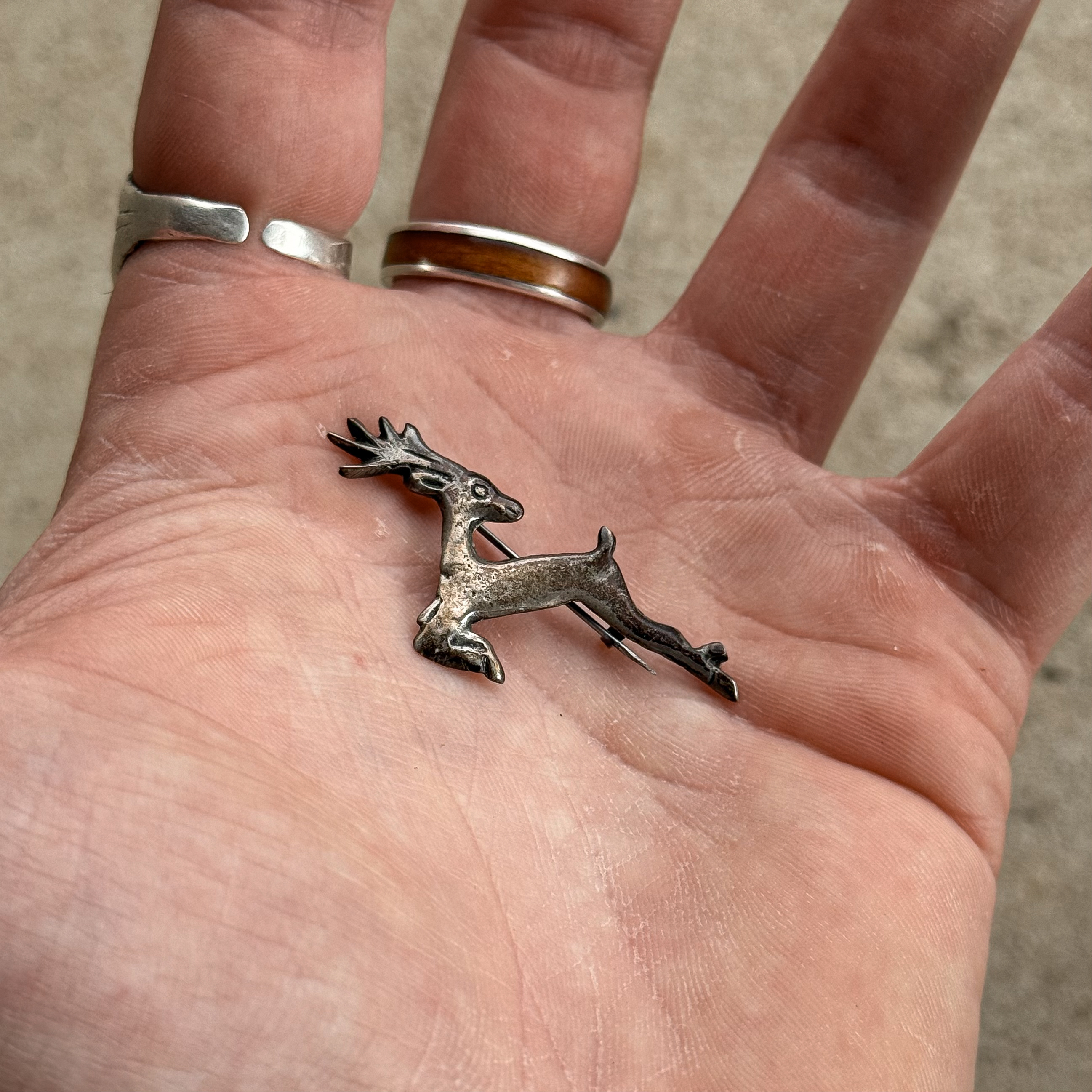
This unique vintage brooch was crafted in Mexican silver and dates from the 1960s. It features a beautiful Native American-inspired design depicting a white tailed deer, giving the piece a distinctive rustic and naturalistic character.
The combination of the traditional silverwork and rugged deer motif makes this a particularly charming accessory. It would be the perfect brooch to complement a vintage, rugged or outdoors-inspired wardrobe, and would also make a wonderful addition to a collection of vintage silver jewellery.
After more than 60 years, the brooch remains in good vintage condition and shows only minor signs of age and use. Over the decades, the silver has developed a beautiful natural patina, which enhances the details of the design and, in my opinion, only adds to its character and charm.
Vintage juvenile fox taxidermy mount – ‘Vulpes vulpes’
This charming juvenile fox was professionally mounted in France and displays beautifully natural and lifelike characteristics. The taxidermist did an excellent job capturing the animal in a relaxed, natural looking position, standing upon a solid piece of tree trunk. The detailed pose and expression give the mount a wonderful sense of character.
This little chap deserves a nice home where he can be admired and appreciated! He would make a wonderful and unusual decorative piece, whether displayed in a country home, hunting lodge, cabin, or cabinet of curiosities. And of course, he makes an excellent guard pet — although we cannot guarantee he’ll be much help against intruders!
The fox remains in good vintage condition and shows authentic signs of age and wear. There was a small tear to the inside of the left hind leg, which has been carefully stitched and is now barely noticeable. Please see the photographs for the overall condition.
Measurements:
Height: 54 cm
Length: 82 cm
Width: 24 cm
This unique antique cigar box was made by the renowned Austrian ceramic artist Johann Maresch around 1880. Maresch (1821–1914) is particularly known for his distinctive ceramic and terracotta figures, many of which are highly characterful and richly detailed.
The box is made from Sidolith, a type of artificial stone developed and used by Maresch, and features a wonderfully unusual figural design. A mounted and armed cowboy is depicted sitting upon a large wooden crate marked “HABANA” and “COLORADO.” The unusual Western-inspired subject makes this an especially striking example of Maresch’s imaginative and often eclectic work. The underside bears the artist’s initials and serial number, “JM – 3375,”* adding to its authenticity and collector appeal.
Whether used as a cigar box or simply displayed as a decorative object, this remarkable piece would make a wonderful addition to a collection of antique ceramics, Western memorabilia, or a cabinet of curiosities. It would also make a unique statement piece in a rustic interior.
After almost 150 years, the box remains in worn antique condition and shows various authentic signs of age and use. Over the decades, the surface has developed a beautiful natural patina that adds considerably to its character and charm. Please note that there is a missing chip to the lower half, underneath the lid on the right side. This damage is visible in the photographs and is taken into account in the condition of the piece.
Measurements:
Heigth: 22 cm
Width: 16 cm
Depth: 14.5 cm
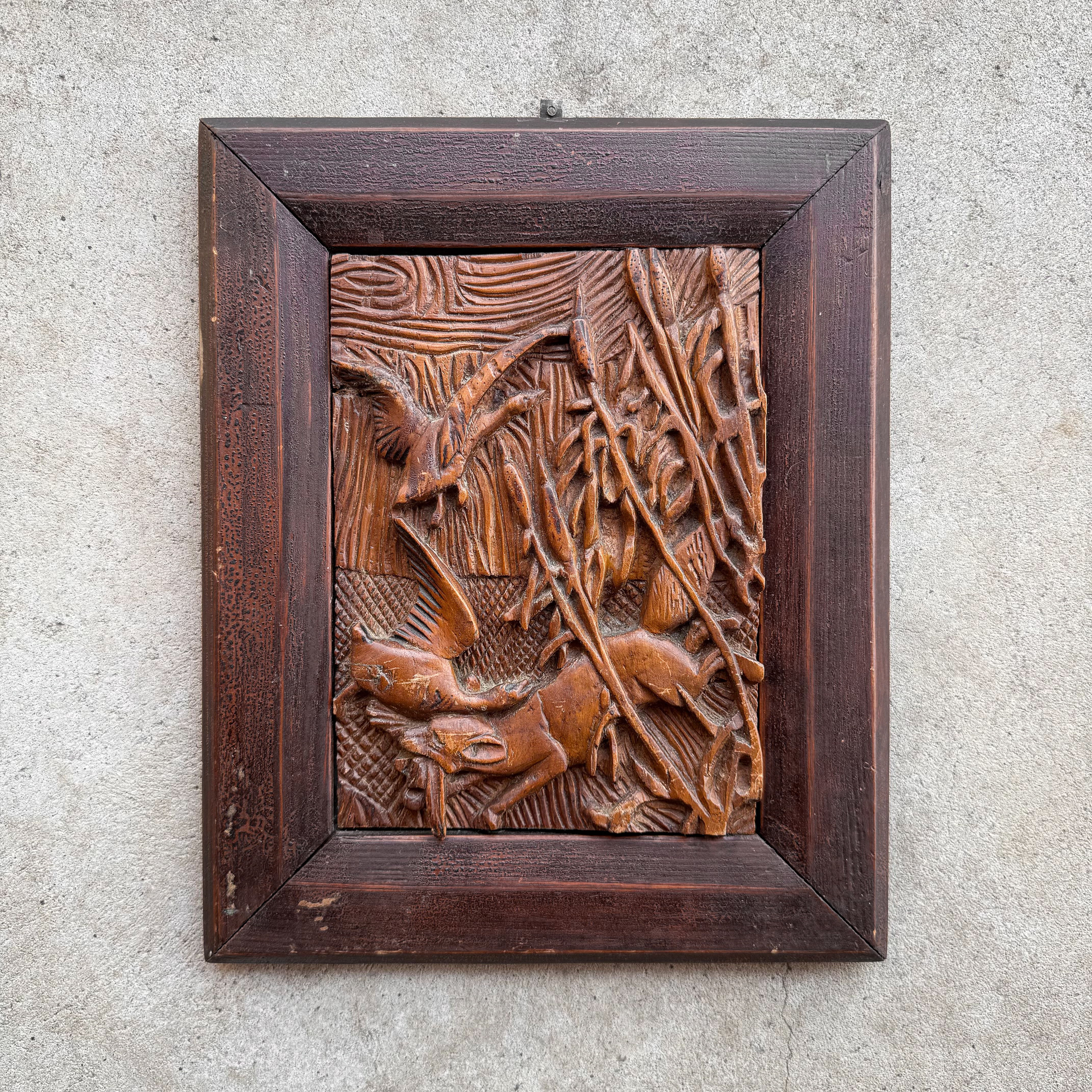
This unique antique bas-relief was hand carved in France in the early 20th century and depicts an idyllic rustic hunting scene featuring a fox and two ducks. The naïve and charming carving style gives the scene a wonderfully folk art character, while the matching wooden frame completes its rustic appearance.
The combination of the hand carved details, hunting subject and naïve craftsmanship makes this a particularly charming decorative piece. It would be a wonderful addition to a cabinet of curiosities, country style interior, rustic home, or collection of antique folk art.
After more than a century, the relief remains in good antique condition while showing various authentic signs of age and use. Over the decades, the wood has developed a beautiful natural patina that only enhances its character and charm. The original varnish has also developed a distinctive network of age-related cracks across the surface, adding further depth and authenticity to its appearance.
Measurements:
Height: 32 cm
Width: 26.5 cm
Depth: 2.2 cm