This antique walking cane dates from the early 1900s and features a shaft crafted from natural thorn wood, paired with a distinctive handle made from red stag antler. The base is fitted with a protective copper ferrule.
The organic form of the antler handle gives each piece a unique character, while the sturdy shaft ensures both durability and balance.
This cane would still make a stylish accessory to complement a classic outfit, but also serves as a striking decorative piece for a collection, study, or rustic interior.
After more than a century, the cane remains in good antique condition, showing expected signs of age and use. Over time, both the wood and antler have developed a beautiful, rich patina that enhances its authentic character and charm.
Measurements:
Length: 86.5 cm
Length handle: 15.5 cm
These rugged saddle bags were issued to the French cavalry in the 20s. They are a fine example of early 20th century craftsmanship and are made from thick, durable saddle leather.
Originally worn on either side of a saddle, they can still be used for riding today. They would also make a striking addition to a classic motorcycle.
After more than a century, the bags remain in good condition and show signs of age and use. Over time, they have developed a rich patina that adds to their character. Despite their age, the leather remains strong and sturdy. One of the bags shows a stitch repair, adding only more charm to it.
Measurements:
Heigth: 34 cm
Width: 16 cm
Depth: 9 cm
This antique sighting compass was manufactured in London around 1910 by Troughton & Simms, the renowned British maker of scientific and surveying instruments. Crafted from brass, it features a clever folding design with a protective hinged cover, combining precision engineering with practical functionality.
Originally used for surveying, navigation, or military fieldwork, this instrument is a fine example of early 20th-century British craftsmanship and scientific innovation. Now it’s a wonderful addition to any collection of antique scientific or nautical instruments, surveying equipment, or a cabinet of curiosities.
After more than a century, the compass remains in used antique condition and displays expected signs of age and use. The brass has developed a beautiful natural patina over the years, enhancing its authentic character. The original glass cover protecting the compass card is unfortunately missing, and the compass is no longer functional, making it best suited as a decorative collector’s piece.
Please examine the photographs carefully, as they form an integral part of the description and condition report.
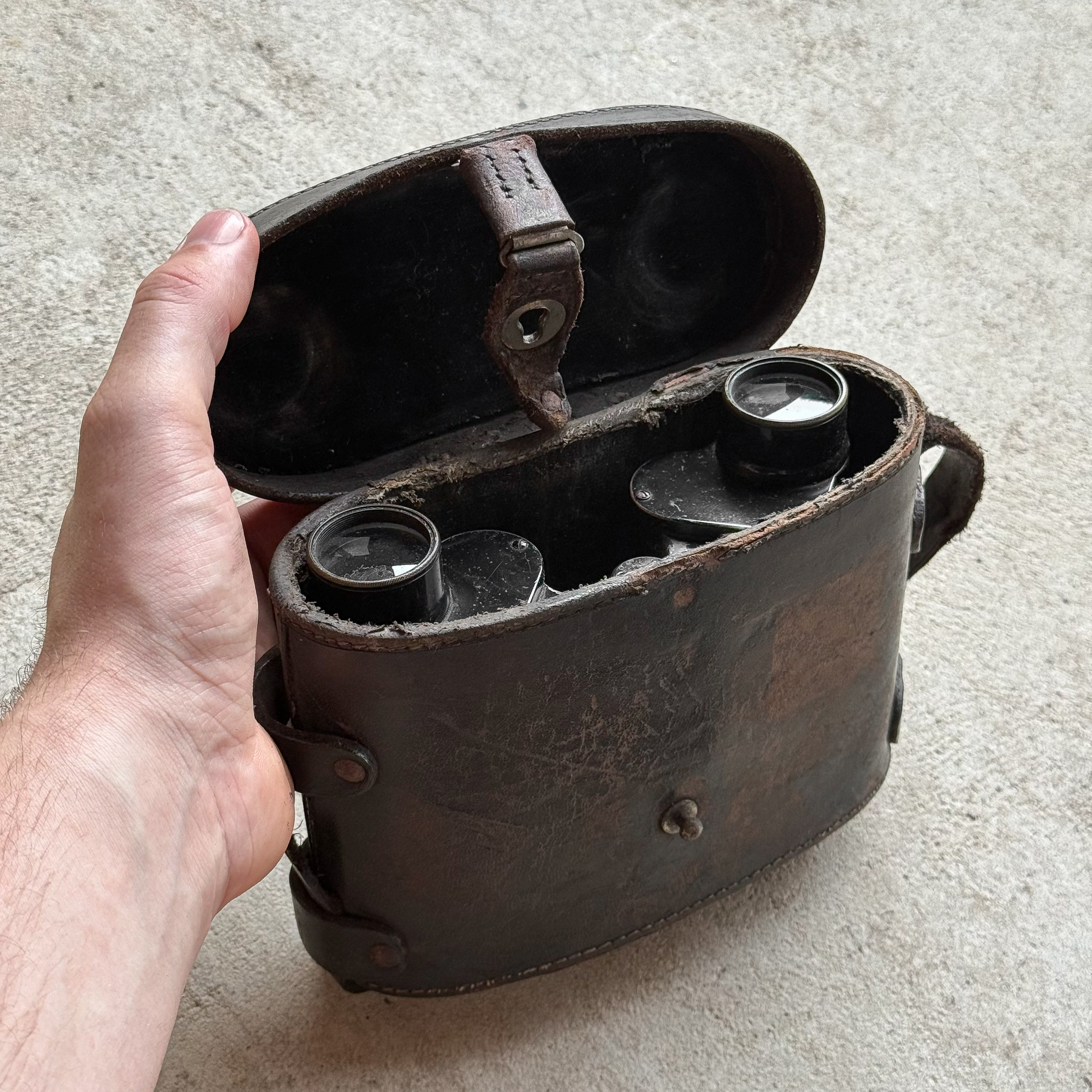
An elegant pair of antique binoculars manufactured by Lemaire in Paris, France, dating to the 1930s. Complete with their original leather carrying case, they are a fine example of early 20th century French optical craftsmanship.
These binoculars would make a wonderful addition to a collection of antique optical instruments, a cabinet of curiosities, or a vintage interior.
After almost a century, the binoculars remain in good antique condition and display expected signs of age and use. Both the metalwork and the original leather case have developed a beautiful patina over the years, enhancing their authentic character and charm. Please examine the photographs carefully, as they form an integral part of the description and condition report.
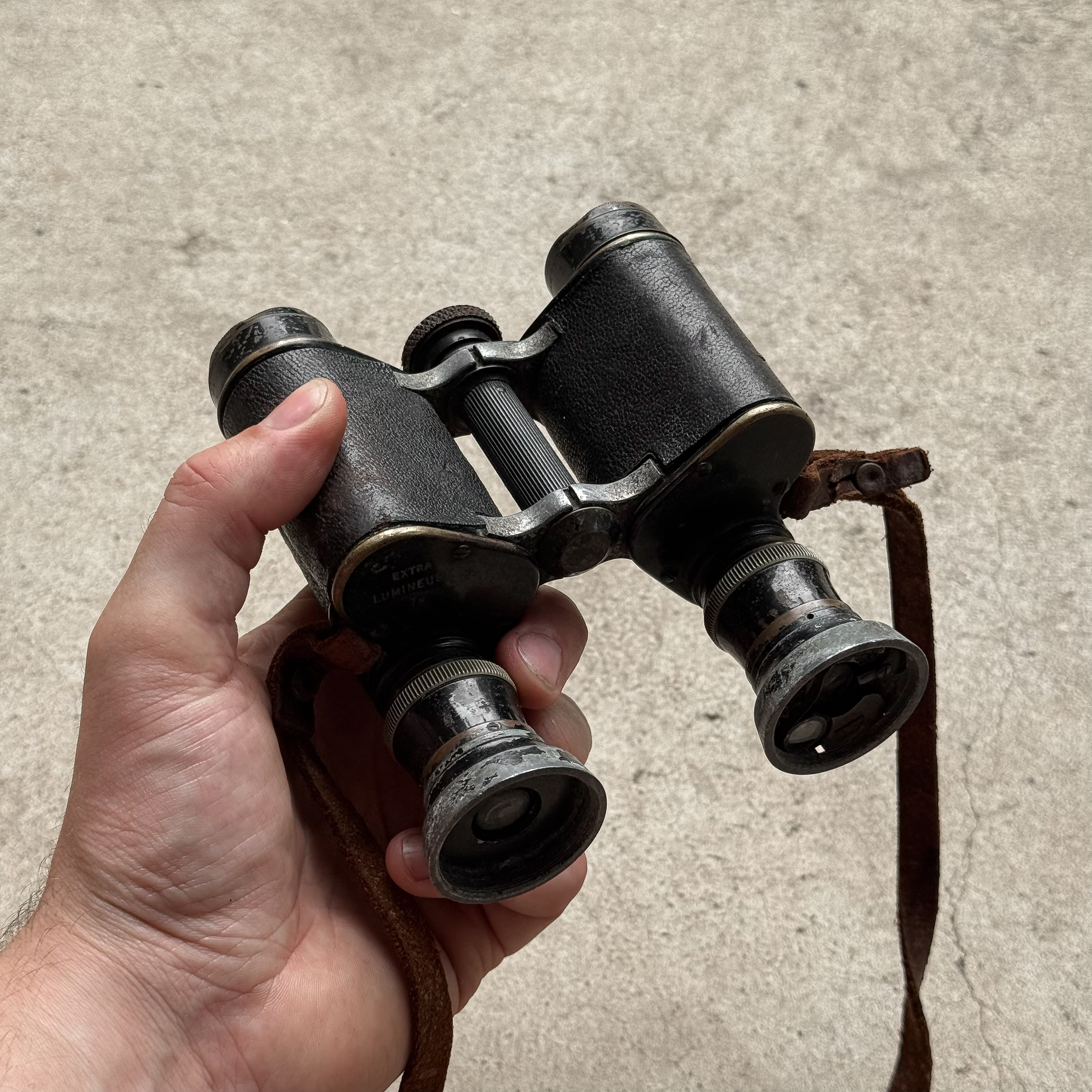
Antique 1910s Huet Paris Extra Lumineuse 7x Binoculars
These elegant Extra Lumineuse 7x binoculars were manufactured by Huet in Paris and were issued to the French military during the First World War. They are a fine example of early 20th-century French optical craftsmanship and military history.
An attractive addition to any WWI or military collection, cabinet of curiosities, or vintage interior.
After more than a century, the binoculars remain in worn condition and display expected signs of age and use. They have developed a beautiful patina over the years, enhancing their authentic character and charm. Both original eyecups are unfortunately missing, as shown in the photographs. Please examine the photographs carefully, as they form an integral part of the description and condition report.
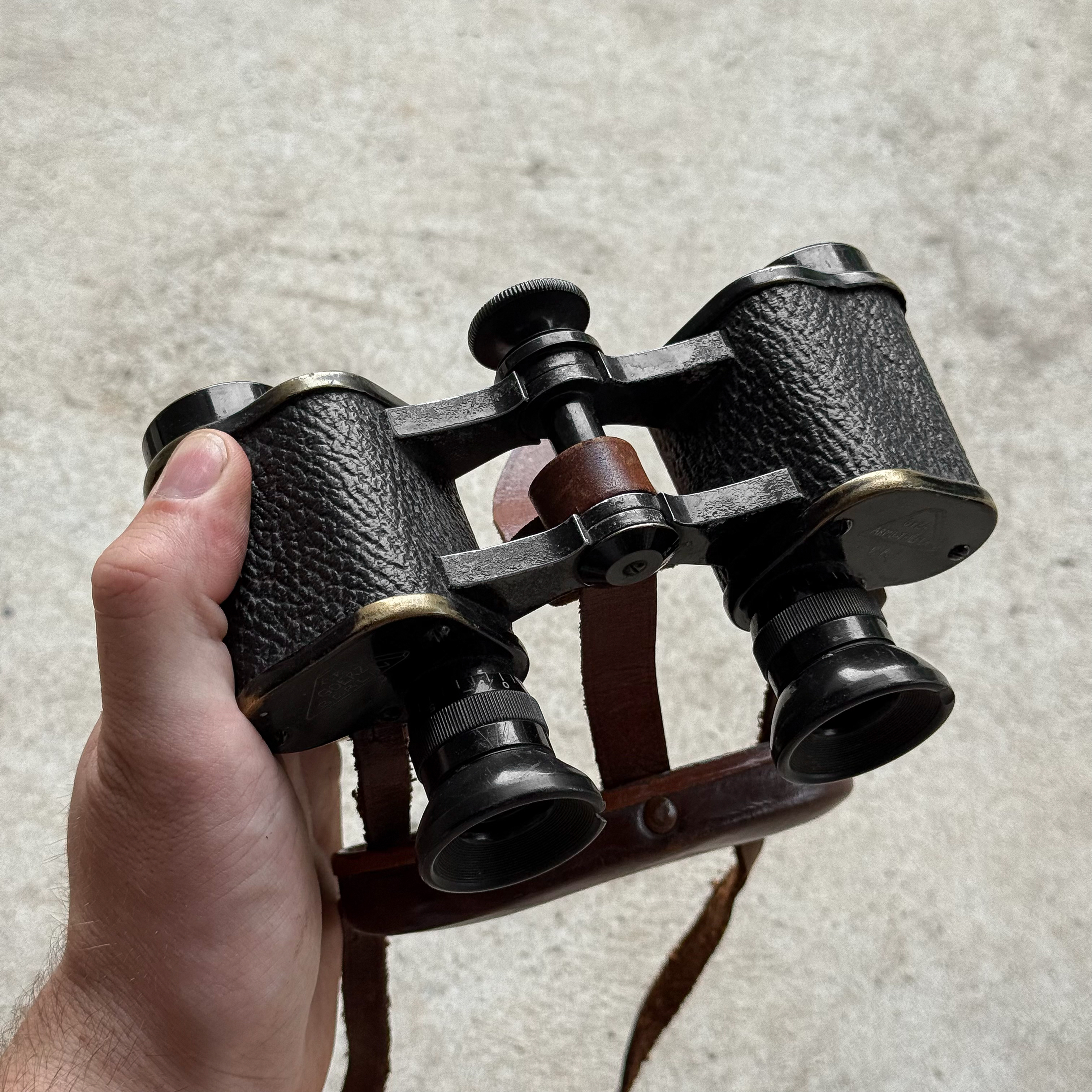
Antique 1916 WWI era Goerz Berlin “Armee Triëder D.R.P.” Binoculars
An authentic pair of Goerz Berlin “Armee Triëder D.R.P.” binoculars, manufactured by C. P. Goerz in Berlin in 1916. Produced during the First World War, this example was issued to the Swiss Army, reflecting the exceptional quality and precision for which Goerz optical instruments became renowned.
The binoculars are complete with their original leather carrying case, embossed “Fried Bigler – Bern – 1916”.The combination of the original optics and period case makes this a highly collectible set for enthusiasts of military history and antique scientific instruments.
A fine example of early 20th century optical craftsmanship, these binoculars would make an excellent addition to a military collection, cabinet of curiosities, study, library, or refined vintage interior. They also make a wonderful display piece for collectors of First World War memorabilia and historical optical equipment.
After more than a century, the binoculars remain in good antique condition and display expected signs of age and use, consistent with their history. Both the metalwork and the original leather case have developed a beautiful patina over time, enhancing their authentic character and historical appeal. Please examine the photographs carefully, as they form an integral part of the description and condition report.
Measurements:
Width: 15.5 cm
Length: 10 cm
Heigth: 4.5 cm
Case: 18 x 14.5 x 6.5 cm
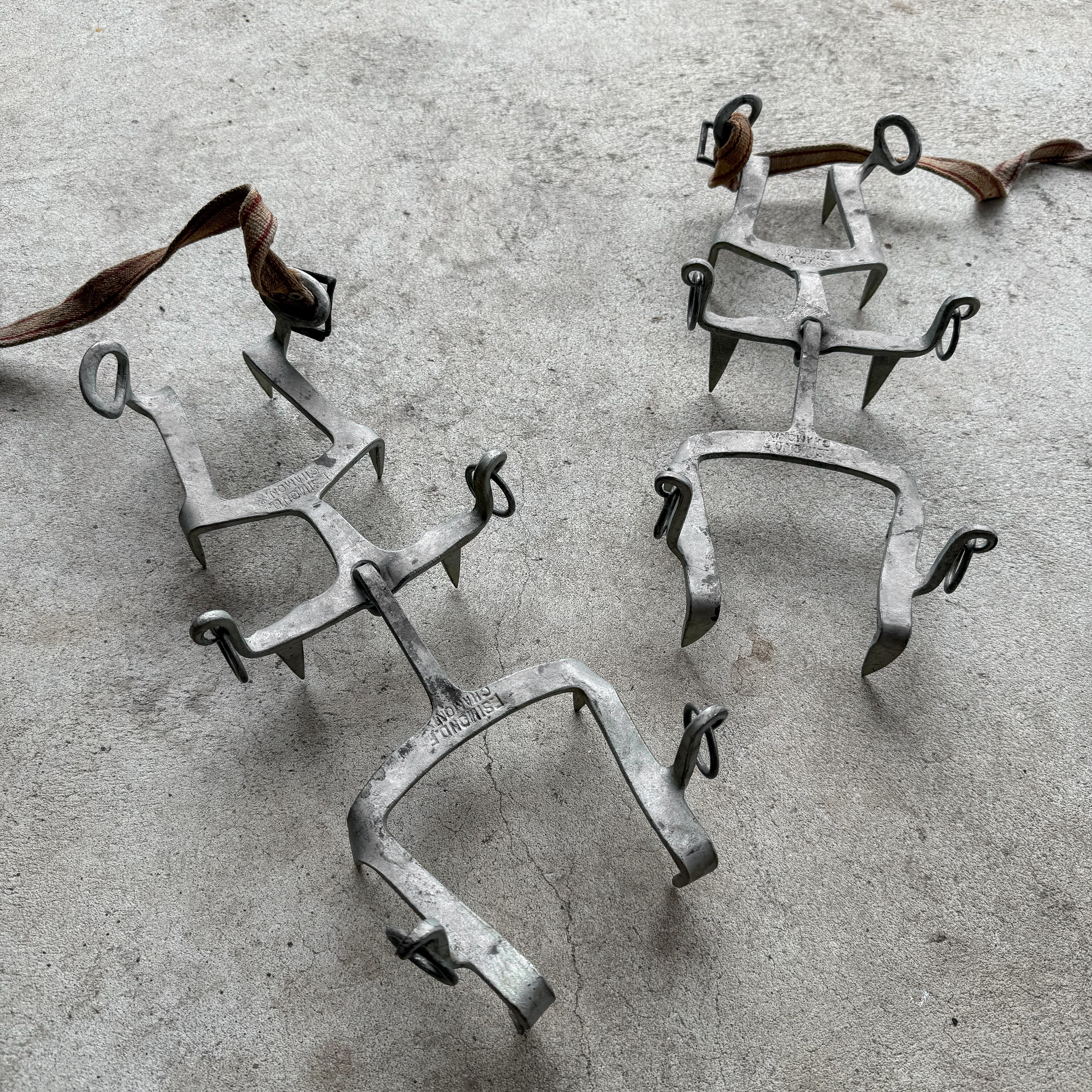
These authentic glacier crampons were used by mountaineers to provide grip on ice and snow, with sharp spikes preventing slips during alpine climbs. Worn beneath sturdy boots, they were essential equipment for navigating glaciers and steep terrain.
Hand-forged in Chamonix during the 1930s, this pair was crafted by the renowned French mountaineer and equipment maker Claudius Simond – a highly respected figure in the Mont Blanc region and a pioneer in early alpine gear.
Today, these vintage crampons make striking decorative pieces, perfect for adding character to a cabin, lodge, or mountain inspired interior.
After almost a century, they remain in good condition and have developed a beautiful, authentic patina that enhances their historical appeal. The metal has been carefully treated with antique wax, providing a protective layer and a subtle, refined sheen.
An elegant pair of antique binoculars manufactured by Colmont in Paris, France, dating to the 1920s. Crafted with quality materials and fine attention to detail, they reflect the craftsmanship of early 20th-century French optical instruments. The binoculars are complete with their original brown leather carrying case and leather neck strap.
A wonderful addition to any collection of antique binoculars, optical instruments, or scientific memorabilia, and a thoughtful gift for a collector, adventurer, or history enthusiast.
After more than a century, the binoculars remain in good antique condition and display expected signs of age and use consistent with their history. The metal and leather have developed a beautiful patina over the years, enhancing their authentic character and vintage appeal. The original leather case also shows age-related wear, further reflecting the set’s long and fascinating history.
Please examine the photographs carefully, as they form an integral part of the description and condition report.
Measurements:
Width: 15.5 cm
Length: 12.5 cm
Case: 17.5 x 14.5 x 8 cm
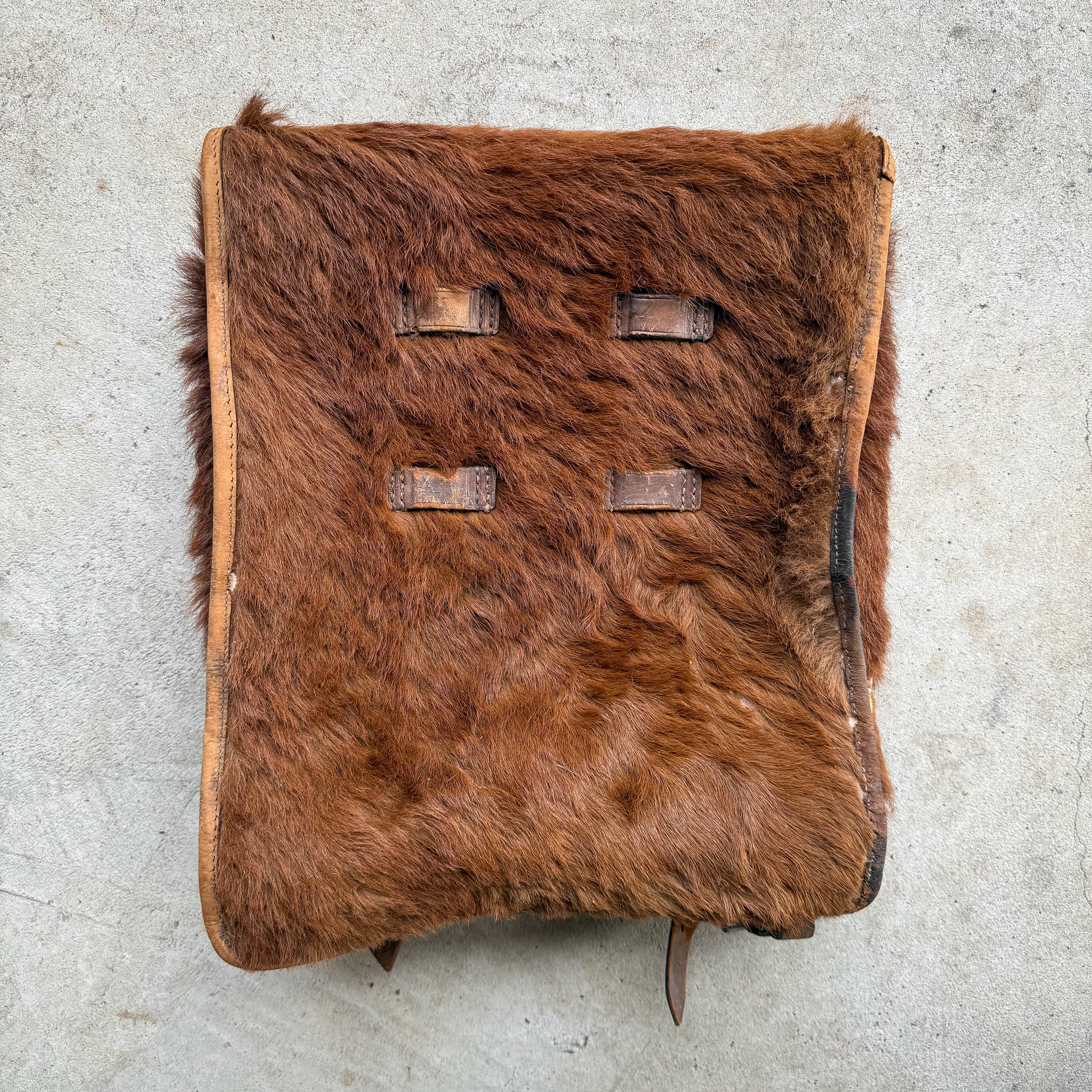
This rugged military Tornister rucksack was issued in the late 1930s, just prior to the outbreak of the Second World War, and was presumably used during the war years. Constructed from sturdy canvas with a cowhide outer covering, it features the classic foldable design with multiple compartments, offering both practicality and durability.
A distinctive and highly collectible piece of military history, this rucksack would make an excellent addition to any WWII or militaria collection.
After more than 90 years, the rucksack remains in worn but authentic condition, showing clear signs of age and use. Over time, it has developed a rich patina that enhances its historical character and appeal. Two leather straps that originally secured the inner flaps have torn away from the fabric, and the pin of one shoulder-strap buckle is broken. The cowhide has been treated and is completely free of any insect activity.
Despite these imperfections, the piece retains its strong display value and serves as a tangible reminder of a significant period in history.
Measurements:
Width: 30.5 cm
Heigt: 38 cm
Depth: 8 cm
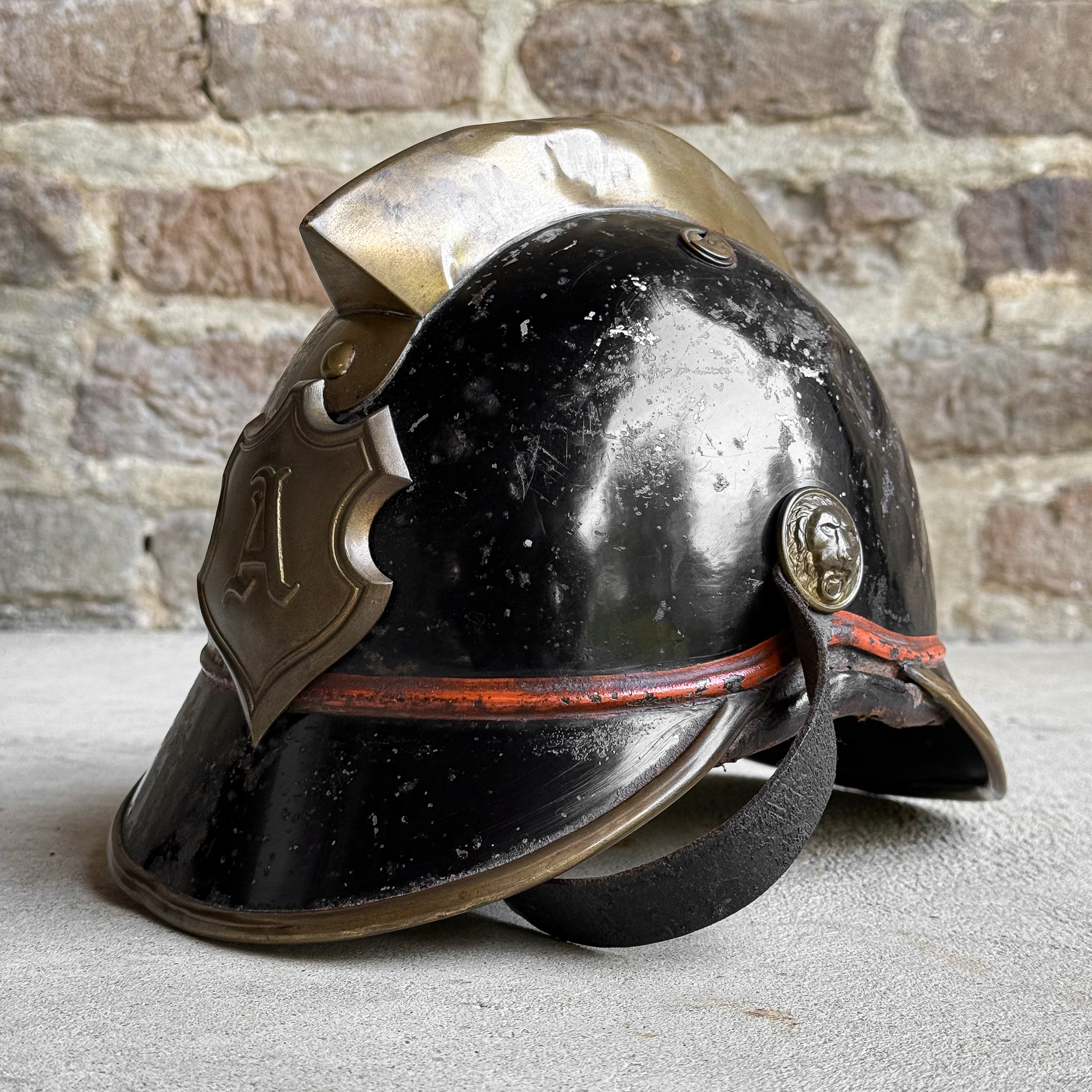
This original helmet was issued to the Bavarian fire brigade in the early 1900s and is a fine example of early 20th century firefighting equipment. Its simple yet functional design features a characteristic brass comb crest on top, along with an original leather interior liner for a secure and comfortable fit. The front displays a brass shield plate marked with a capital “A”.
A highly decorative and authentic piece, this helmet would make an excellent addition to any firefighter collection or serve as a striking feature in a rustic or industrial style interior.
After more than a century, the helmet remains in good antique condition, showing clear signs of age and use consistent with its history. Over time, it has developed a beautiful patina that enhances its character and historical appeal. The surface has been treated with antique wax, providing protection and a subtle soft sheen.
Measurements: Height: 19 cm Width: 16 cm Length: 23 cm
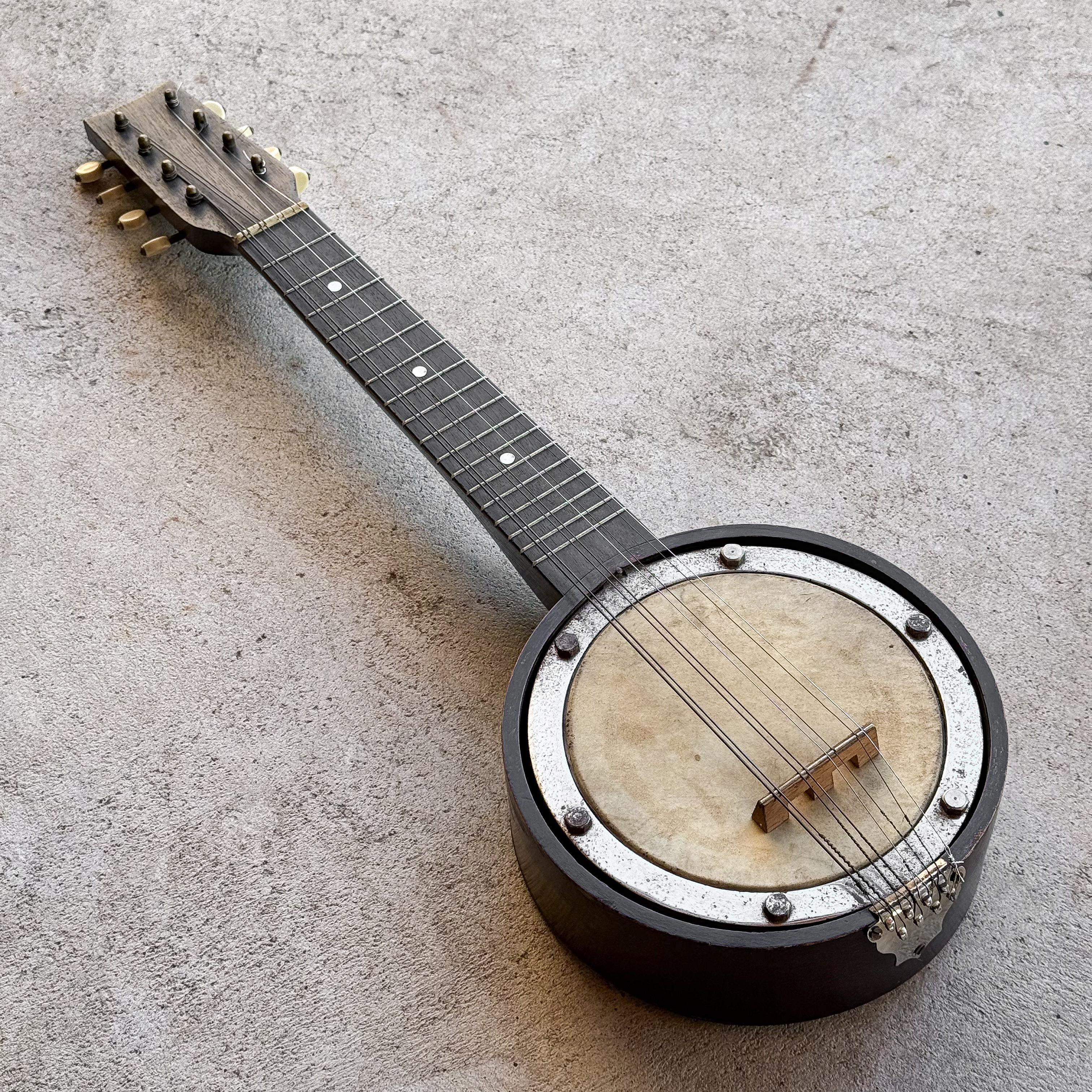
This instrument is a fine example of 1930s luthier craftsmanship. It comes complete with its original hard case.
A truly decorative piece of musical history, perfect for adding character to a lodge, cabin, or eclectic interior.
The banjolin shows signs of wear consistent with age and use, which add to its authentic vintage appeal. Aside from light, careful cleaning, it has been left in its original condition, allowing the next owner to either enjoy it as-is or restore it further according to their preference.
Measurements:
banjolin length: 51 cm
Neck length: 35 cm
banjolin width: 17 cm
This charming antique compass dates back to the 1920s and features a solid brass case with a folding cover and a transit lock. The compass comes with an original matching 1920s watch chain, making it ideal for attaching to a vest or other garments.
Whether you’re looking for a practical hiking companion, a unique pendant, or a decorative display piece, this compact compass is both functional and full of history.
The compass remains in good working condition and still reliably points north. Over the years, the brass case has developed a beautifully aged patina that adds to its antique appeal and character.