This pocket sized compass dates back to the World War II era and was likely military issued. It features a solid brass case with a glass cover and is equipped with a side mounted transit lock.
Still fully functional, it can accompany you on new adventures or be worn as a unique and characterful pendant.
After more than 80 years, the compass remains in good condition, showing light, age-appropriate wear. Over time, it has developed a subtle patina that enhances its character and authentic vintage appeal.
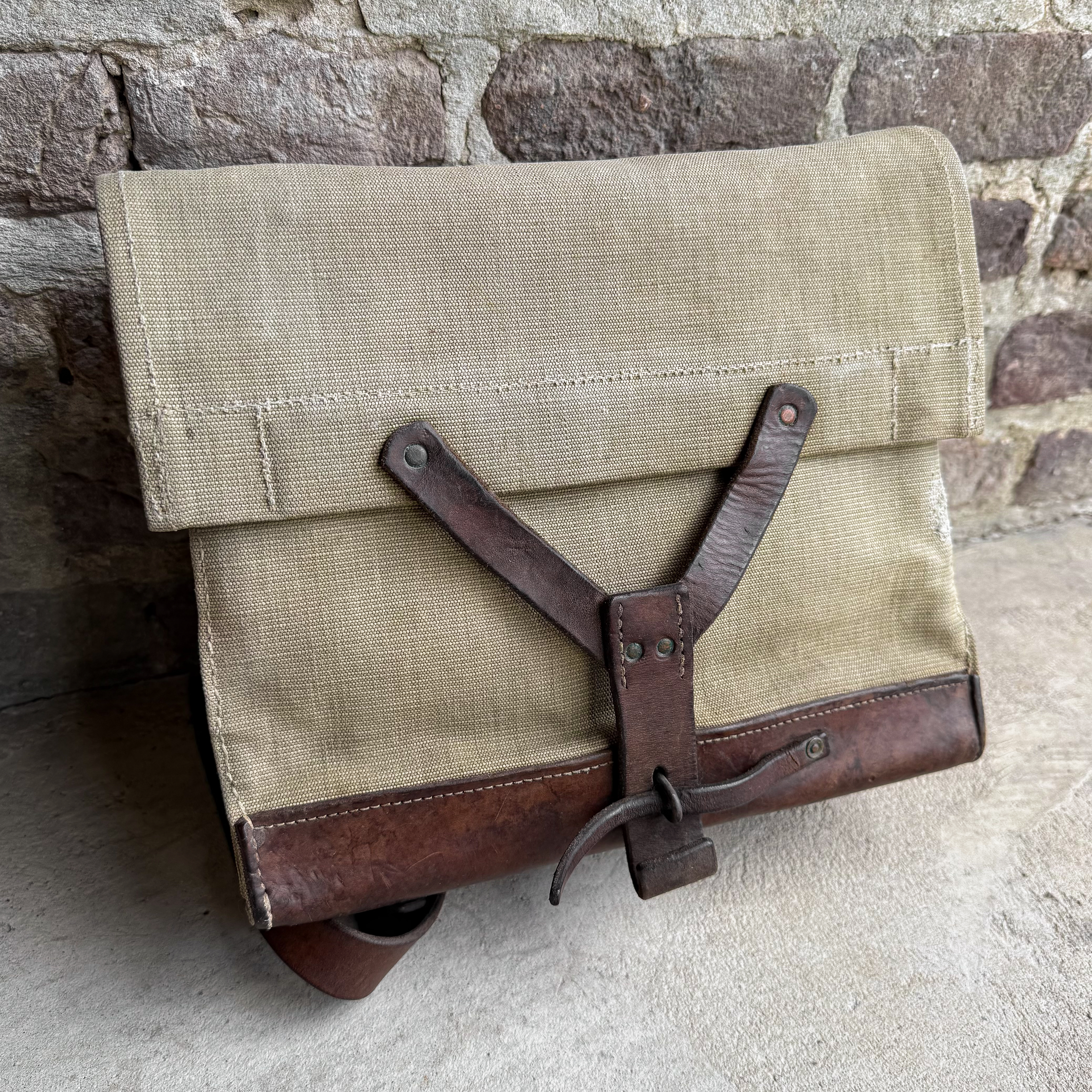
This rucksack was issued by the Swiss Army around World War II and is a fine example of early military field gear.
The bag features one large main compartment, two shoulder straps, and a sturdy top handle. It is made from durable canvas, while the base and fastening straps are crafted from thick saddle leather.
This rucksack would still make an excellent everyday bag and is also well-suited for day hikes or outdoor use.
After around a century, the bag remains in used but solid condition and shows clear signs of age and wear. Both the canvas and leather have developed a beautiful patina over time, adding to its authentic character. Built to withstand years of use, this piece still has plenty of life left.
The canvas has been carefully cleaned, and the leather parts have been treated with saddle soap and leather grease to keep them supple.
Measurements:
Height: 27 cm
Width: 30 cm
Depth: 17 cm
This charming vintage pocket compass features a solid brass case and was made in West Germany in the 1950s.
Still fully functional, it can accompany you on new adventures or be worn as a unique pendant.
After more than 70 years, the compass remains in good condition. It has developed a light patina over time, adding to its character and vintage appeal.
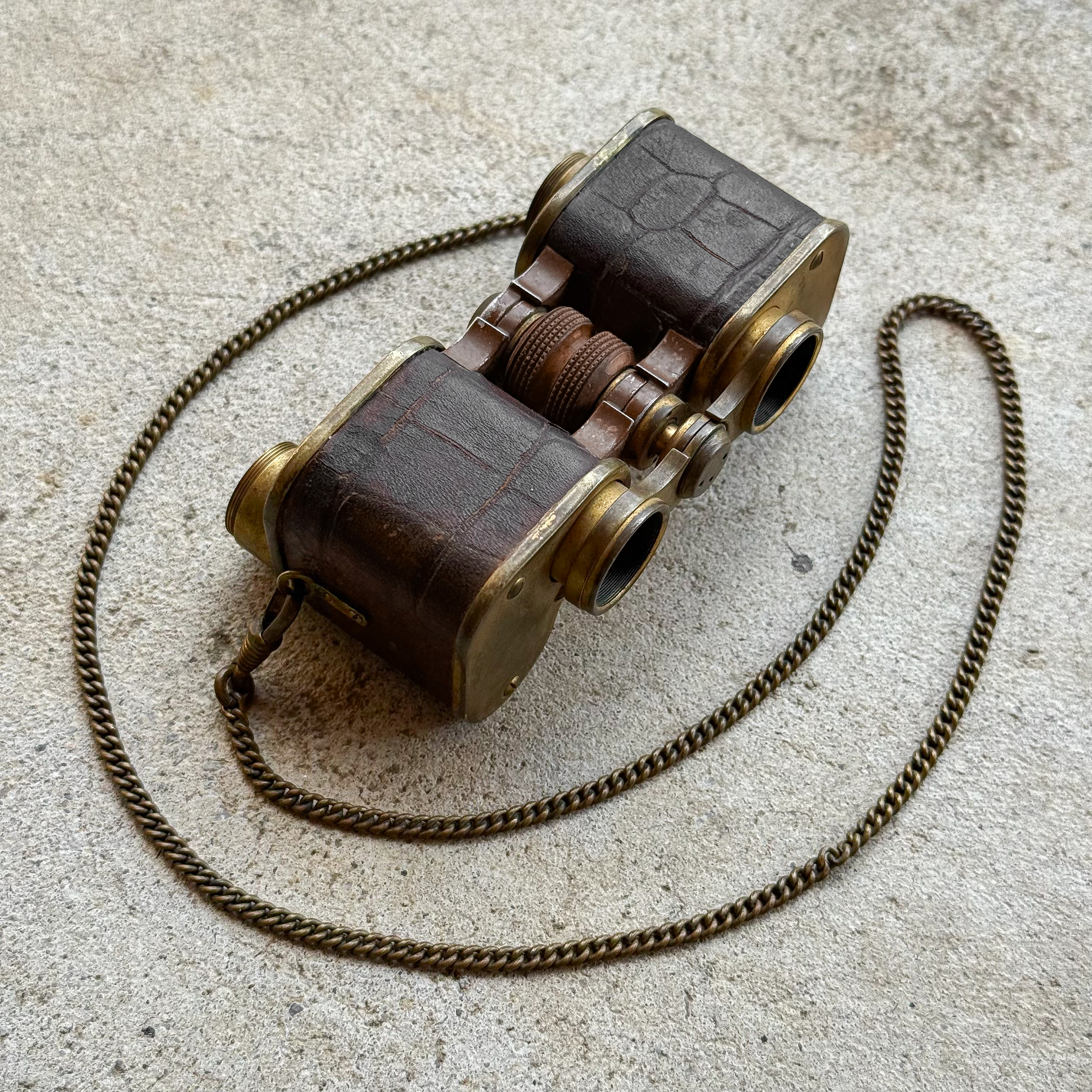
Antique early 1900s C.P. Goerz 3 1/3 Fago binoculars
These unique theatre glasses were produced by C. P. Goerz in Berlin in the early 20th century. They feature an elegant design, with a brass body complemented by a leather covering embossed in a crocodile pattern.
A fine example of early optical craftsmanship, these binoculars would make a perfect addition to any collection of scientific instruments, a cabinet of curiosities, or a classic, refined interior.
After more than a century, the binoculars remain in good antique condition, showing expected signs of age and use. Over time, they have developed a beautiful patina that enhances their character and historical appeal.
Measurements:
Width; 9.3 cm
Length: 5.6 cm
Heigth: 3.6 cm
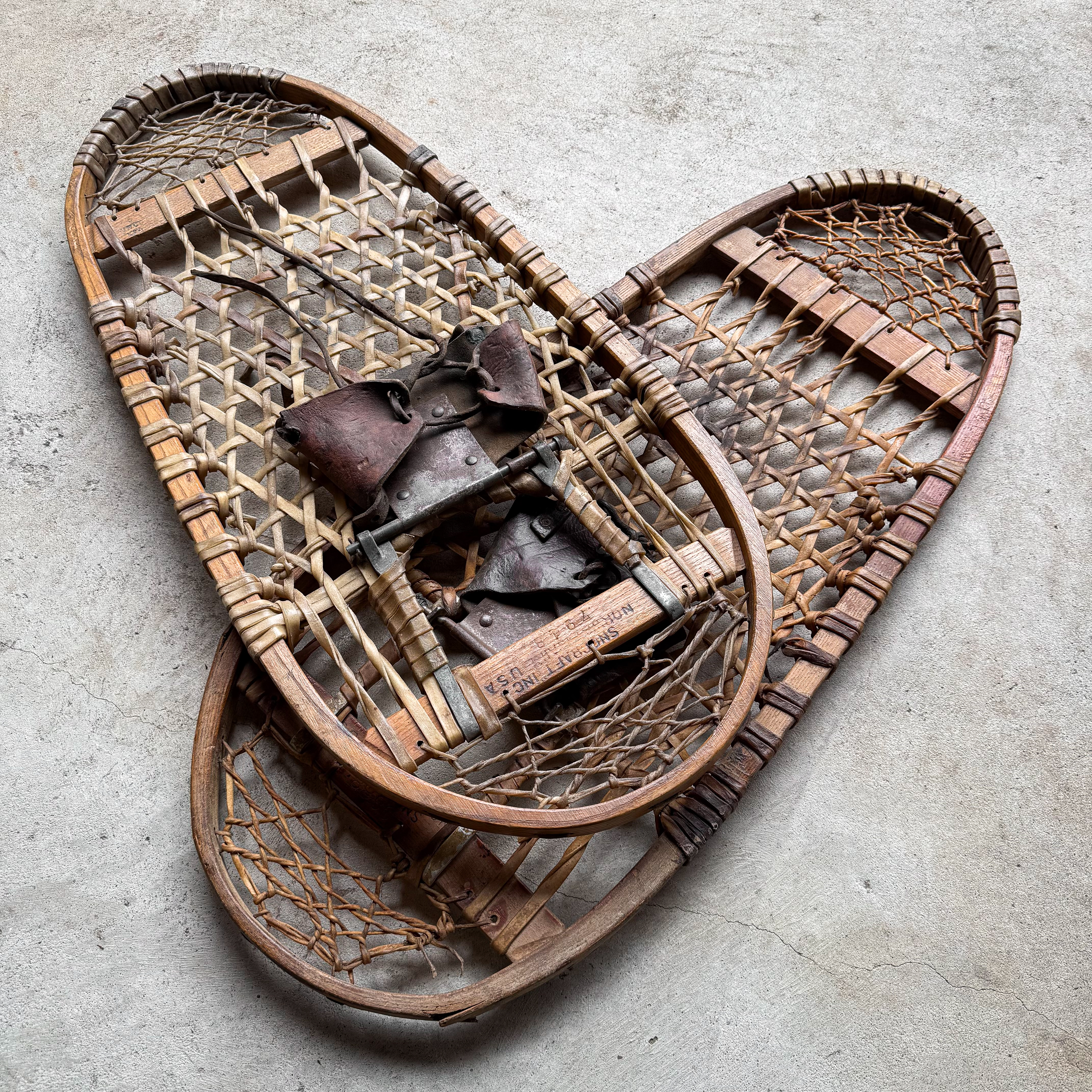
These iconic “bear paw” snowshoes were handmade by Snocraft Inc. in Norway, Maine. They were issued by the U.S. Army during the Second World War to the 10th Mountain Division, which fought in the Italian Alps.
Their design was inspired by traditional Native American craftsmanship and features classic rawhide latticework stretched over wooden frames.
These snowshoes would make striking decorative pieces above a fireplace or displayed on the wall of a cabin, lodge, or man cave.
After more than 70 years, they remain in worn condition, showing clear signs of age and use. One of the snowshoes has a small crack in the upper right corner. They have been carefully cleaned and treated with antique wax, providing a protective layer and a subtle, soft sheen. All leather components have been conditioned with grease to help preserve their suppleness and durability.
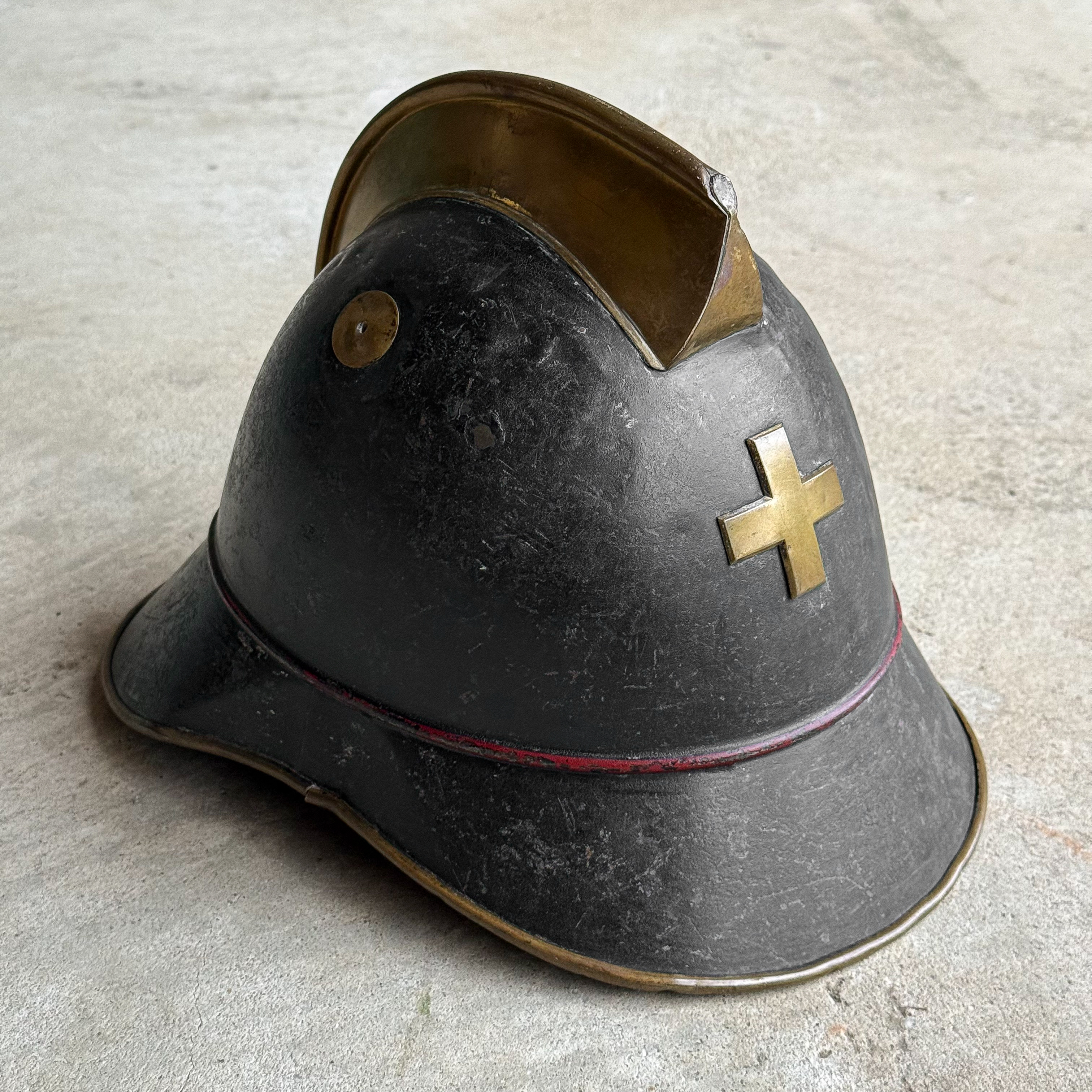
This original helmet was issued by the Swiss fire brigade in the early 1900s and stands as a fine example of early 20th century firefighting equipment.
Its design is both simple and functional, featuring a characteristic brass comb crest along the top, an interior leather liner for a secure and comfortable fit, and a prominent Swiss cross emblem at the front.
A highly decorative and authentic piece, it would make a striking addition to any firefighting collection or serve as a distinctive accent in a rustic or industrial-style interior.
After more than a century, the helmet remains in good antique condition, showing clear signs of age and use. Over time, it has developed a rich, beautiful patina that enhances its character and historical appeal. The surface has been carefully treated with antique wax, providing a protective layer and a subtle, soft sheen.
Measurements:
Height: 22 cm
Width: 19.5 cm
Lenght: 26 cm
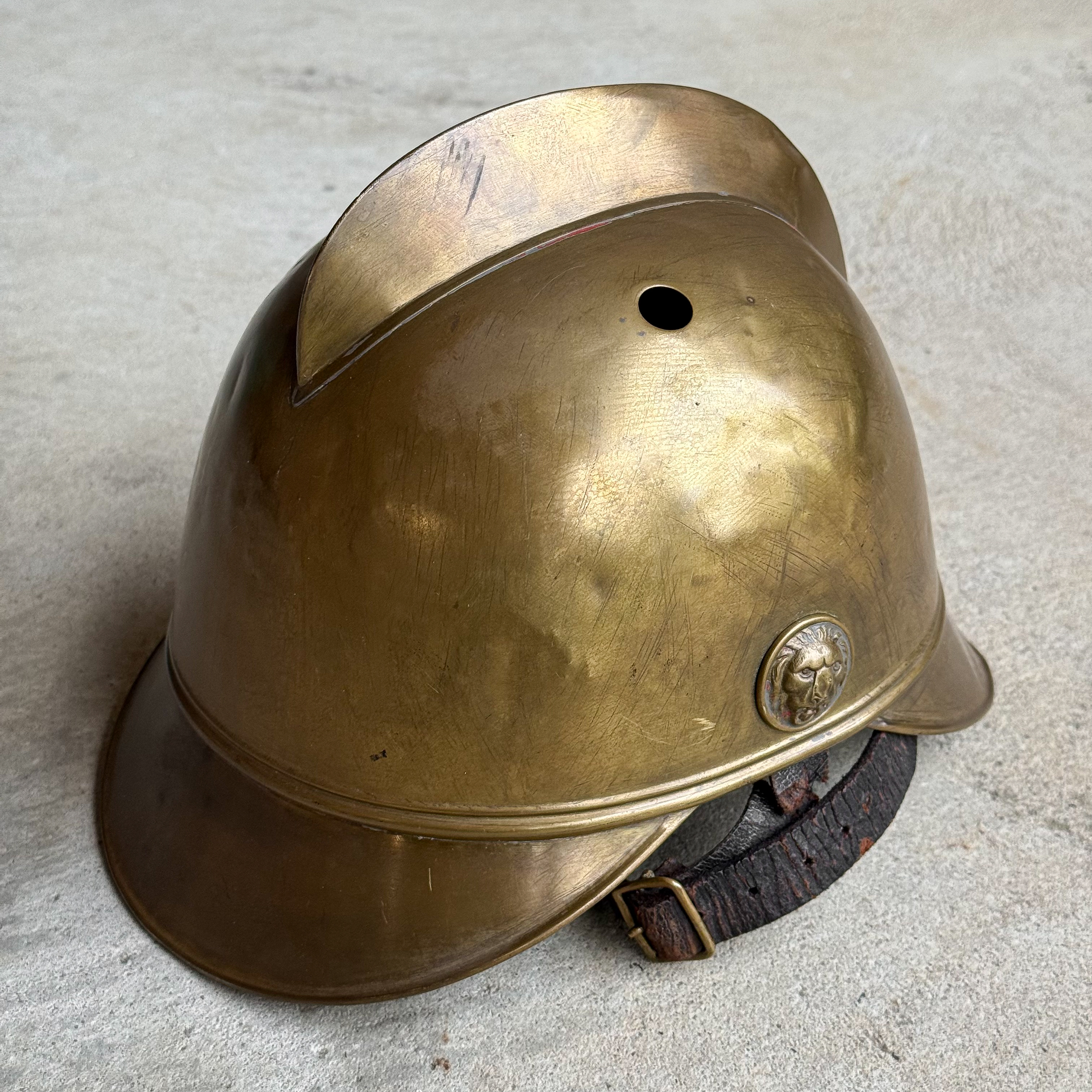
This original brass helmet was issued by the Bavarian fire brigade in the early 1900s and is a fine example of early 20th century firefighting equipment. It was made by Conrad Dietrich Magirus, who was a famous German fire brigade pioneer and entrepreneur.
Its simple yet functional design features a characteristic comb crest on top, along with a leather neck guard and an interior leather liner for a secure and comfortable fit.
A highly decorative and authentic piece, it would make a great addition to any firefighter collection or a rustic or industrial-style interior.
After a century, the helmet remains in good antique condition, showing clear signs of age and use. Over time, it has developed a beautiful patina that enhances its character and historical appeal. The surface has been treated with antique wax, providing a protective layer and a subtle, soft sheen.
Measurements:
Height: 18 cm
Width: 17 cm
Lenght: 24.5 cm
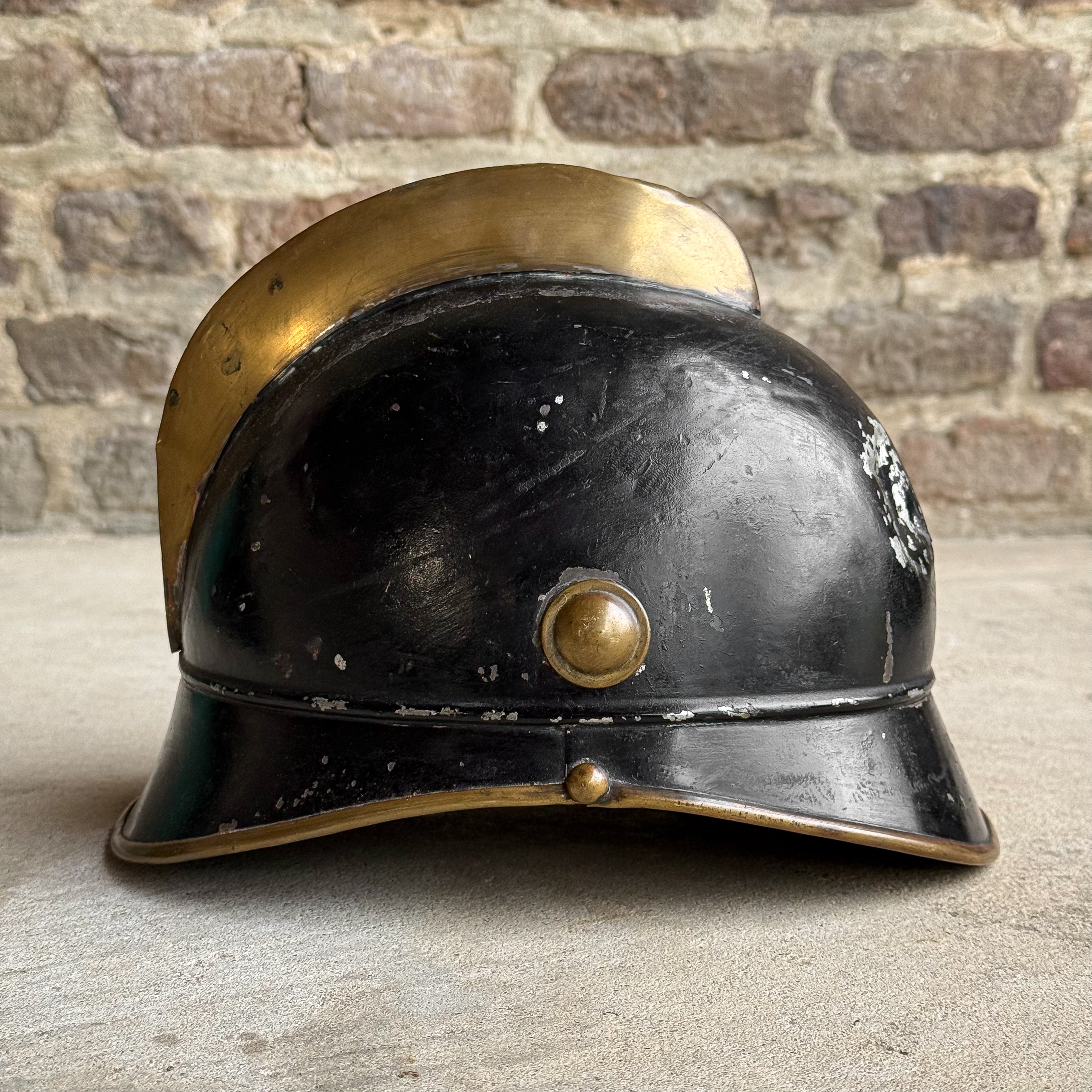
This original helmet was issued by the German fire brigade in the early 20th century and is a fine example of period firefighting equipment.
Its simple yet functional design features a characteristic brass comb crest on top, along with an interior leather liner for a secure and comfortable fit.
A highly decorative and authentic piece, it would make a great addition to any firefighter collection or a rustic or industrial style interior.
After more than a century, the helmet remains in good antique condition, showing clear signs of age and use. Over time, it has developed a beautiful patina that enhances its character and historical appeal. The surface has been treated with antique wax, providing a protective layer and a subtle, soft sheen.
Measurements:
Height: 19.5 cm
Width: 17.5 cm
Lenght: 24 cm
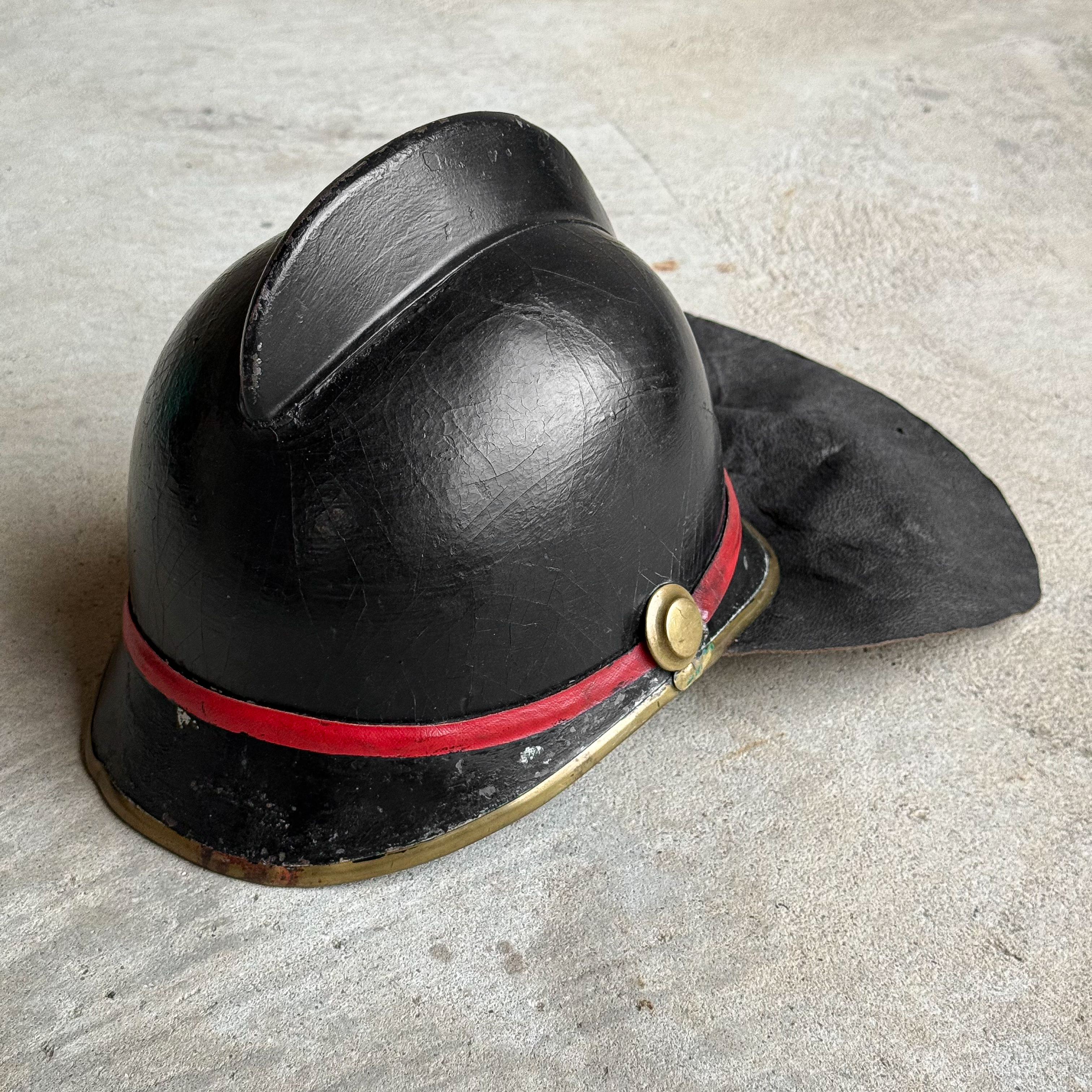
This original helmet was issued by the German fire brigade in the early 20th century and is a fine example of period firefighting equipment.
Its simple yet functional design features a characteristic comb crest on top, along with a leather neck guard and an interior leather liner for a secure and comfortable fit.
A highly decorative and authentic piece, it would make a great addition to any firefighter collection or a rustic or industrial style interior.
After more than a century, the helmet remains in good antique condition, showing clear signs of age and use. Over time, it has developed a beautiful patina that enhances its character and historical appeal. The surface has been treated with antique wax, providing a protective layer and a subtle, soft sheen.
Measurements:
Height: 19.5 cm
Width: 17.5 cm
Lenght: 24 cm
These authentic glacier crampons were used by mountaineers to provide grip on ice and snow, with sharp spikes preventing slips during alpine climbs. Worn beneath sturdy boots, they were essential equipment for navigating glaciers and steep terrain.
Hand-forged in Chamonix during the 1950s, this pair was crafted by the renowned French mountaineer and equipment maker Claudius Simond – a highly respected figure in the Mont Blanc region and a pioneer in early alpine gear.
Today, these vintage crampons make striking decorative pieces, perfect for adding character to a cabin, lodge, or mountain inspired interior.
After more than 70 years, they remain in good condition and have developed a beautiful, authentic patina that enhances their historical appeal. The metal has been carefully treated with antique wax, providing a protective layer and a subtle, refined sheen.
Size 40 – 41
Measurements:
Length: 6 cm
Width: 11.5 cm
This antique riding spur is a fine example of early Spanish craftsmanship, hand-forged with great skill and attention to detail.
It is a unique piece that would make a striking addition to any cabinet of curiosities or a western-themed interior.
After more than a century, the spur remains in good antique condition and displays a beautiful rustic patina acquired through time and use. The iron has been treated with antique wax, providing a protective layer and a subtle, soft sheen.
This rare medical instrument was crafted in the late 1800s by the French maker Oger A Couterne. Fleam knives were commonly used by physicians and barbers for bloodletting, a now-obsolete practice once believed to “relieve stress from the heart” and treat various ailments.
Today, it stands as a fascinating relic of medical history – a tangible reminder of how different healthcare once was. It would make a remarkable addition to any medical collection, museum display, or cabinet of curiosities.
Despite being over a century old, this fleam remains in good condition. It shows light signs of wear consistent with age, and over the years it has developed a subtle oxidized patina that enhances its character and authenticity.