This unusual antique pendant features a beautifully polished canine tooth set in a silver mount. The pendant was given as a personal gift by the owner of a hunting club in Berlin during the 1930s, adding a fascinating piece of personal history to this already distinctive object.
Unfortunately, the exact species the tooth originates from is unknown. Based on its size and shape, I suspect it may have belonged to a large feline, although this cannot be confirmed. Its unknown origin only adds to the mystery and character of the piece.
It would make a truly unique pendant when worn on a necklace, or an intriguing addition to a collection of antique curiosities, hunting memorabilia or natural history objects.
After almost a century, the pendant remains in good antique condition. Over the decades, the silver mount has developed a beautiful natural patina, which enhances its aged appearance and adds to its antique charm and character.
This unique vintage handbag was created from an original 1967 ammunition pouch, originally issued by the Swiss military. The original military pouch has been thoughtfully converted into a practical everyday bag and fitted with a matching leather shoulder strap.
The bag has been further decorated with charming metal Alpine symbols, featuring an edelweiss flower and a mountain ibex. These details complement the rugged military character of the original pouch while giving the bag its own distinctive and stylish appearance.
Combining practical functionality with authentic vintage character, this would make a wonderful everyday bag and a unique accessory to complement a vintage, rustic or rugged clothing style.
After almost 60 years, the bag remains in good vintage condition and shows only minor signs of age and use. The original pouch retains its authentic character, while the added details give it a unique new life as a one-of-a-kind vintage accessory.
Measurements:
Width: 21.5 cm
Heigth: 10.5 cm
Depth: 4.5 cm
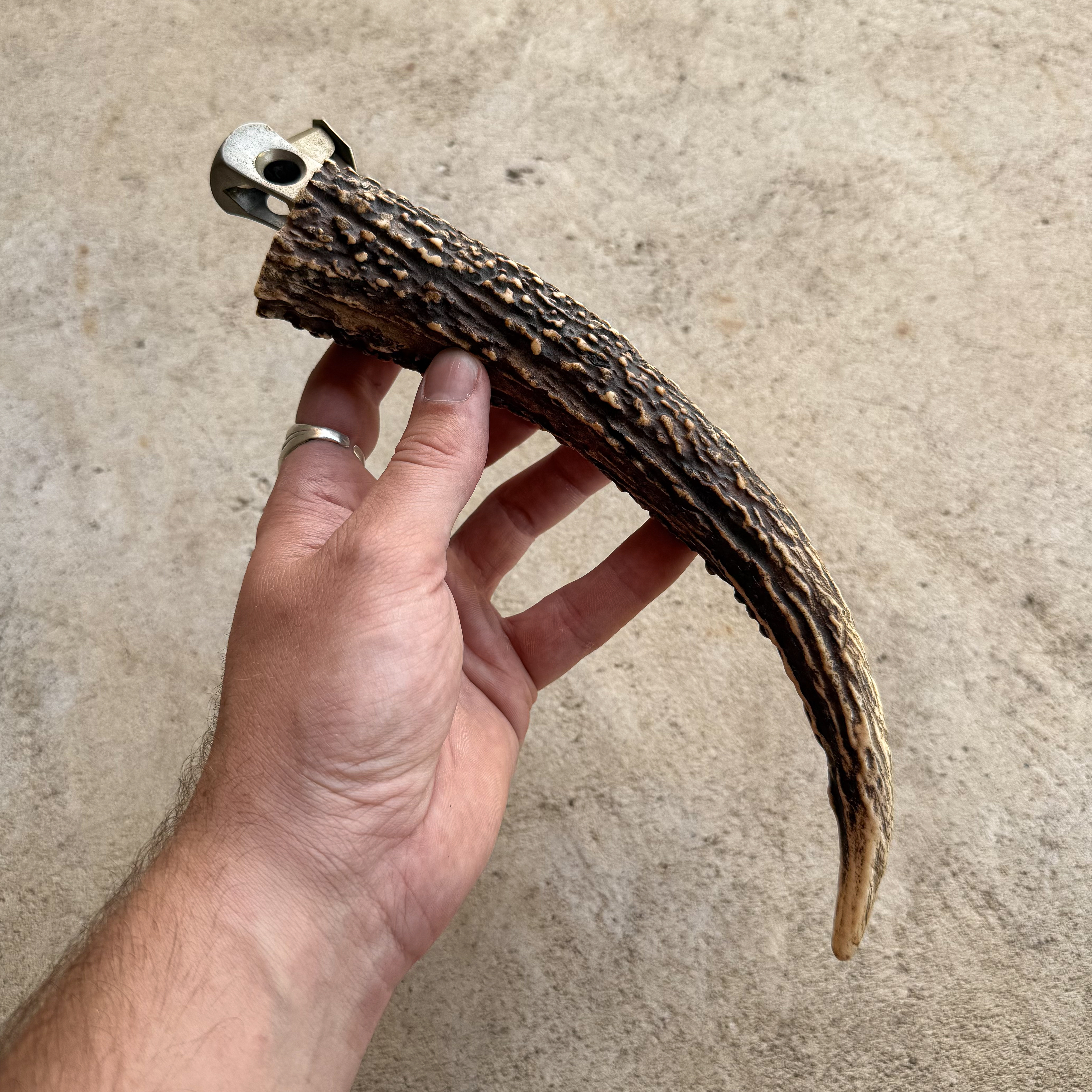
This robust cigar cutter was crafted in Germany in the 1930s. It features a beautifully aged stag horn handle paired with chrome hardware. The combination gives the piece a timeless character and a distinctive vintage appearance.
A wonderful functional object with plenty of character, it would make an excellent gift for a cigar enthusiast or a unique addition to a collection of vintage smoking accessories.
After more than 90 years, the cutter remains in good vintage condition and shows light overall signs of age and use. Over the decades, the stag horn and metal components have developed a warm natural patina that only enhances the piece’s vintage character and charm.
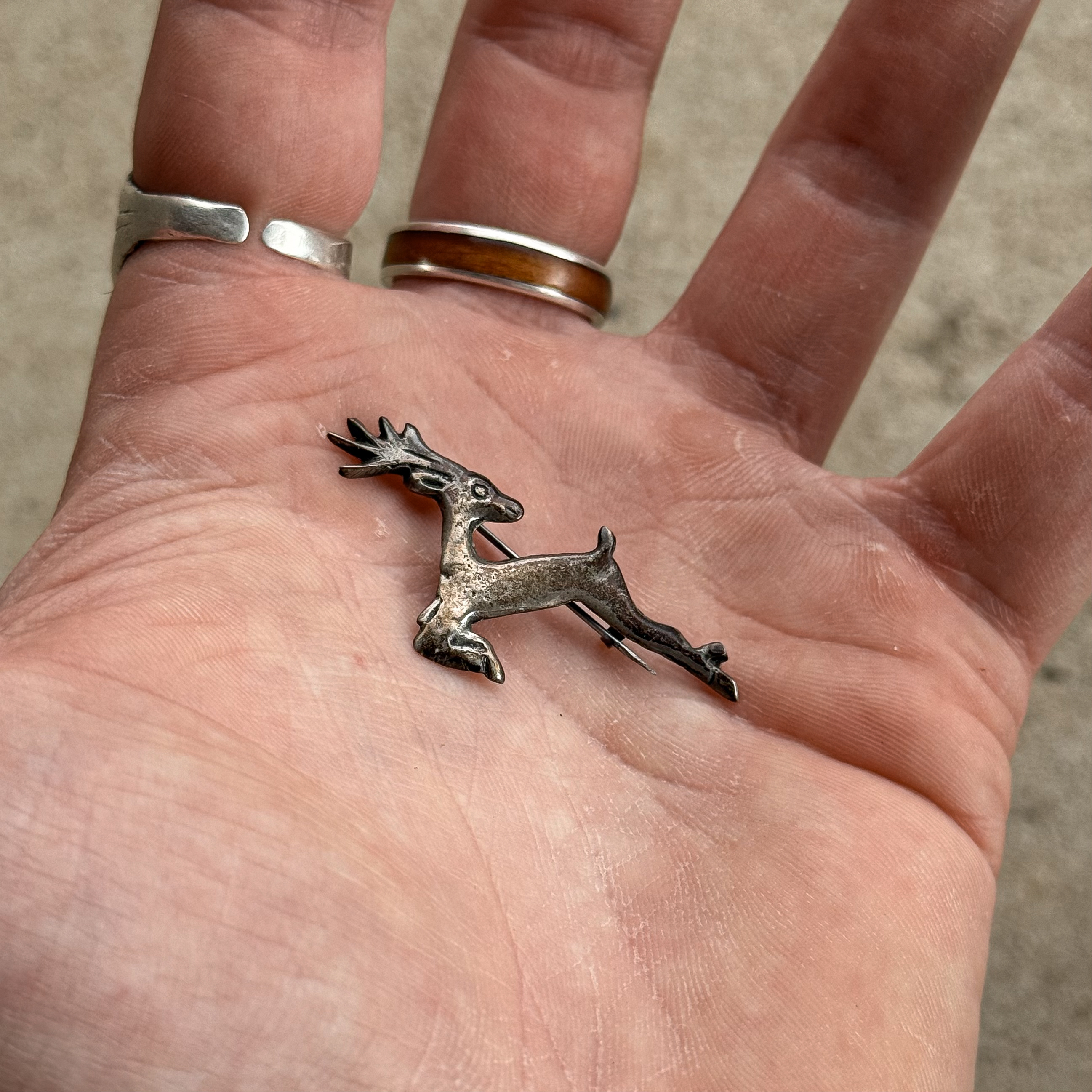
This unique vintage brooch was crafted in Mexican silver and dates from the 1960s. It features a beautiful Native American-inspired design depicting a white tailed deer, giving the piece a distinctive rustic and naturalistic character.
The combination of the traditional silverwork and rugged deer motif makes this a particularly charming accessory. It would be the perfect brooch to complement a vintage, rugged or outdoors-inspired wardrobe, and would also make a wonderful addition to a collection of vintage silver jewellery.
After more than 60 years, the brooch remains in good vintage condition and shows only minor signs of age and use. Over the decades, the silver has developed a beautiful natural patina, which enhances the details of the design and, in my opinion, only adds to its character and charm.
This sturdy and timeless leather tool bag dates from the 1960s. It features a spacious main compartment, originally intended for carrying tools, but equally well suited for books, documents or a laptop. A strong shoulder strap allows the bag to be carried comfortably over the shoulder, while the sturdy leather handle on top offers an alternative way to carry it.
With its rugged, utilitarian design, this bag combines practicality with timeless vintage style. Its simple construction and durable leather make it a versatile everyday bag, while its authentic appearance also makes it a wonderful statement piece for any vintage collection.
After mora than 60 years, the bag remains in solid vintage condition and shows authentic signs of age and use. The rich patina developed over the decades adds considerably to its character and charm, while the sturdy construction reflects its original purpose as a practical working bag.
The leather has been carefully cleaned with saddle soap and treated with leather grease to nourish the material and help preserve its flexibility and natural appearance.
Measurements: Height: 27 cm Width: 39 cm Depth: 13 cm
Vintage juvenile fox taxidermy mount – ‘Vulpes vulpes’
This charming juvenile fox was professionally mounted in France and displays beautifully natural and lifelike characteristics. The taxidermist did an excellent job capturing the animal in a relaxed, natural looking position, standing upon a solid piece of tree trunk. The detailed pose and expression give the mount a wonderful sense of character.
This little chap deserves a nice home where he can be admired and appreciated! He would make a wonderful and unusual decorative piece, whether displayed in a country home, hunting lodge, cabin, or cabinet of curiosities. And of course, he makes an excellent guard pet — although we cannot guarantee he’ll be much help against intruders!
The fox remains in good vintage condition and shows authentic signs of age and wear. There was a small tear to the inside of the left hind leg, which has been carefully stitched and is now barely noticeable. Please see the photographs for the overall condition.
Measurements:
Height: 54 cm
Length: 82 cm
Width: 24 cm
This unique antique cigar box was made by the renowned Austrian ceramic artist Johann Maresch around 1880. Maresch (1821–1914) is particularly known for his distinctive ceramic and terracotta figures, many of which are highly characterful and richly detailed.
The box is made from Sidolith, a type of artificial stone developed and used by Maresch, and features a wonderfully unusual figural design. A mounted and armed cowboy is depicted sitting upon a large wooden crate marked “HABANA” and “COLORADO.” The unusual Western-inspired subject makes this an especially striking example of Maresch’s imaginative and often eclectic work. The underside bears the artist’s initials and serial number, “JM – 3375,”* adding to its authenticity and collector appeal.
Whether used as a cigar box or simply displayed as a decorative object, this remarkable piece would make a wonderful addition to a collection of antique ceramics, Western memorabilia, or a cabinet of curiosities. It would also make a unique statement piece in a rustic interior.
After almost 150 years, the box remains in worn antique condition and shows various authentic signs of age and use. Over the decades, the surface has developed a beautiful natural patina that adds considerably to its character and charm. Please note that there is a missing chip to the lower half, underneath the lid on the right side. This damage is visible in the photographs and is taken into account in the condition of the piece.
Measurements:
Heigth: 22 cm
Width: 16 cm
Depth: 14.5 cm
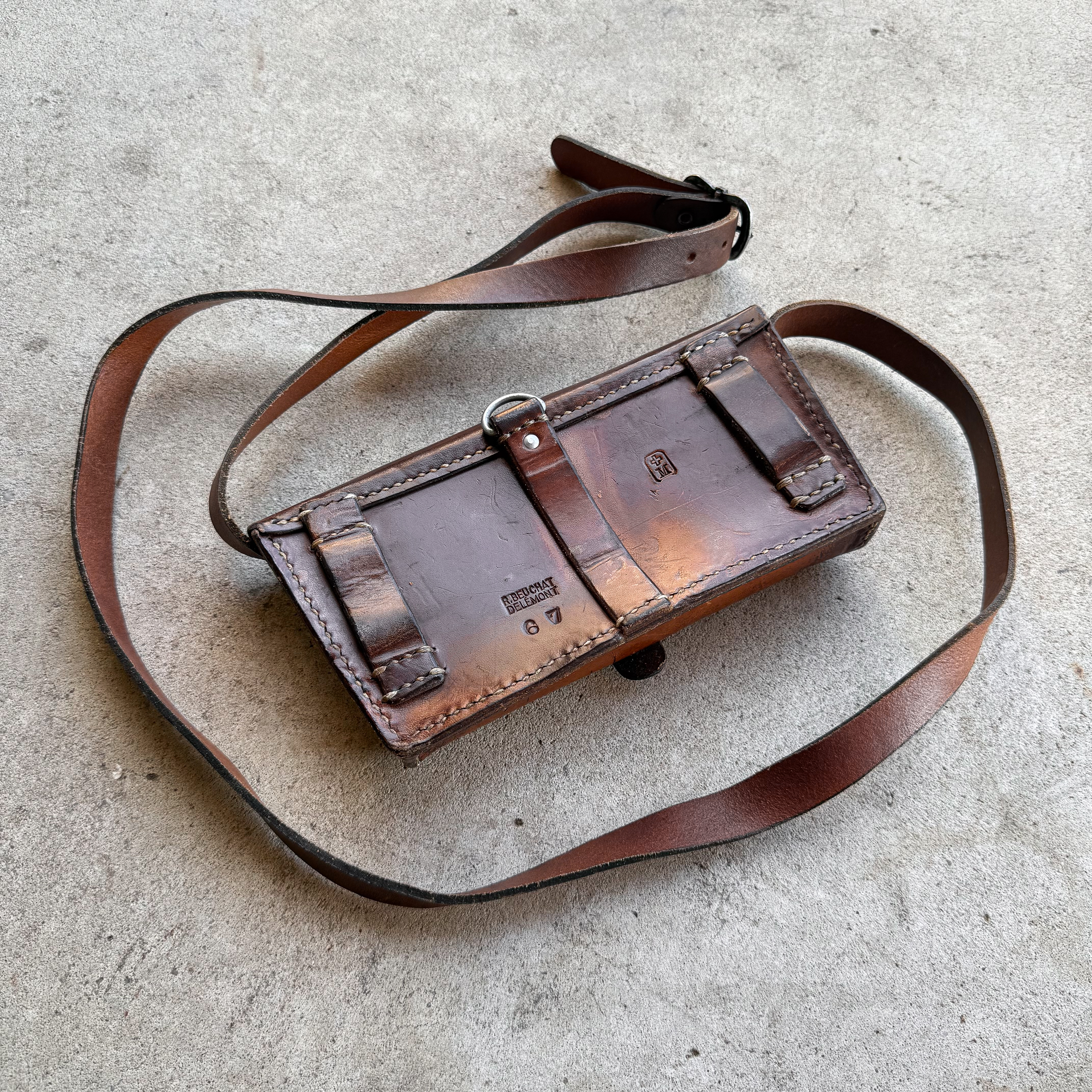
This vintage leather map bag was issued by the Swiss Army in the 1920s and was originally designed to carry and protect military maps and documents. Made from sturdy saddle leather, it was built with durability in mind and intended to withstand years of practical use in the field. We have added a vintage Swiss Army leather strap, making the bag ready to use and wear.
With its compact size and timeless military design, the bag also works beautifully as a small everyday handbag. Its simple, functional appearance makes it a stylish accessory for daily use while retaining all the character of an authentic military piece.
After almost a century, the bag remains in used vintage condition and shows various authentic signs of age and use. The leather has developed a rich natural patina over the decades, giving the bag plenty of character and charm. These marks and imperfections are part of its history and reflect the years of service it has seen.
The leather has been carefully cleaned and treated with leather grease to help preserve and condition it. Despite its age and previous use, the sturdy construction has stood the test of time and the bag remains ready for many more years of use.
Measurements:
Height: 18 cm
Width: 26 cm
Depth: 6.5 cm
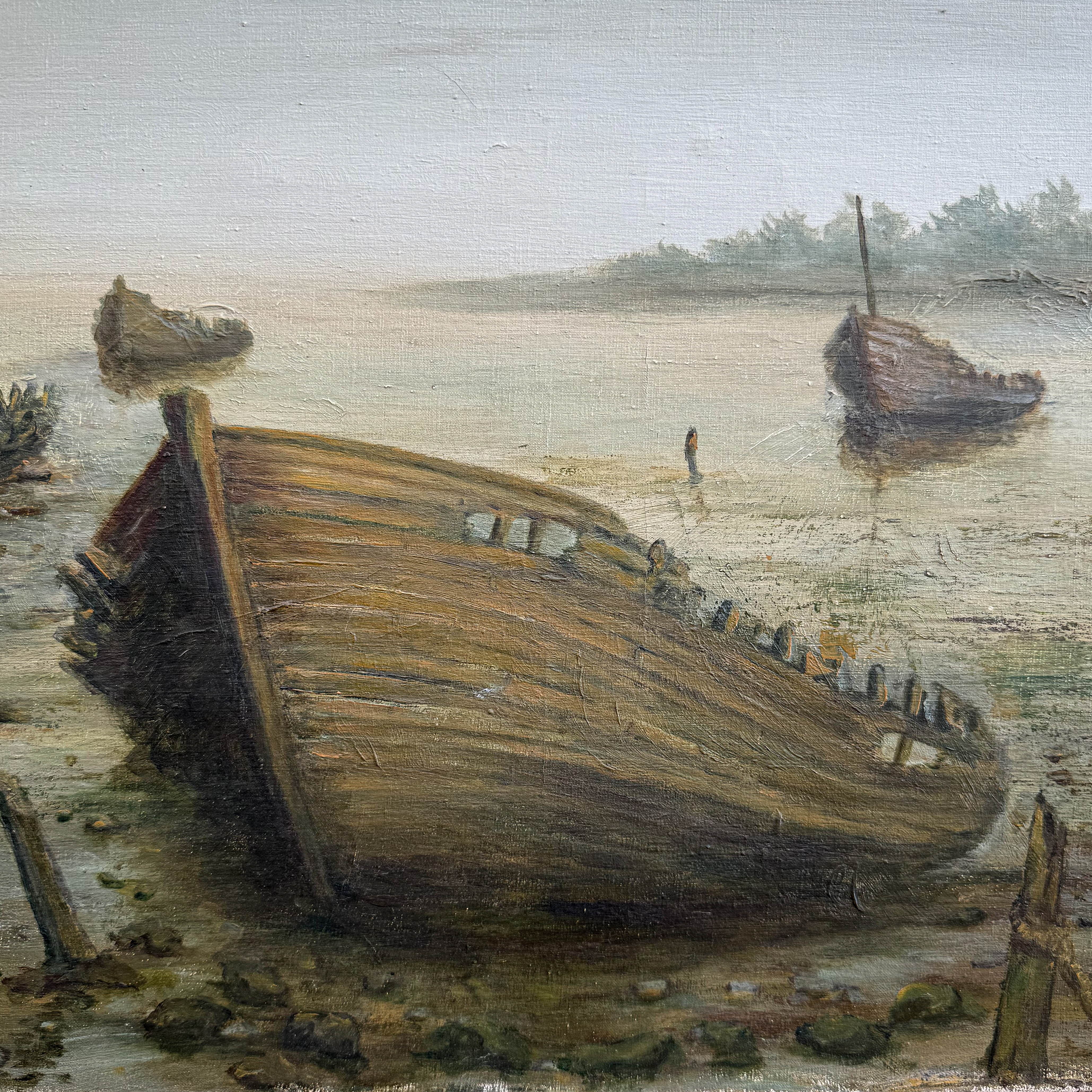
This charming antique oil painting depicts a coastal scene in Brittany, France, at low tide, with several old shipwrecks resting along the shore. The painting is signed by the French artist in the lower right corner, “Chateaugiron.”
The naive and somewhat rough painting style perfectly complements the rustic character of the scene, giving the work a wonderfully atmospheric and authentic appearance. The muted colours and simple composition evoke the rugged beauty of the Breton coastline and give the painting a distinctly nostalgic, early 20th-century feel.
A beautiful decorative piece that would make a wonderful addition to a rustic interior, coastal home, beach house, or collection of French vintage art.
After almost a century, the painting remains in good vintage condition and shows only minor signs of age and wear. Over the decades, the surface has developed a subtle natural patina, which enhances its aged character and adds to its overall charm.
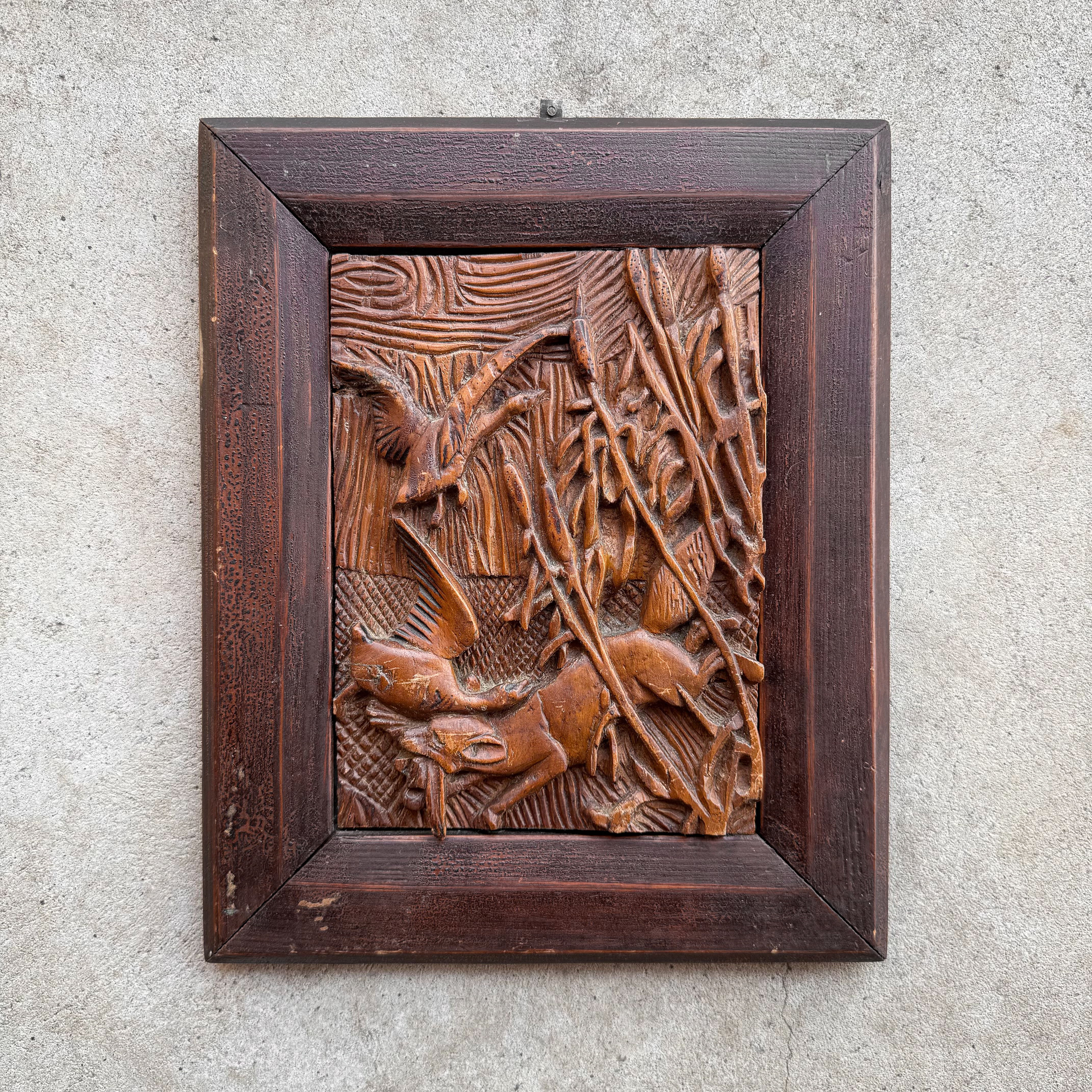
This unique antique bas-relief was hand carved in France in the early 20th century and depicts an idyllic rustic hunting scene featuring a fox and two ducks. The naïve and charming carving style gives the scene a wonderfully folk art character, while the matching wooden frame completes its rustic appearance.
The combination of the hand carved details, hunting subject and naïve craftsmanship makes this a particularly charming decorative piece. It would be a wonderful addition to a cabinet of curiosities, country style interior, rustic home, or collection of antique folk art.
After more than a century, the relief remains in good antique condition while showing various authentic signs of age and use. Over the decades, the wood has developed a beautiful natural patina that only enhances its character and charm. The original varnish has also developed a distinctive network of age-related cracks across the surface, adding further depth and authenticity to its appearance.
Measurements:
Height: 32 cm
Width: 26.5 cm
Depth: 2.2 cm
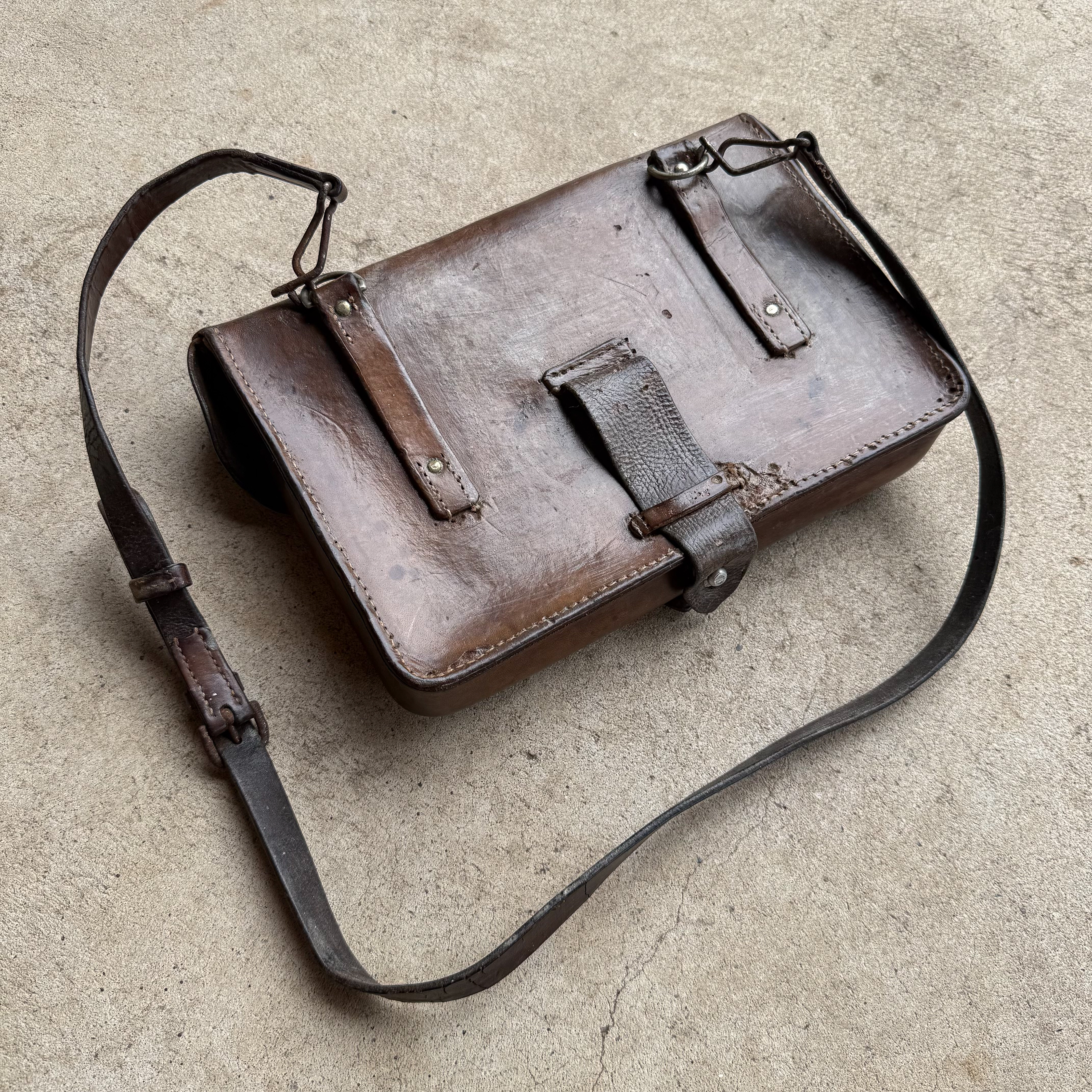
This rugged leather bag was issued by the French postal service, the PTT (Postes, Télégraphes et Téléphones), in the 1930s. Designed for practical everyday use, it features a spacious main compartment and a smaller front compartment, providing ample room for documents and personal belongings. Multiple sturdy leather straps give the bag its distinctive utilitarian appearance and reflect its original purpose as a working bag.
With its generous size and practical layout, the bag would make an excellent everyday companion, offering enough space for a small laptop, tablet, books, or other essentials. Its authentic postal-service design and beautifully aged leather also make it an appealing piece for collectors of vintage military, postal, and utilitarian items.
After almost a century, the bag remains in worn vintage condition and shows authentic signs of age and use. The leather has developed a rich natural patina over the decades, adding considerably to its character and charm. There are small stitch repairs to both corners underneath the front flap, reflecting the bag’s long history of practical use.
The leather has become somewhat dry and brittle with age, but it remains surprisingly strong and flexible. It should therefore be handled with the care appropriate for a nearly century old leather item. The leather has been treated with leather grease and antique wax to nourish and condition it.
Measurements:
Width: 36 cm
Heigth: 25
Depth: 7.5 cm
Antique early 1900s Dutch tekstbook of Natural History
This fascinating antique book is titled “De Wereld voor de Schepping van de Mensch,” which translates roughly as “The World Before the Existence of Man.” It was published in the Netherlands around 1900 by Dr. B.C. Goudsmit and is a Dutch translation of a work by the renowned French astronomer and author Camille Flammarion.
The book explores the prehistoric world and presents more than 300 beautifully detailed engravings depicting prehistoric landscapes, extinct animals and imagined scenes from a world long before mankind. The illustrations offer a wonderful glimpse into the way prehistoric life and natural history were understood and imagined at the turn of the 20th century.
Adding to its appeal is the beautifully designed Victorian-style cover, which gives the book a particularly decorative and collectible character. It would make a wonderful addition to a cabinet of curiosities, antique library, or collection of natural history and early scientific books.
After more than a century, the book remains in worn antique condition and shows authentic signs of age and use. Over the years, the cover and pages have developed a beautiful aged patina that only adds to its character and charm. Despite its age, the book remains complete, intact and fully readable.
Measurements:
Height: 24.5 cm
Width: 18 cm
Depth: 4 cm