Antique 19th century British oil painting with hunting dogs
This classic scene was painted on a wooden panel and shows two English Setter dogs posing in a nice landscape.
The panel itself dates back to the 1800’s but got reframed by the famous English framing company of Biggs & Sons that was founded in the 1780’s! They provided it with a classic style gilded frame.
This antique paiting would be the perfect decor piece to any cabin, lodge or cottage!
After more than a century the painting & frame are in good condition and only show minor sigs of wear.
Measurements:
Heigth: 35.5 / 25 cm
Width: 44.5 / 30 cm
Traditionally daggers like this one were used by German hunters to kill deer or boar!
Its German name appropriately translates “deer catcher”.
It was professionnaly hand forged and equipped with a stag handle. It comes with unoriginal recently made leather sheath.
This unique piece would be the perfect addition to any hunting collection of cabinet of curiosities!
After more than a century the dagger remains in used condition and shows signs of wear. The patina it acquired over the years only adds to its character in my opinion! Its blade has recently been sharpened.
Measurements:
Length: 63.5 cm
Length blade: 49 cm
Length handle: 14.5 cm
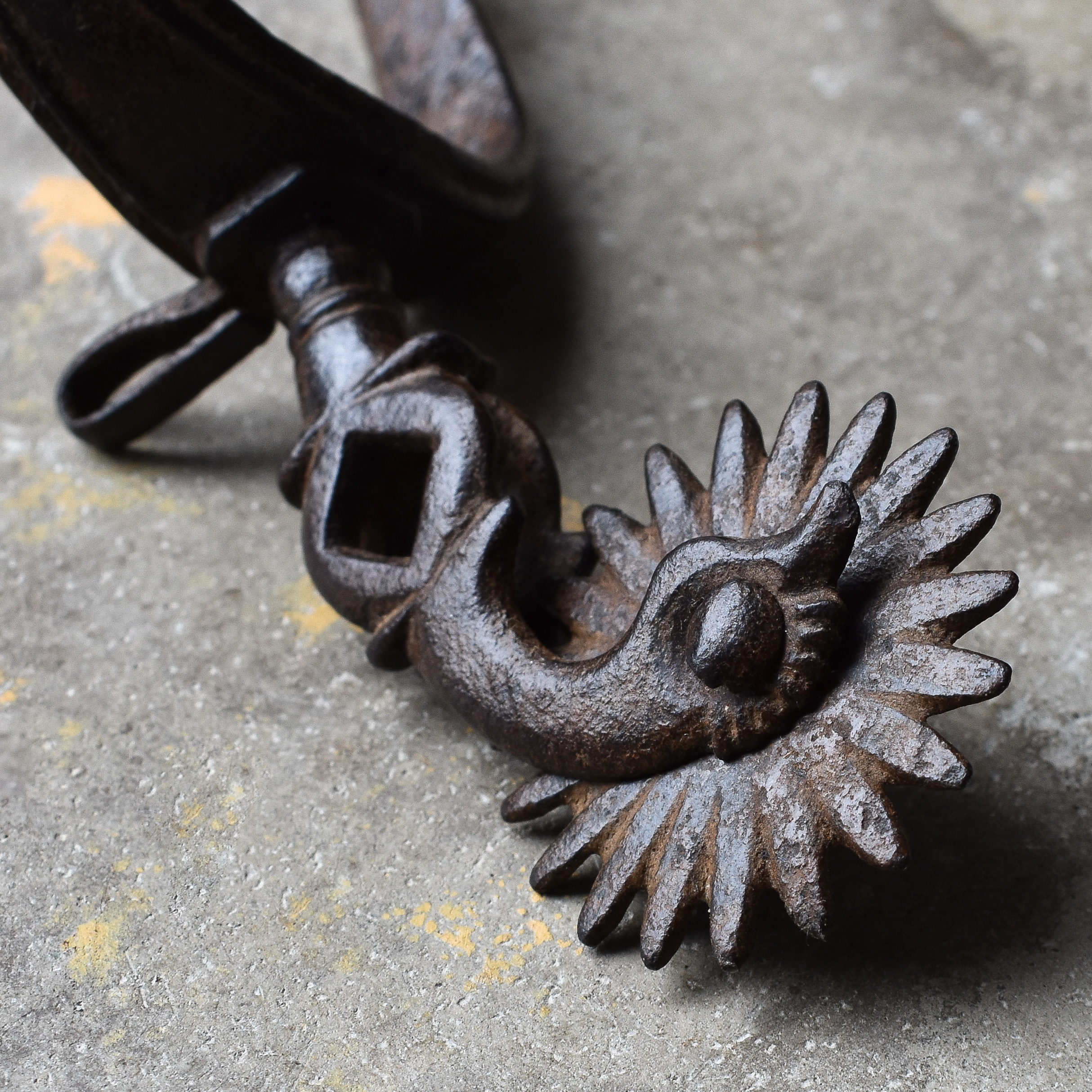
This antique spur is a true piece of early craftsmanship and was wrought with high skill!
It’s an unique piece that would fit perfectly into any collection or western themed interior!
After more than a century it still remains in good condition and shows a rustic patina it acquired over time and use.
The iron has been treated with antique wax to give the surface a protective layer and a subtle glossy finish.
Antique 19th century victorian prosthetic lower leg
This wooden leg has actually been worn and made it possible for its wearer to walk again after losing his, or her lower leg. The prosthesis could be fastened by a leather strap on the wearers stump.
This is an unique oddity that would fit perfectly in a medical collection or cabinet of curiosities!
It makes you fantasize about its stories, perhaps it might have been of a pirate or captain Ahab!
After more than a century the prosthesis remains in used condition and shows signs of wear and time.
The iron and wooden parts have been treated with antique wax and all leather parts have been cleaned and treated with leather grease.
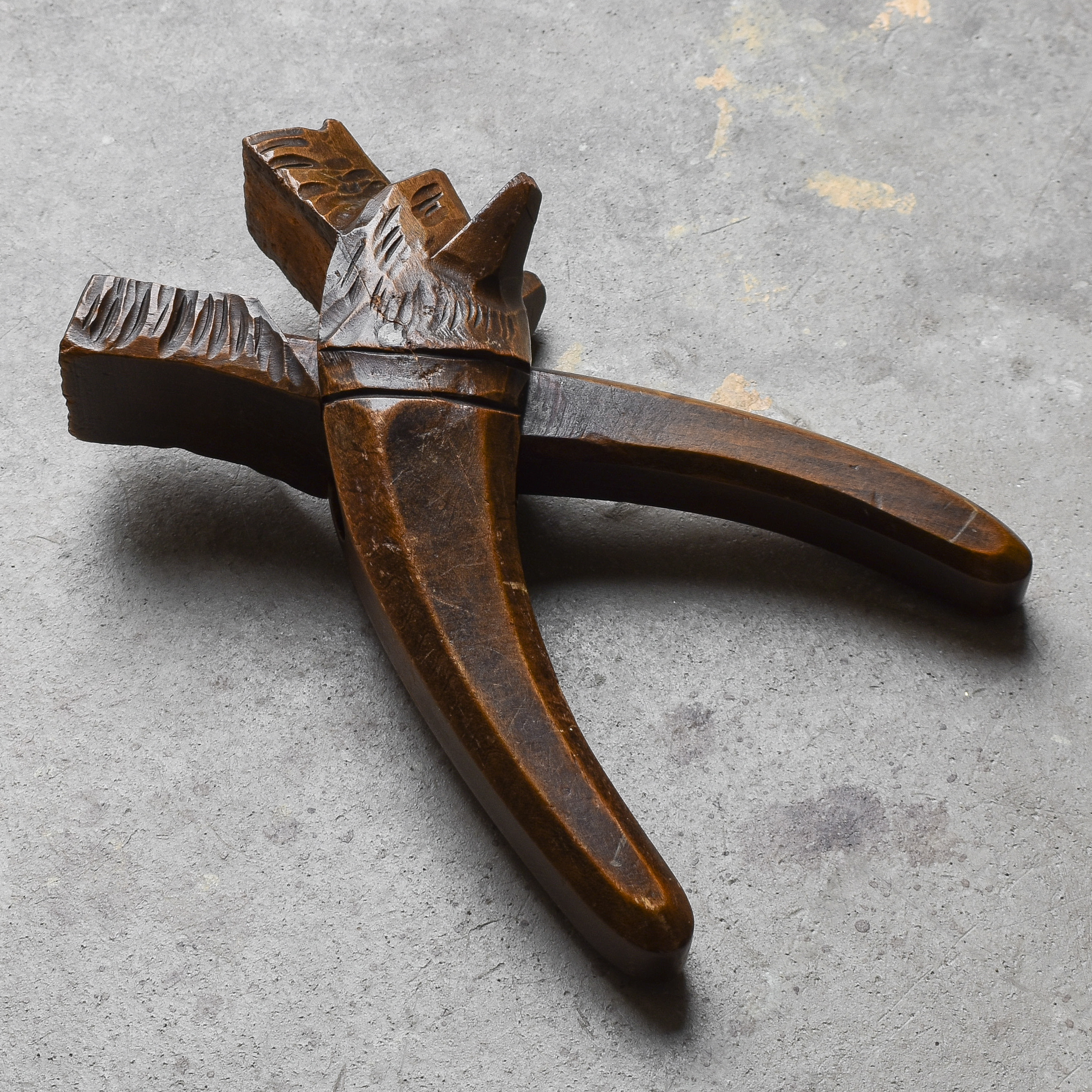
This beautiful piece of folk art was traditionally hand carved out of hard wood in the Black Forest area of Germany and Switserland.
It’s a real piece of local craftsmanship and was shaped like a dog that can break open walnuts by closing its mouth.
This unique piece would be the perfect addition to any collection or cabinet of curiosities!
After more than a century this piece acquired a nice patina that only adds to it’s rough charm!
It has been treated with antique wax to give the surface a protective layer and a subtle glossy finish.
Measurements:
Length: 23.5 cm
Width: 5.5 cm
Height: 10 cm
Antique 19th century pair of French military spurs
These riding spurs were issued by the French army in the late 1800’s.
Their design was made to actually be pinned into the heels of its wearers boots.
Both spurs show a ‘S’ makers mark and were carved with the french words for left and right.
These pieces would be cool to display into your military collection or vintage decor!
After more than a century the spurs remain in used but good condition.
Due to years of use they acquired a nice patina which only adds to their character!
This early glacier cleat was once part of a pair and was used by mountaineers so the spikes would prevent them from slipping as they wore them underneath their shoes.
It was hand forged in the 1800’s in the Alps.
This antique crampon would make unique decor pieces to hang on the wall of your cabin or lodge!
After more than a century the crampon still remains in good condition.
Is has been treated with antique wax to give the surface a protective layer and a subtle glossy finish.
No, this is no orc spear or some other movie prop but you might consider this an as cruel device.
This crude tool actually is a real whaling harpoon, used in the early 1800’s!
Although I hope we all agree that hunting these majestic creatures is a horrible occasion, the whaling industry has been very important to the European history and economy. Back then the oil that was obtained from whales was used to produce many everyday products such as lamp oil, candles, and soap and therefor was essential. Sadly overhunting the arctic seas for centuries has been devastating to the populations of many whale species. Because of its dark past, mixed vibes remain attached to this rare relic though I still consider it a true piece of history that comes with loads of adventurous tales!
It was hand-wrought and forged in iron with a cone to attach a wooden handle.
This relic would be an unique piece to add to your whaling collection or cabinet of curiosities!
After almost two centuries the harpoon remains in worn condition and shows an oxidised patina.
After sanding off the coarse rust the iron tool has been treated with antique wax to give the surface a protective layer and a subtle glossy finish.
No, this is no orc spear or some other movie prop but you might consider this an as cruel device.
This crude tool actually is a real whaling harpoon, used in the early 1800’s!
Although I hope we all agree that hunting these majestic creatures is a horrible occasion, the whaling industry has been very important to the European history and economy. Back then the oil that was obtained from whales was used to produce many everyday products such as lamp oil, candles, and soap and therefor was essential. Sadly overhunting the arctic seas for centuries has been devastating to the populations of many whale species. Because of its dark past, mixed vibes remain attached to this rare relic though I still consider it a true piece of history that comes with loads of adventurous tales!
It was hand-wrought and forged in iron with a cone to attach a wooden handle.
This relic would be an unique piece to add to your whaling collection or cabinet of curiosities!
After almost two centuries the harpoon remains in worn condition and shows an oxidised patina.
After sanding off the coarse rust the iron tool has been treated with antique wax to give the surface a protective layer and a subtle glossy finish.
This crude blade was hand forged in the mid 1800’s and served a messy purpose.
It was made in the Netherlands and was used in the Dutch whaling industry to cut off blubber in the decompositioning of a killed whale.
Although I hope we all agree that hunting these majestic creatures is a horrible occasion, the whaling industry has been very important to the American history and economy. Back then the oil that was obtained from whales was used to produce many everyday products such as lamp oil, candles, and soap and therefor was essential. Sadly overhunting the arctic seas for centuries has been devastating to the populations of many whale species. Because of its dark past, mixed vibes remain attached to this rare relic though I still consider it a true piece of history that comes with loads of adventurous tales!
It has a crudely hand-wrought and forged iron blade attached to a wooden handle.
This relic would be an unique piece to add to your whaling collection or cabinet of curiosities!
Even after almost two centuries this knife still remains in good condition! The iron surface of the blade only shows some minor wear due to use and time. It has been treated with antique wax to give the surface a protective layer and a subtle glossy finish.
Antique 19th century Swiss Black Forest folk art coat hook
This bear figure was hand carved out of wood and features two hooks made of real chaimos horns.
This sculpture is a perfect example of old school, traditional Schwartzwalder craftmanship and features some fine details and characteristics like the gun the bear wears on its back. Pieces like this have become quite rare!
It’s an unique and very decorative piece that would be the perfect addition to any cabin, man cave or barber shop!
After more than a century the pieces still remains in good condition and only shows minor signs of use and wear.