This crude yet fascinating iron harpoon dates back to the early 1800s and was once used in the harsh world of maritime hunting. Such tools were employed to catch fish, seals, or even small whales, reflecting the perilous life of whalers at sea.
The piece is hand wrought and forged from iron, featuring a conical socket designed to attach a wooden shaft. Its rough, utilitarian form speaks of function over beauty, a true working tool rather than a decorative object.
Today, it stands as a remarkable relic of seafaring and whaling history. It would make a striking addition to any maritime collection, cabinet of curiosities, or display of nautical artifacts.
After nearly two centuries, the harpoon survives in worn but stable condition. It bears an oxidized patina that highlights its age and authenticity. To preserve its surface, it has been treated with antique wax, offering a protective layer and a subtle glossy finish.
Small flasks like this were traditionally carried on hunts, allowing the thirsty hunter to take a quick sip of whisky now and then. This example is decorated with a protective pewter body and a brown leather covering.
Even today, it would make a handy companion on a hunting or hiking trip, while also serving perfectly as a decorative accent in a cabin or as part of a collection.
After nearly a century, this flask remains in good condition. Its leather cover has developed a beautiful patina over the years, adding even more character and charm.
These authentic riding spurs, dating back to the early 1900s, were military issued and come with their original leather straps.
A fine piece of both military and equestrian history, they make a striking addition to any collection or cabinet of curiosities.
Despite being over a century old, the spurs remain in very good, usable condition. Over the years, they have developed a beautiful natural patina, giving them a unique character and timeless charm.
These authentic riding spurs, dating back to the early 1900s, were military issued and come with their original leather straps.
A fine piece of both military and equestrian history, they make a striking addition to any collection or cabinet of curiosities.
Despite being over a century old, the spurs remain in very good, usable condition. Over the years, they have developed a beautiful natural patina, giving them a unique character and timeless charm.
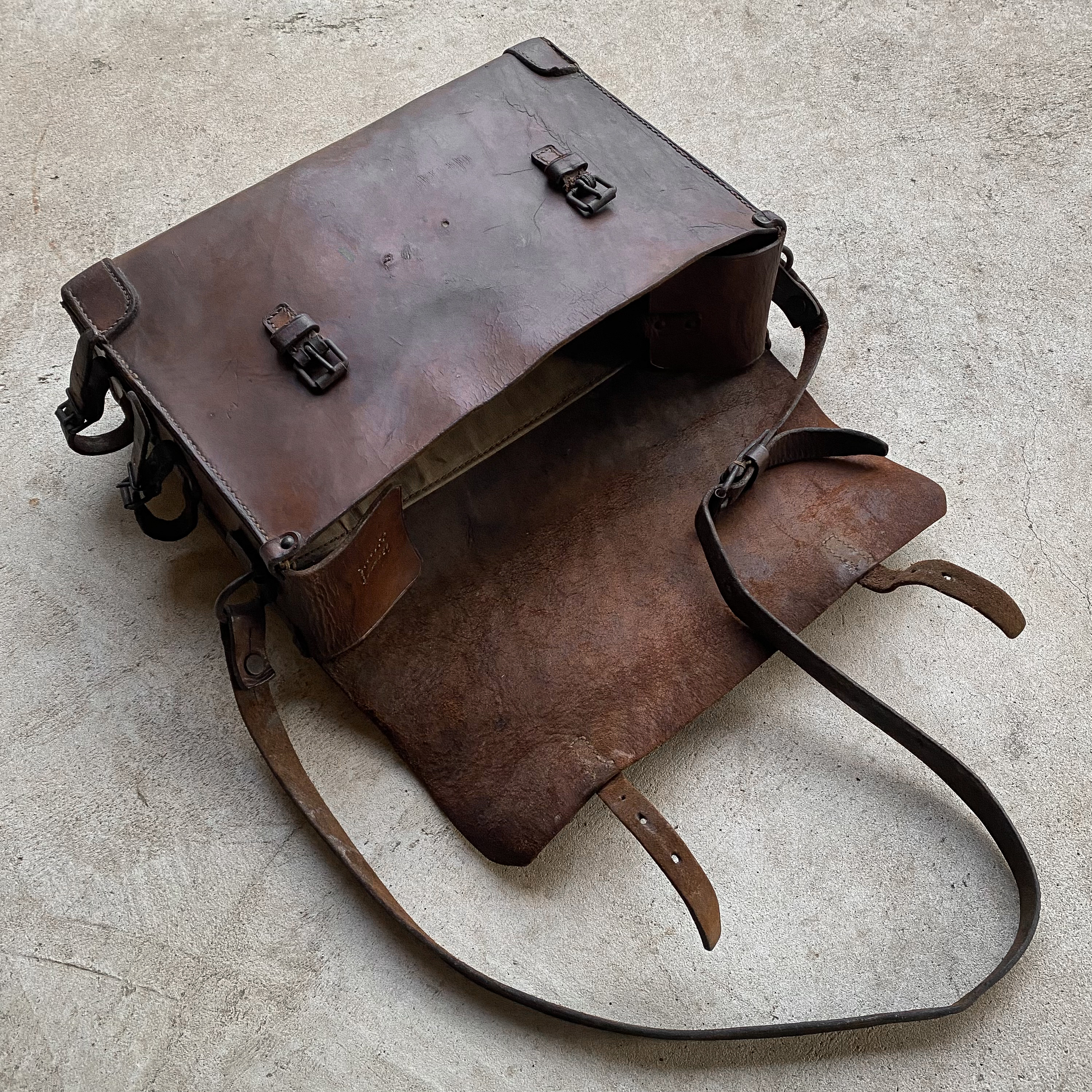
This rugged bag was handmade in France during the 1950s and was presumably used to carry tools. Crafted from sturdy saddle leather, it was built to last a lifetime.
Ideal for daily use, the bag also makes a striking decorative piece in any rustic style interior.
After nearly a century, it shows signs of wear yet remains strong and durable. The rich patina it has developed over the years only enhances its rugged character. It has been carefully cleaned with saddle soap and treated with leather grease and beeswax.
Measurements:
Heigth: 16 cm
Width: 40 cm
Depth: 16 cm
These authentic riding spurs, dating back to the early 1900s, were military issued and come with their original leather straps.
A fine piece of both military and equestrian history, they make a striking addition to any collection or cabinet of curiosities.
Despite being over a century old, the spurs remain in very good, usable condition. Over the years, they have developed a beautiful natural patina, giving them a unique character and timeless charm.
These authentic riding spurs, dating back to the early 1900s, were military issued and designed to be mounted into the heels of riding boots.
A fine piece of both military and equestrian history, they make a striking addition to any collection or cabinet of curiosities.
Despite being over a century old, the spurs remain in very good, usable condition. Over the years, they have developed a beautiful natural patina, giving them a unique character and timeless charm.
This charming vintage globe was produced in England by Chad Valley Co Ltd during the 1930s, yet it was published entirely in French.
Perfect as a decorative accent for your desk, bookshelf, or cabinet of curiosities, this globe carries with it nearly a century of history. Over time, the tin surface has developed an oxidized patina that enhances its rustic character and antique appeal.
To preserve and highlight its beauty, the globe has been carefully treated with antique wax, leaving a protective layer and a subtle glossy finish.
These authentic riding spurs, dating back to the early 1900s, are crafted from solid brass and still feature their original leather straps.
A fine example of military and equestrian history, they would make a striking addition to any collection or cabinet of curiosities.
Despite being over a century old, the spurs remain in good, usable condition. The brass has developed a beautiful natural patina over the years, giving them a unique character and timeless charm.
This unusual inkwell dates back to the 1800s and was skillfully crafted from genuine roe deer antlers and wild boar tusks. A fine example of 19th century folk art, it reflects both creativity and craftsmanship of the period.
It would make a striking decorative piece on a desk or a fascinating addition to any cabinet of curiosities.
After more than a century, the inkwell is in used condition. Some parts of the boar tusks broke off over time and were later glued back on, though small pieces remain missing. The surface has developed a beautiful patina through age and use, enhancing its character and antique charm.
Measurements:
Width: 35 cm
Depth: 22 cm
Heigth: 21.5 cm
These remarkable pipes were crafted in Switzerland around 1880. Made from genuine alpine chamois horns and hooves, and lined with skin, they are striking examples of folk art and traditional craftsmanship.
They would make an excellent addition to any pipe collection or a true curiosity for a cabinet of wonders.
After more than a century, the pipes are in used condition with visible signs of age and wear. One pipe is missing the small top ring on the horn bowl.
These huge classic wooden snowshoes were handcrafted in the 1950s and feature traditional rawhide latticework stretched over solid wooden frames — a design rooted in Indigenous craftsmanship and adapted for winter travel in deep snow.
These iconic snowshoes make stunning decorative pieces, perfect to hang above the fireplace or display on the wall of your cabin, lodge, or man cave.
After nearly a century, they remain in good overall shape, with signs of age and use that speak to their history. Over time, they’ve developed a beautiful, natural patina that only adds to their authentic charm.