Antique early 1900s Dutch tekstbook of Natural History
This fascinating antique book is titled “De Wereld voor de Schepping van de Mensch,” which translates roughly as “The World Before the Existence of Man.” It was published in the Netherlands around 1900 by Dr. B.C. Goudsmit and is a Dutch translation of a work by the renowned French astronomer and author Camille Flammarion.
The book explores the prehistoric world and presents more than 300 beautifully detailed engravings depicting prehistoric landscapes, extinct animals and imagined scenes from a world long before mankind. The illustrations offer a wonderful glimpse into the way prehistoric life and natural history were understood and imagined at the turn of the 20th century.
Adding to its appeal is the beautifully designed Victorian-style cover, which gives the book a particularly decorative and collectible character. It would make a wonderful addition to a cabinet of curiosities, antique library, or collection of natural history and early scientific books.
After more than a century, the book remains in worn antique condition and shows authentic signs of age and use. Over the years, the cover and pages have developed a beautiful aged patina that only adds to its character and charm. Despite its age, the book remains complete, intact and fully readable.
Measurements:
Height: 24.5 cm
Width: 18 cm
Depth: 4 cm
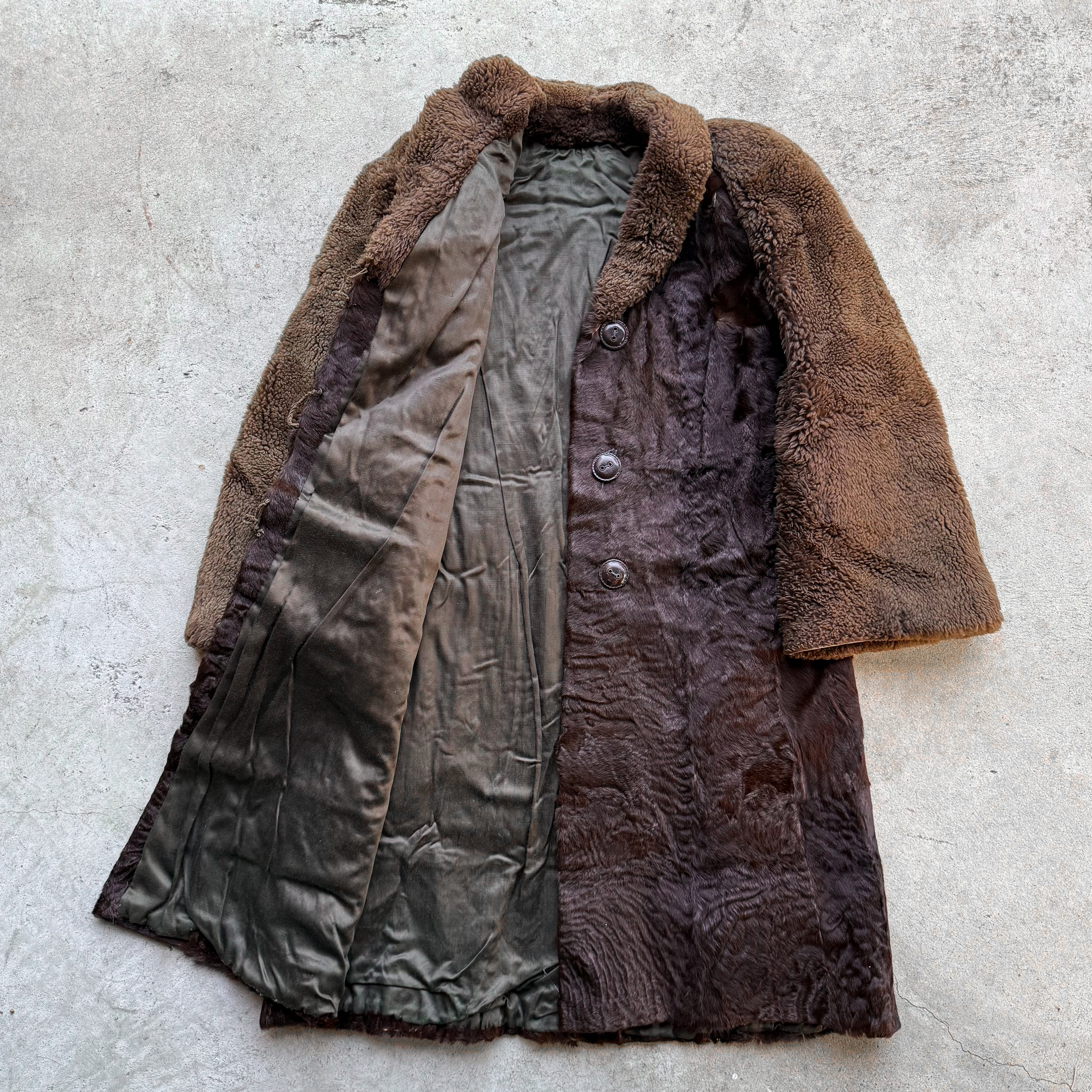
This elegant antique fur coat was made in France and dates from the 1930s. Its distinctive design combines elegance with a slightly rugged character, featuring a luxurious Persianer fur body with contrasting mouton fur sleeves and collar. The combination of textures gives the coat a wonderfully rich and timeless appearance, typical of the craftsmanship and style of the period.
A beautiful statement piece that is not only stylish but also exceptionally warm, making it a wonderful winter coat for anyone who appreciates authentic vintage fashion and beautifully crafted garments.
After almost a century, the coat remains in good vintage condition and retains its original character and charm. It shows authentic signs of age and use consistent with its history, adding to its unique vintage appeal.
Measurements:
Chest width: 50 cm
Back length: 106 cm
Sleeve length: 60 cm
This antique presse-papier was made in France and dates from the early 20th century. Its striking design features a finely cast bronze songbird, depicted lifeless upon a marble base. The imagery evokes the Victorian fascination with mortality and the fragility of life, giving the piece a subtle memento mori character.
Originally intended as a functional desk accessory, this beautiful piece would have been used to hold papers in place, while at the same time serving as a decorative object. Today, its age, materials and unusual subject make it especially appealing to collectors of antiques, natural history and curiosities.
A wonderful addition to display on a desk, within a collection, or as part of a cabinet of curiosities.
After more than a century, the presse-papier remains in good antique condition, showing only minor signs of age and use. Over the decades, the bronze has developed a subtle natural patina, which beautifully enhances its aged character and charm. The marble base also shows the gentle traces of age one would expect from an object of this period.
Measurements:
Length: 16 cm
Width: 9.5 cm
Height: 5.5 cm
This unique advertising tin was manufactured in the Netherlands by the Wed. J. Bekkers & Zoon metal factory for the renowned Dutch confectionery company Van Melle. Every side is beautifully decorated with charming illustrations of polar bears, while the lid features the Dutch national coat of arms, making it an eye-catching example of early 20th-century advertising design.
Both decorative and practical, this antique tin would make a wonderful addition to a rustic or vintage-style interior, a kitchen display, or a collection of advertising memorabilia. It can also be used to store a variety of small items.
After more than a century, the tin remains in worn antique condition and displays expected signs of age and use. Over the years, it has developed a beautiful patina that enhances its authentic character and appeal. The lid is slightly bent and therefore no longer closes properly. There is also a small hole in one corner of the base. Please examine the photographs carefully, as they form an integral part of the description and condition report.
Measurements:
Height: 26 cm
Width: 24 cm
Depth: 21 cm
This charming portrait was skillfully painted in southern Germany and depicts a moustached man dressed in traditional hunting attire, calmly smoking a pipe. While the painting dates from the 1930s, the classic subject matter, combined with the original gilded frame, gives it a timeless, rustic character.
A warm and atmospheric piece, it would make a distinctive decorative addition to a cabin, lodge, or any cozy, rustic interior.
After more than almost a century, the portrait remains in very good condition, showing only minor signs of age and use.
Measurements:
Height: 41 cm
Width: 38 cm
Depth (frame): 5.5 cm
This antique walking cane dates from the early 1900s and features a shaft crafted from natural thorn wood, paired with a distinctive handle made from red stag antler. The base is fitted with a protective copper ferrule.
The organic form of the antler handle gives each piece a unique character, while the sturdy shaft ensures both durability and balance.
This cane would still make a stylish accessory to complement a classic outfit, but also serves as a striking decorative piece for a collection, study, or rustic interior.
After more than a century, the cane remains in good antique condition, showing expected signs of age and use. Over time, both the wood and antler have developed a beautiful, rich patina that enhances its authentic character and charm.
Measurements:
Length: 86.5 cm
Length handle: 15.5 cm
Antique early 1900s oil painting of a mountain landscape
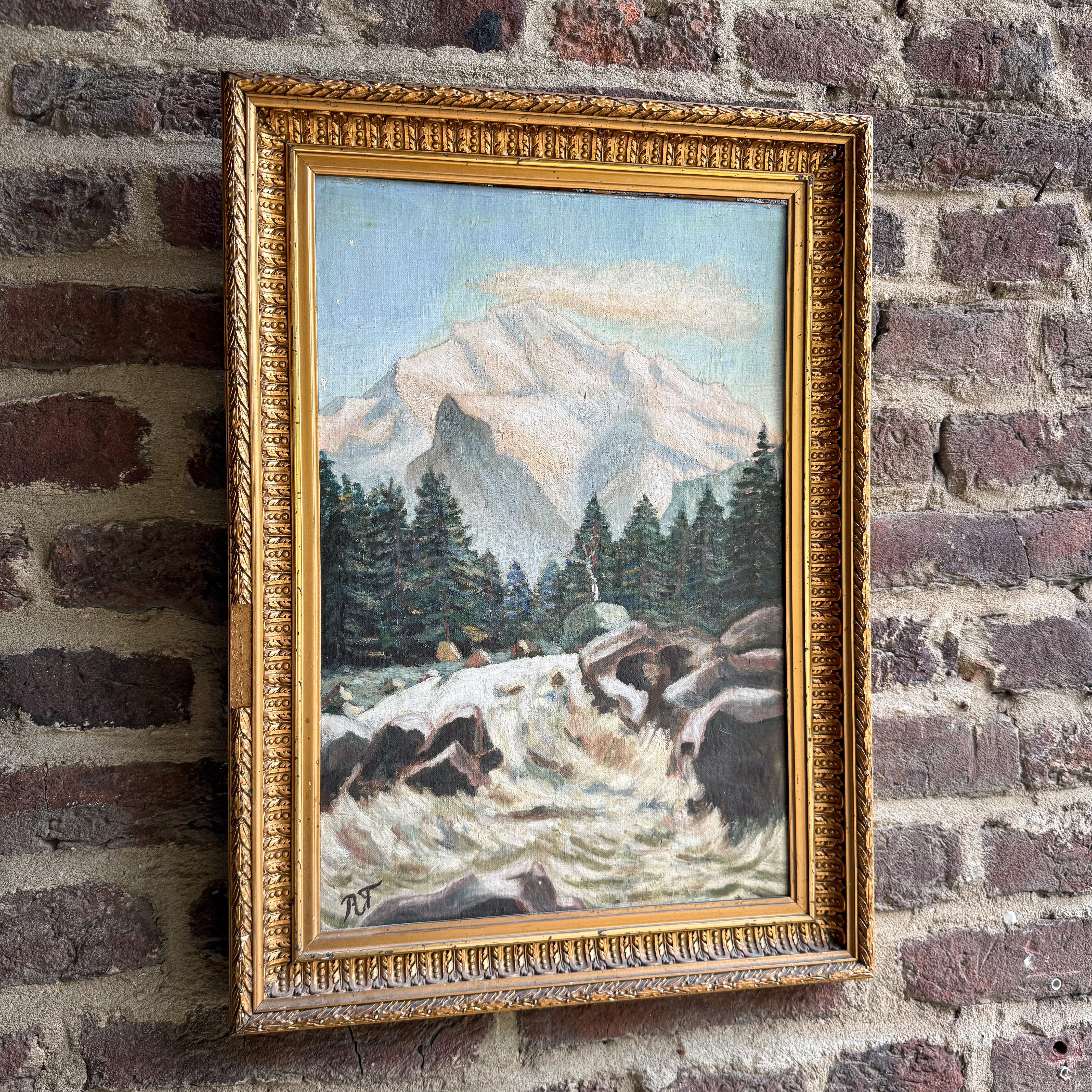
This charming antique oil painting was created in France at the beginning of the 20th century. It depicts a picturesque mountain landscape with a fast flowing stream, towering pine trees, and a majestic mountain peak rising in the background. The artwork is presented in its original classic gilded frame, complementing its timeless character.
With its peaceful natural scenery and warm colours, this painting would make a beautiful addition to a classic, rustic, or country-style interior, bringing a touch of alpine charm to any room.
After more than a century, the painting remains in good antique condition and displays expected signs of age and wear. Over the years, it has developed a beautiful patina that enhances its authenticity and character. The original gilded frame shows some damage along the left side, which has been sympathetically touched up with gold paint. Please examine the photographs carefully, as they form an integral part of the description and condition report.
These rugged saddle bags were issued to the French cavalry in the 20s. They are a fine example of early 20th century craftsmanship and are made from thick, durable saddle leather.
Originally worn on either side of a saddle, they can still be used for riding today. They would also make a striking addition to a classic motorcycle.
After more than a century, the bags remain in good condition and show signs of age and use. Over time, they have developed a rich patina that adds to their character. Despite their age, the leather remains strong and sturdy. One of the bags shows a stitch repair, adding only more charm to it.
Measurements:
Heigth: 34 cm
Width: 16 cm
Depth: 9 cm
This antique archive cabinet was manufactured by Simon Van Doornik & Co. in Hamburg during the 1930s. Crafted from solid oak, it features attractive brass hardware and reflects the practical yet elegant design of early 20th century office furniture. Originally designed as a stackable filing unit, it combines functionality with timeless craftsmanship.
With its warm oak finish and classic appearance, this cabinet would make a beautiful addition to a rustic, industrial, or traditional interior. It is equally suitable as a functional storage piece or as a distinctive decorative item.
After almost a century, the cabinet remains in good antique condition and displays expected signs of age and use. Over the years, the oak has developed a beautiful natural patina that enhances its character and authenticity. As the cabinet was originally intended to be stacked and was therefore open at the top, a previous owner fitted it with a custom-made wooden top in a matching colour, allowing it to be used as a standalone cabinet.
Please examine the photographs carefully, as they form an integral part of the description and condition report.
Measurements:
Width: 25.5 cm
Length: 39 cm
Height: 24 cm
This antique sighting compass was manufactured in London around 1910 by Troughton & Simms, the renowned British maker of scientific and surveying instruments. Crafted from brass, it features a clever folding design with a protective hinged cover, combining precision engineering with practical functionality.
Originally used for surveying, navigation, or military fieldwork, this instrument is a fine example of early 20th-century British craftsmanship and scientific innovation. Now it’s a wonderful addition to any collection of antique scientific or nautical instruments, surveying equipment, or a cabinet of curiosities.
After more than a century, the compass remains in used antique condition and displays expected signs of age and use. The brass has developed a beautiful natural patina over the years, enhancing its authentic character. The original glass cover protecting the compass card is unfortunately missing, and the compass is no longer functional, making it best suited as a decorative collector’s piece.
Please examine the photographs carefully, as they form an integral part of the description and condition report.
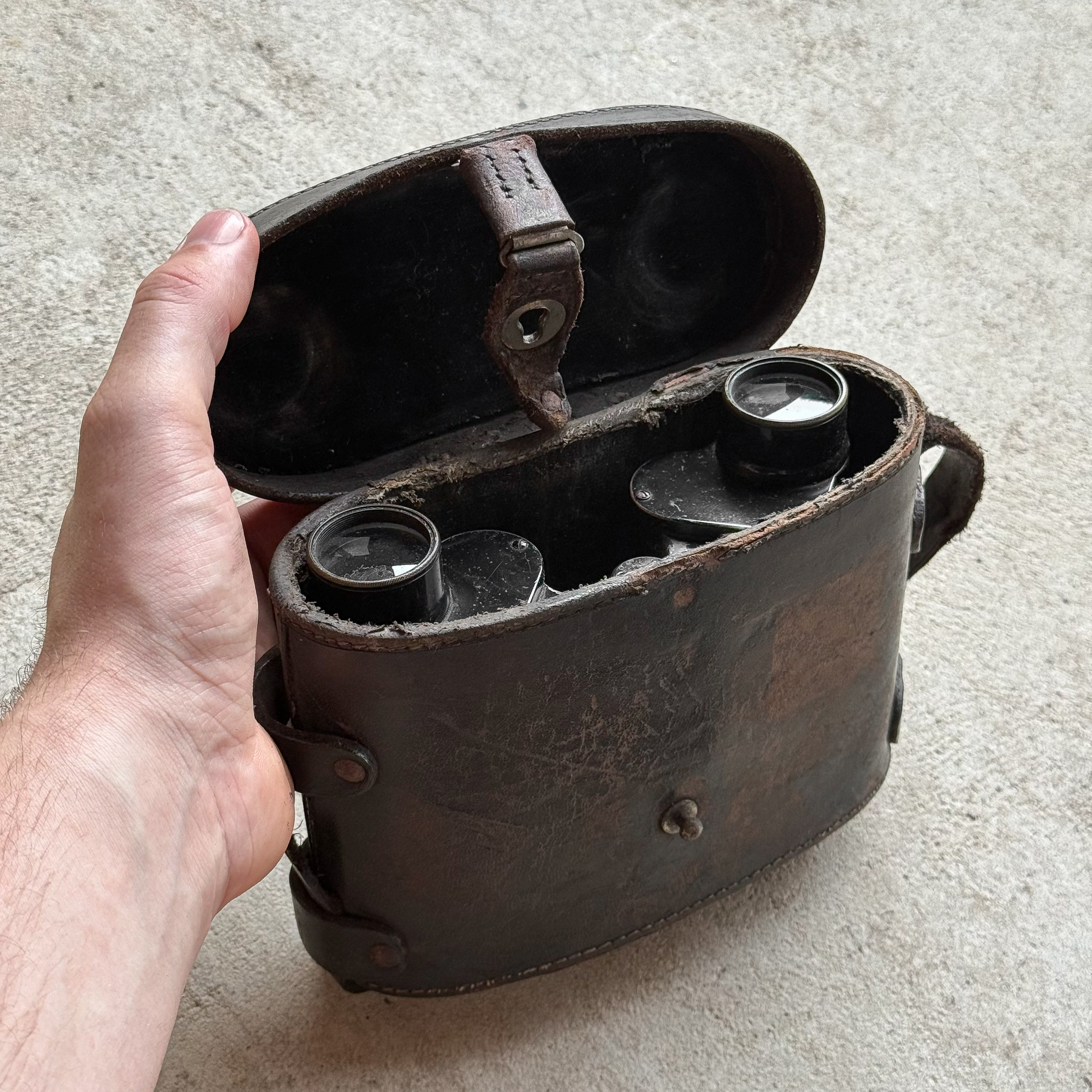
An elegant pair of antique binoculars manufactured by Lemaire in Paris, France, dating to the 1930s. Complete with their original leather carrying case, they are a fine example of early 20th century French optical craftsmanship.
These binoculars would make a wonderful addition to a collection of antique optical instruments, a cabinet of curiosities, or a vintage interior.
After almost a century, the binoculars remain in good antique condition and display expected signs of age and use. Both the metalwork and the original leather case have developed a beautiful patina over the years, enhancing their authentic character and charm. Please examine the photographs carefully, as they form an integral part of the description and condition report.
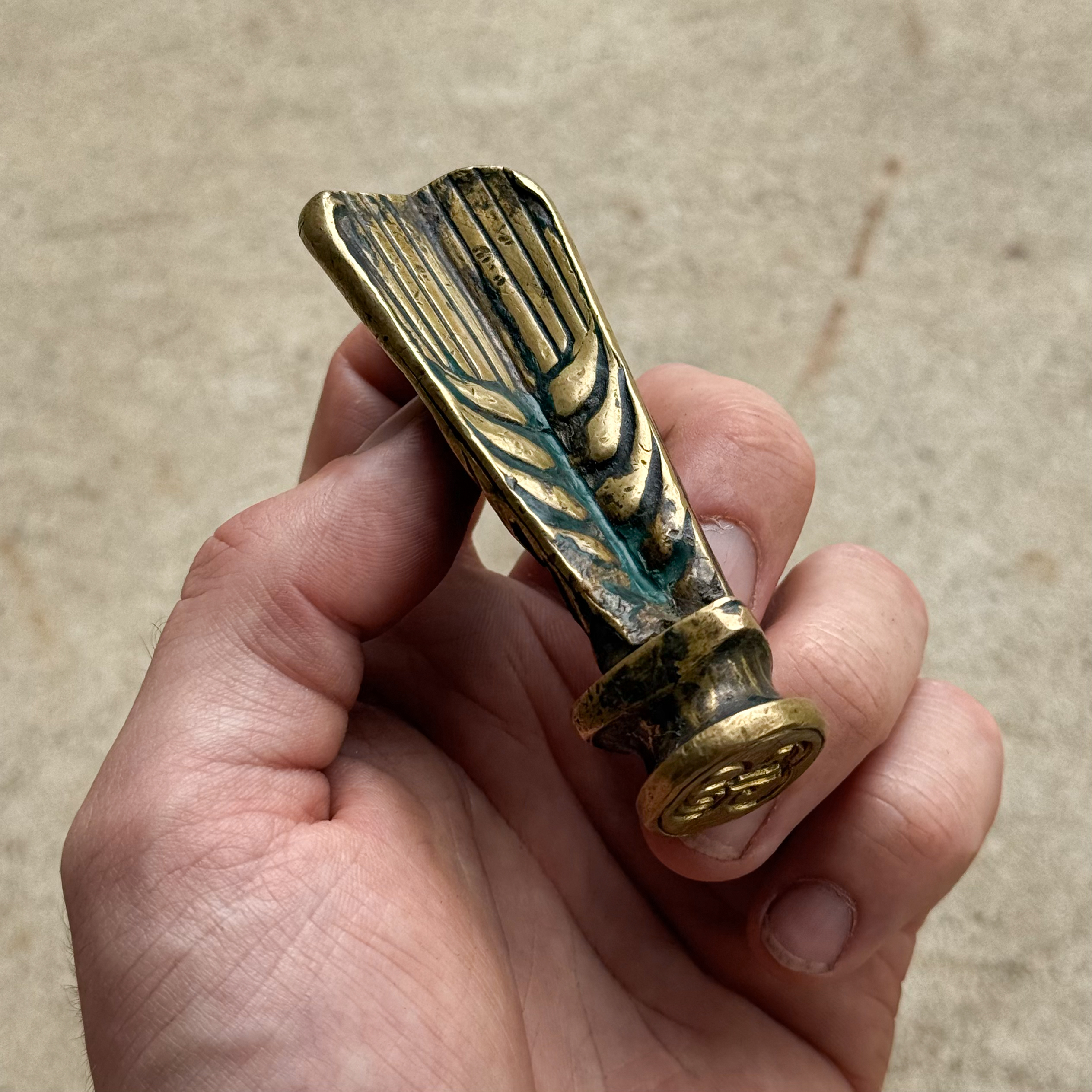
This elegant antique wax seal stamp dates to the early 20th century and was crafted in France. Made of bronze, it features a graceful Art Nouveau design, reflecting the flowing lines and refined elegance characteristic of the period. The seal matrix is engraved with a monogram, suggesting that it was once used as a personal seal for correspondence and official documents.
Rich in character and historical charm, this piece would make a wonderful addition to a cabinet of curiosities, writing desk, or collection of antique seals and decorative objects. A charming example of early 20th-century French craftsmanship.
After more than a century, the stamp remains in good antique condition and displays expected signs of age and use. The bronze has acquired a beautiful oxidized patina over the years, enhancing its authenticity and visual appeal.
Please examine the photographs carefully, as they form an integral part of the description and condition report.