This antique presse-papier was made in France and dates from the early 20th century. Its striking design features a finely cast bronze songbird, depicted lifeless upon a marble base. The imagery evokes the Victorian fascination with mortality and the fragility of life, giving the piece a subtle memento mori character.
Originally intended as a functional desk accessory, this beautiful piece would have been used to hold papers in place, while at the same time serving as a decorative object. Today, its age, materials and unusual subject make it especially appealing to collectors of antiques, natural history and curiosities.
A wonderful addition to display on a desk, within a collection, or as part of a cabinet of curiosities.
After more than a century, the presse-papier remains in good antique condition, showing only minor signs of age and use. Over the decades, the bronze has developed a subtle natural patina, which beautifully enhances its aged character and charm. The marble base also shows the gentle traces of age one would expect from an object of this period.
Measurements:
Length: 16 cm
Width: 9.5 cm
Height: 5.5 cm
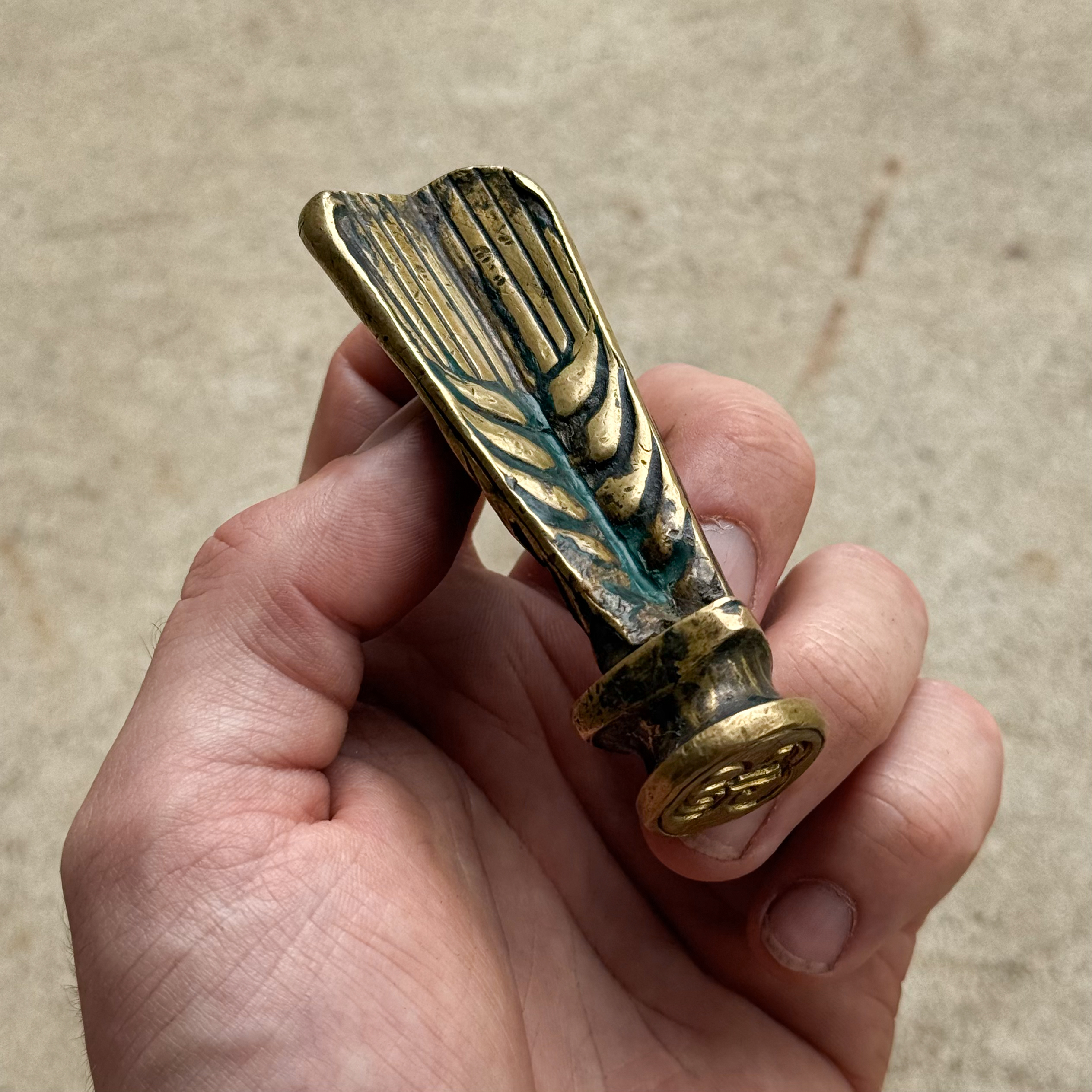
This elegant antique wax seal stamp dates to the early 20th century and was crafted in France. Made of bronze, it features a graceful Art Nouveau design, reflecting the flowing lines and refined elegance characteristic of the period. The seal matrix is engraved with a monogram, suggesting that it was once used as a personal seal for correspondence and official documents.
Rich in character and historical charm, this piece would make a wonderful addition to a cabinet of curiosities, writing desk, or collection of antique seals and decorative objects. A charming example of early 20th-century French craftsmanship.
After more than a century, the stamp remains in good antique condition and displays expected signs of age and use. The bronze has acquired a beautiful oxidized patina over the years, enhancing its authenticity and visual appeal.
Please examine the photographs carefully, as they form an integral part of the description and condition report.
This rugged antique leather tool bag was made in France during the 1930s and is complete with its original adjustable leather shoulder strap. The front flap is embossed with the initials “A DI”, adding to its authentic character and history.
Originally intended as a craftsman’s or tradesman’s tool bag, it offers ample space for everyday essentials such as a small laptop or tablet, documents, books, and personal belongings. With its timeless design and robust construction, it can still serve as a practical and stylish everyday shoulder bag. A wonderful piece of French utilitarian craftsmanship, equally suitable for daily use, vintage-inspired fashion, or as part of a collection of antique leatherwork and industrial objects.
Considering its age of nearly a century, the bag remains in good antique condition and displays expected signs of age and use. The leather has developed a beautiful, rich patina over the decades that enhances its authentic character and charm. It has been carefully cleaned and treated with antique wax to nourish the leather while providing a subtle protective sheen.
Please examine the photographs carefully, as they form an integral part of the description and condition report.
Measurements:
Width: 44 cm
Height: 24 cm
Depth: 13.5 cm
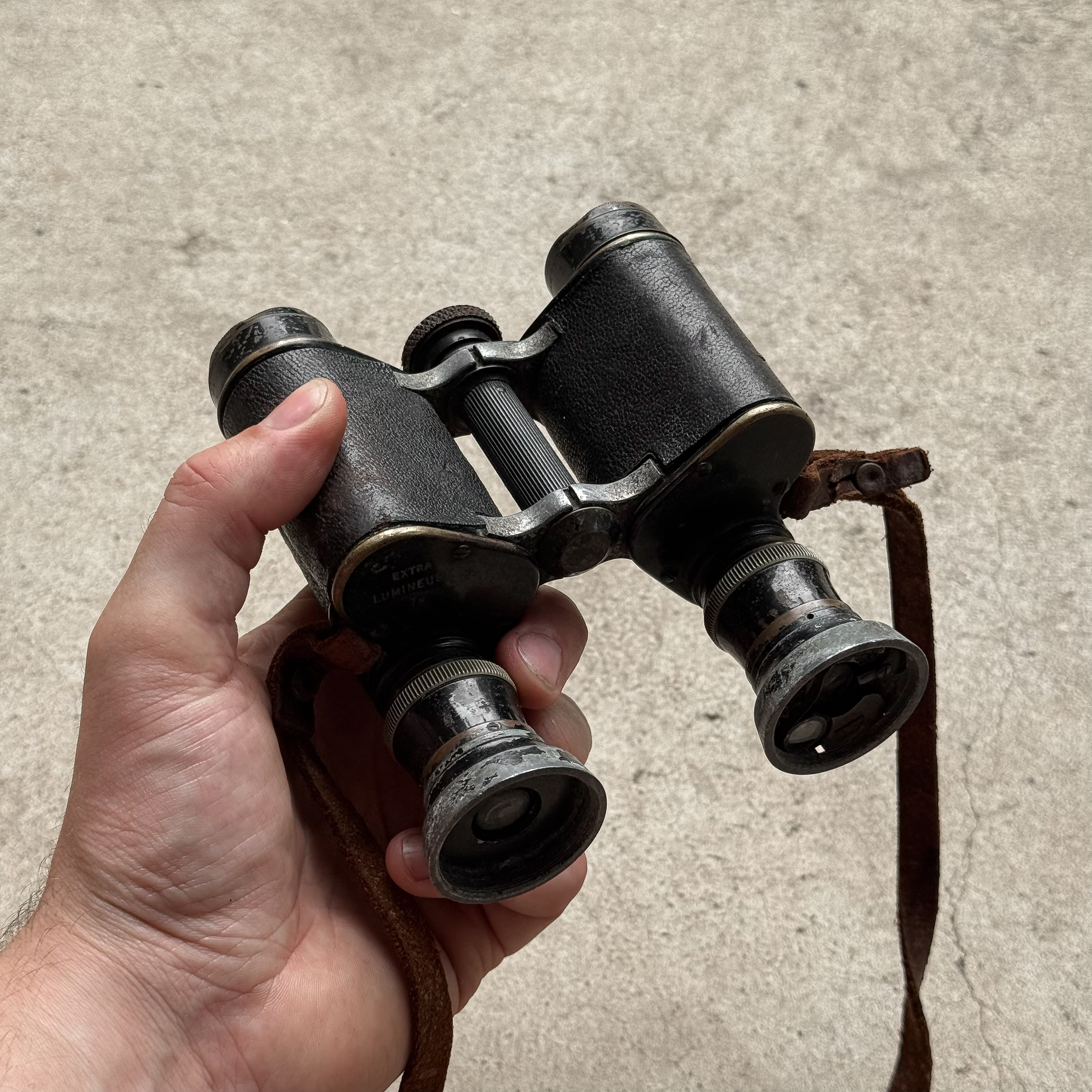
Antique 1910s Huet Paris Extra Lumineuse 7x Binoculars
These elegant Extra Lumineuse 7x binoculars were manufactured by Huet in Paris and were issued to the French military during the First World War. They are a fine example of early 20th-century French optical craftsmanship and military history.
An attractive addition to any WWI or military collection, cabinet of curiosities, or vintage interior.
After more than a century, the binoculars remain in worn condition and display expected signs of age and use. They have developed a beautiful patina over the years, enhancing their authentic character and charm. Both original eyecups are unfortunately missing, as shown in the photographs. Please examine the photographs carefully, as they form an integral part of the description and condition report.
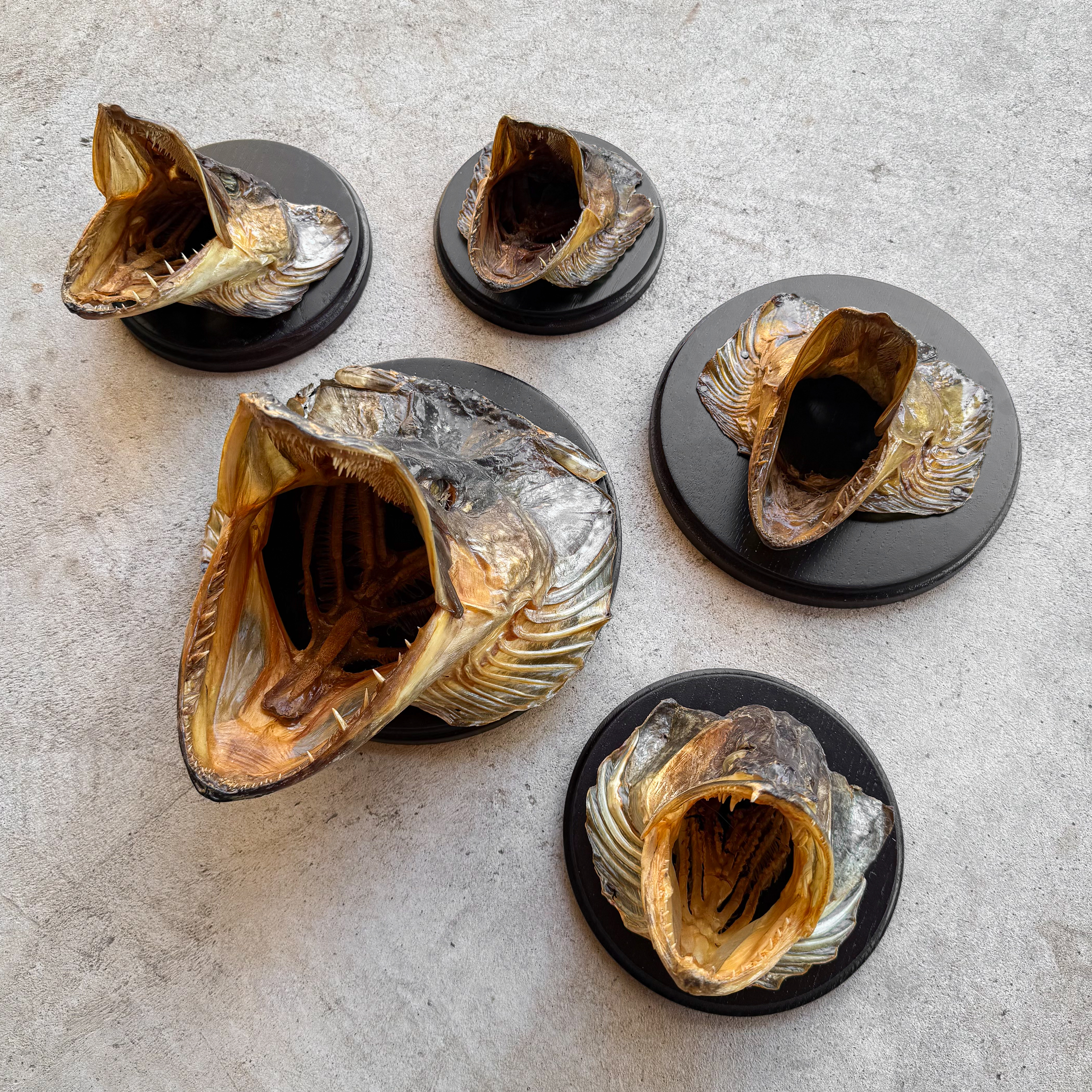
Vintage 60s pike perch head mount – ‘Sander lucioperca’.
This authentic fishing trophy dates back to the 1960s and was originally caught in France. It is recently mounted on a classic circulair wooden plaque shield and would make an ideal decorative accent for a cabin, lodge, bar, study, or man cave.
After more than 60 years, the pike head remains in good overall condition. As expected with an object of this age, it shows visible signs of wear, which only add to its character and authenticity.
This authentic fishing trophy dates back to the 1960s and was originally caught in France. It is recently mounted on a classic circulair wooden plaque shield and would make an ideal decorative accent for a cabin, lodge, bar, study, or man cave.
After more than 60 years, the pike head remains in good overall condition. As expected with an object of this age, it shows visible signs of wear, which only add to its character and authenticity.
This authentic fishing trophy dates back to the 1960s and was originally caught in France. It is recently mounted on a classic circulair wooden plaque shield and would make an ideal decorative accent for a cabin, lodge, bar, study, or man cave.
After more than 60 years, the pike head remains in good overall condition. As expected with an object of this age, it shows visible signs of wear, which only add to its character and authenticity.
Vintage 60s large pike head mount – ‘Esox lucius’.
This authentic fishing trophy dates back to the 1960s and was originally caught in France. It is recently mounted on a classic circulair wooden plaque shield and would make an ideal decorative accent for a cabin, lodge, bar, study, or man cave.
After more than 60 years, the pike head remains in good overall condition. As expected with an object of this age, it shows visible signs of wear, which only add to its character and authenticity.
Antique early 1900s red deer antler mount – Cervus elaphus
This impressive antler trophy originates from Germany and dates back to 1911. It is professionally mounted, featuring the upper part of the skull affixed to a classic wooden plaque decorated with hand cut oak leaves – a timeless and traditional presentation. The plaque is marked “Anno 1911 – WE”.
This striking piece would make an ideal addition to any lodge style interior, hunting cabin, or rustic home décor. It would look especially majestic above a fireplace or on a feature wall.
The mount is in worn but stable condition, showing minor signs of age and use. Over the decades, it has developed a beautiful, natural patina that enhances its authentic and historic character.
Measurements:
Width: 36 cm
Heigth: 22 cm
Depth: 48 cm
This rare antique toy floatplane was manufactured by Meccano in Liverpool, England, during the 1930s. A true collector’s piece, it beautifully showcases the craftsmanship and inventive design that made Meccano a household name in model construction toys.
With its timeless charm and striking appearance, this airplane would make a wonderful decorative display piece — whether suspended from the ceiling in a child’s room, featured in a man cave, or added to a vintage toy or aviation collection.
After nearly a century, the plane remains in used antique condition and shows clear signs of age and wear consistent with its history. Over time, it has developed a beautiful patina that enhances its unique character and authenticity. The model is missing a few small nuts and bolts, and the horizontal stabilizer on the tail has some slight movement, but the piece retains a strong overall appearance and display value.
Measurements:
length: 24.5 cm
width: 28 cm
heigth: 10 cm
This authentic fishing trophy dates back to the 1960s and was originally caught in France. It is recently mounted on a classic circulair wooden plaque shield and would make an ideal decorative accent for a cabin, lodge, bar, study, or man cave.
After more than 60 years, the pike head remains in good overall condition. As expected with an object of this age, it shows visible signs of wear, which only add to its character and authenticity.
This sturdy and timeless leather bag dates back to the 1930s. It features a spacious main compartment, ideal for carrying a laptop, books, or everyday essentials, as well as a smaller front pocket.
With its rugged, utilitarian design, this bag is both functional and stylish, making it an excellent choice for daily use or as a statement piece in a vintage collection.
After more than 90 years, the bag remains in solid antique condition and shows authentic signs of age and use. The rich patina it has developed over the decades adds to its unique charm and character. The leather has been carefully cleaned with saddle soap and treated with leather grease to preserve its flexibility and natural sheen.
Measurements: Height: 24.5 cm Width: 36 cm Depth: 11.5 cm