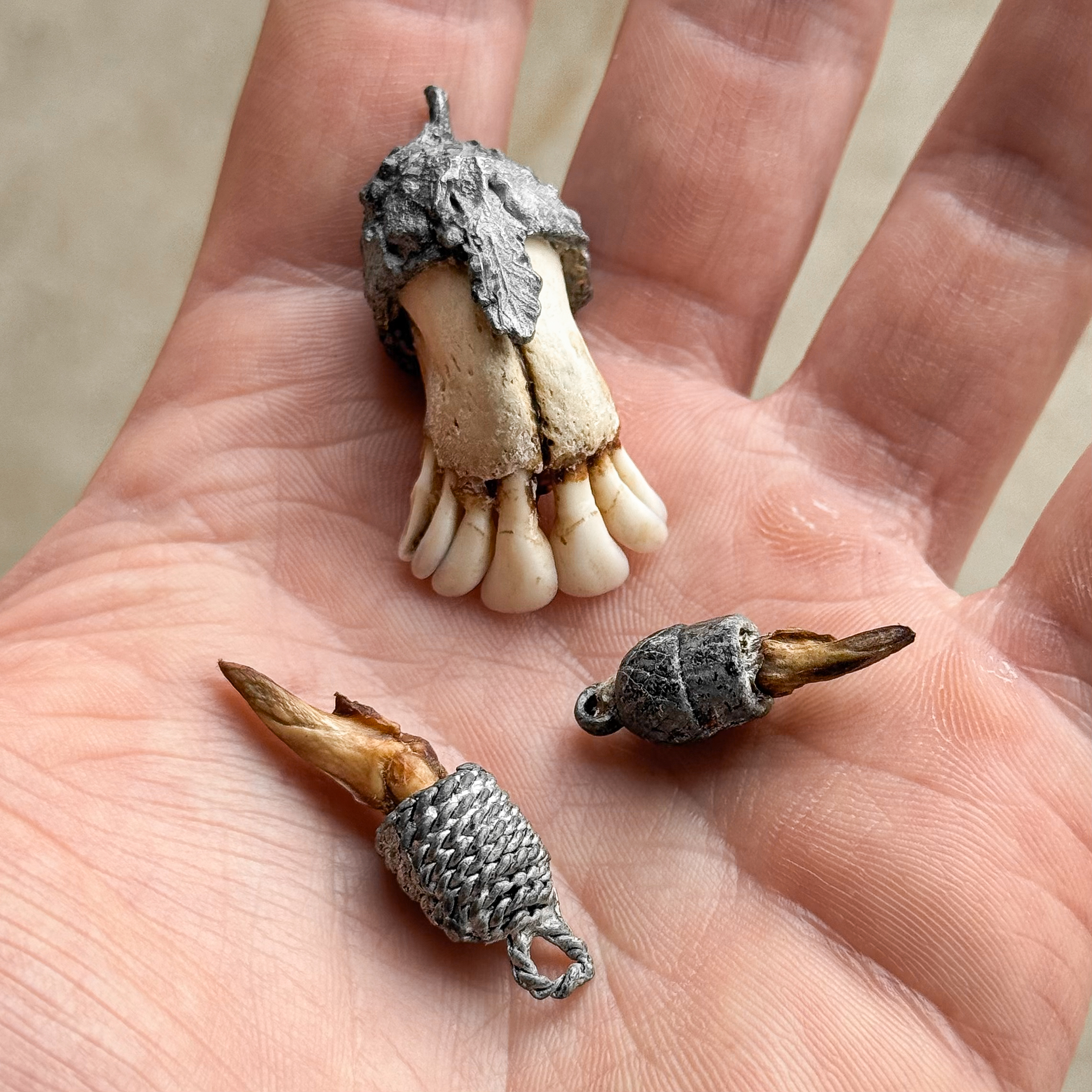
Traditionally, charivari charms like these were worn by Bavarian hunters as talismans believed to bring good fortune during the hunt. These small ornaments were often crafted from roe deer antler tips and attached to a hunting hat, bag, or watch chain. These unique pendants, however, are made from the lower front teeth of a chamois and two animal claws.
These pieces would make distinctive items of jewellery, still perfect to wear for good luck on a hunting trip, or as a fascinating addition to a cabinet of curiosities.
After more than a century, the pendants remain in good condition, showing light signs of age and wear consistent with their history. Over time, they have developed a beautiful natural patina that enhances their character and charm. One the front teeth in the chamois is missing.
This beautiful painting on canvas depicts a forest scene with a fox and a quail. It comes in a classic wooden frame.
The painting would make a lovely addition to a traditional interior, a hunting lodge, or a cabinet of curiosities.
After more than 70 years, the painting shows signs of age and wear. Over time, both the frame and the canvas have developed a lovely patina that only adds to its charm.
Measurements:
Width: 55.5 cm
Heigth: 46 cm
Depth: 3 cm
This unique plant press consists of wooden covers that were hand carved in Aeschi, a Swiss town in the Black Forest region. The two wooden covers can be tightened together with leather straps, allowing plant specimens to be pressed and dried in between. The press still includes several old alpine plant specimens. The top cover is decorated with hand-carved edelweiss flowers and the name of the town where it was made.
This herbarium press would make a wonderful addition to any botanical collection or cabinet of curiosities.
After more than a century, the herbarium press remains in good condition. It has been treated with antique wax to protect the surface and give it a subtle glossy finish.
Measurements:
Length: 28 cm
Width: 18 cm
Depth: 4 cm
This charming sculpture was traditionally hand carved from a single piece of wood in the Black Forest region. It is a wonderful example of the masterful craftsmanship for which this area became renowned, depicting a fox in a woodland setting with beautifully rendered details and a strong sense of character. The piece also features two hollow tree trunks that can be used to store small utensils or other items.
A piece like this would make a striking addition to any collection or cabinet of curiosities – a true conversation starter with historic appeal.
After more than a century, the carving shows clear signs of age and wear. In my opinion, the distressed patina it has developed over time only enhances its charm and authenticity. Over the years, some of the edges of the larger tree trunk have sustained some damage. It also shows some old woodworm holes, for which it has been properly treated.
Measurements:
Heigth: 17.5 cm
Width: 13.5 cm
Length: 25 cm
This authentic vintage tool bag was issued by the SNCF (Société Nationale des Chemins de fer Français), the French national railway company, and was used by mechanics to carry their tools on the job. Crafted from thick, high-quality saddle leather, the bag features one spacious main compartment for tools or daily essentials. The front still bears the original SNCF stamp, deeply impressed into the leather.
Its utilitarian, no-nonsense design makes it a striking decorative piece, while remaining perfectly suitable for use as a distinctive everyday shoulder bag.
After nearly a century, the bag remains in solid, usable condition, showing signs of heavy use and age consistent with its working life. The leather has developed a beautifully worn patina that enhances its rugged, timeworn character.
To preserve the leather and enrich its appearance, the bag has been thoroughly cleaned with saddle soap and treated with natural grease and beeswax. The result is a supple, well-conditioned surface with a subtle protective sheen, ready to be displayed or put back into service once again.
Measurements:
Heigth: 24.5 cm
Width: 36.5 cm
Depth: 10 cm
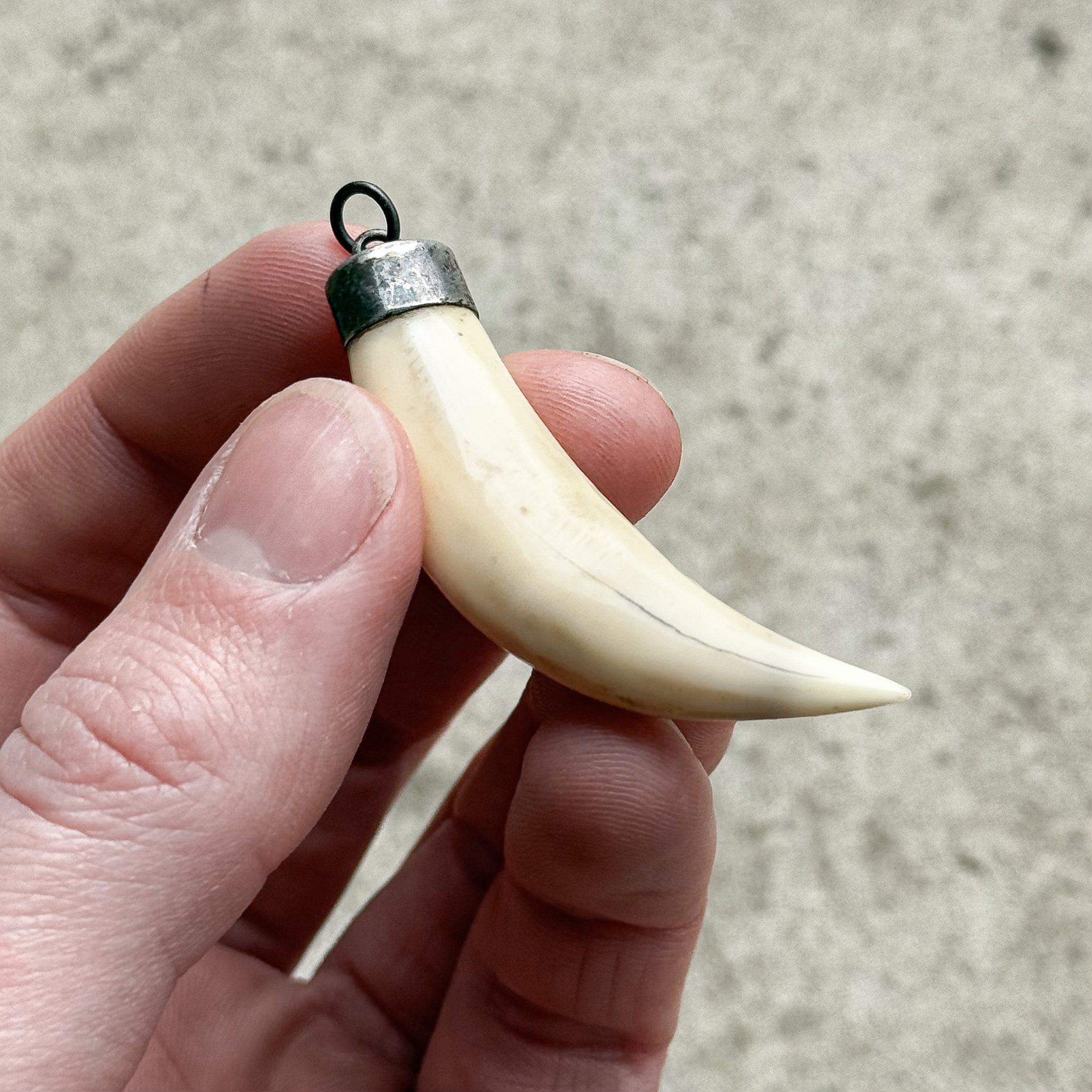
This antique polished canine tooth is set in a silver mount. Unfortunately, the exact species it originates from is unknown.
It would make a unique pendant to wear on a necklace.
After more than a century, the piece remains in good condition. Over the years, the silver mount has developed a beautiful natural patina, which only enhances its antique charm.
These impressive horns were taken in Germany in the 1930s. The horns are still attached to the top of its skulls and are presented on a traditional wooden shield plaque,
A striking focal point above a fireplace or as part of a rustic interior, hunting lodge, or trophy collection.
After approximately 30 years, the mount is in a vintage condition and shows expected signs of age and display.
Measurements:
Heigth: 30 cm
Width: 41 cm
Depth: 16 cm
Antique early 1900s charivari bird’s talon pendant
Traditionally, charivari charms like this one were worn by Bavarian hunters as talismans believed to bring good fortune during the hunt. These small ornaments were often crafted from roe deer antler tips and attached to a hunting hat, bag, or watch chain. This unique pendant, however, is made from a large bird’s talon and features an eagle-shaped metal mount.
This particular piece would make a distinctive item of jewellery – still perfect to wear for good luck on a hunting trip, or as a fascinating addition to a cabinet of curiosities.
After more than a century, the pendant remains in good condition, showing light signs of age and wear consistent with its history. Over time, it has developed a beautiful natural patina that enhances its character and charm.
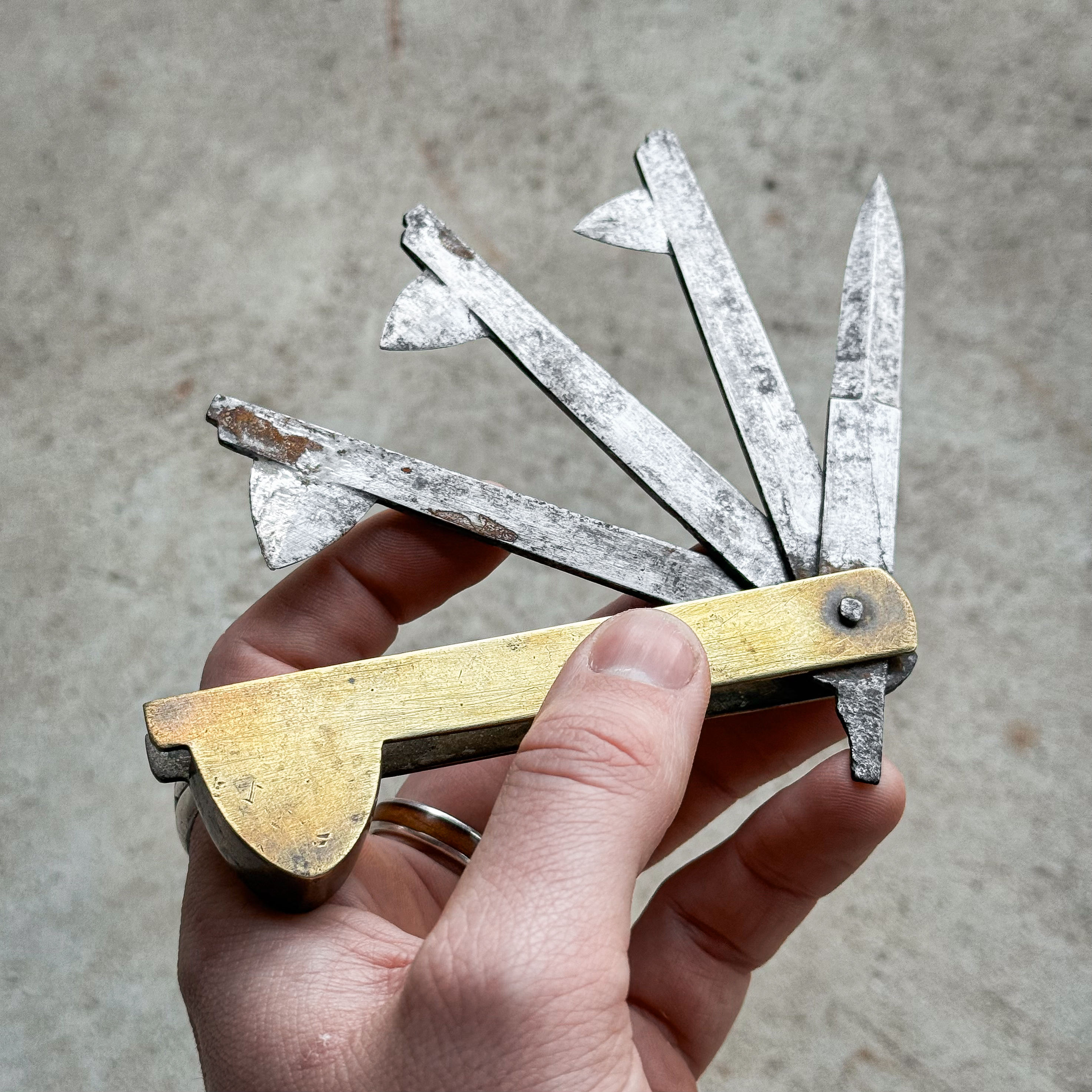
This rare medical instrument was crafted in the late 1800s in France. Fleam knives were commonly used by physicians and barbers for bloodletting, a now-obsolete practice once believed to “relieve stress from the heart” and treat various ailments.
Today, it stands as a fascinating relic of medical history – a tangible reminder of how different healthcare once was. It would make a remarkable addition to any medical collection, museum display, or cabinet of curiosities.
Despite being over a century old, this fleam remains in good condition. It shows light signs of wear consistent with age, and over the years it has developed a subtle oxidized patina that enhances its character and authenticity.
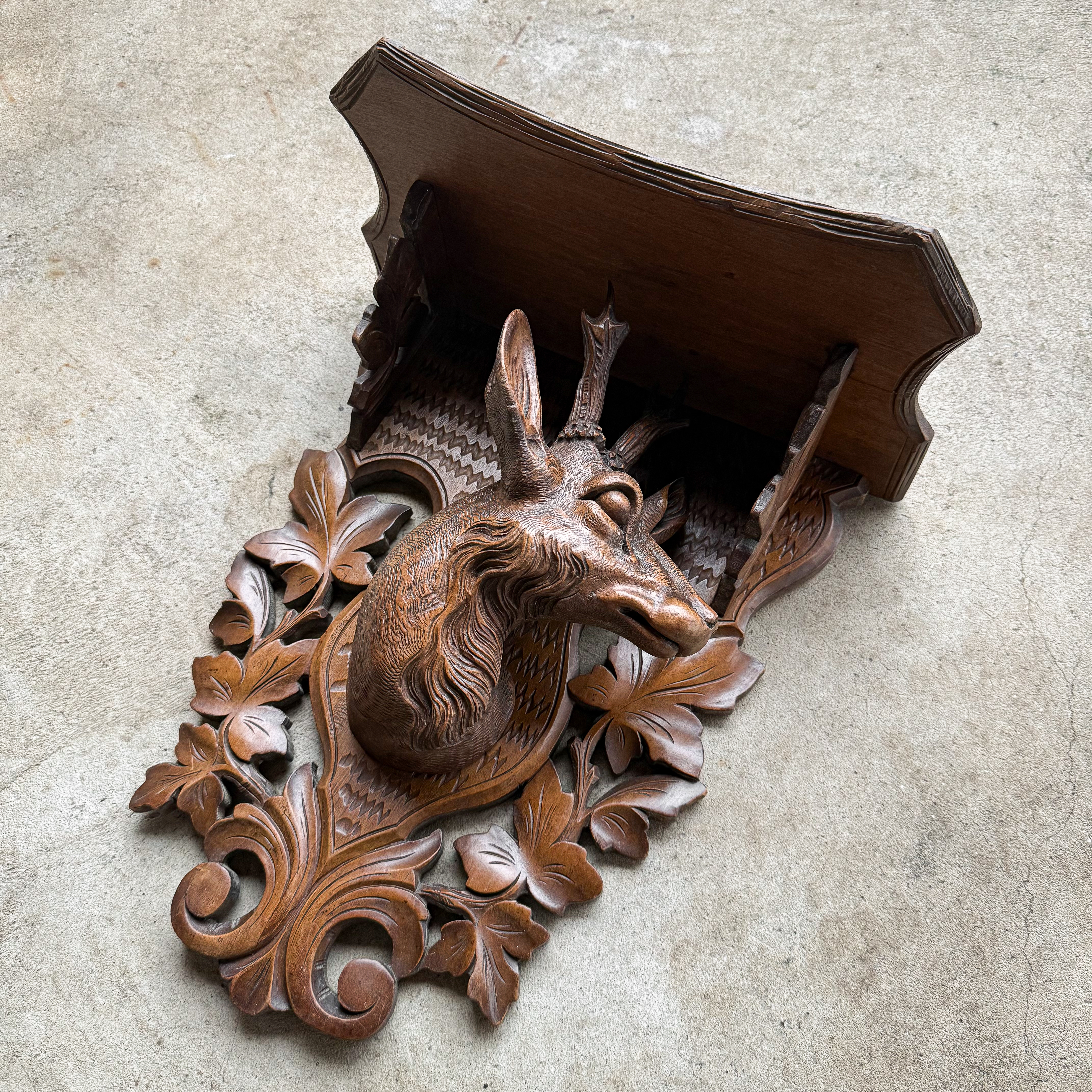
This distinctive wall console was traditionally hand carved in the Black Forest region, renowned for its rich woodcarving heritage. It is a fine example of the craftsmanship that made the area internationally recognised, featuring the carved head of a roe deer. The upper surface forms a small shelf suitable for displaying a decorative object.
Its expressive character and authentic finish make it well suited for display in a cabinet of curiosities, as part of a folk art collection, or as a striking wall accent.
After more than a century, the console shows only minor signs of age and wear. Over time, it has developed a natural patina that enhances its character and authenticity.
Measurements:
Heigth: 38.5 cm
Width: 35 cm
Length: 19 cm
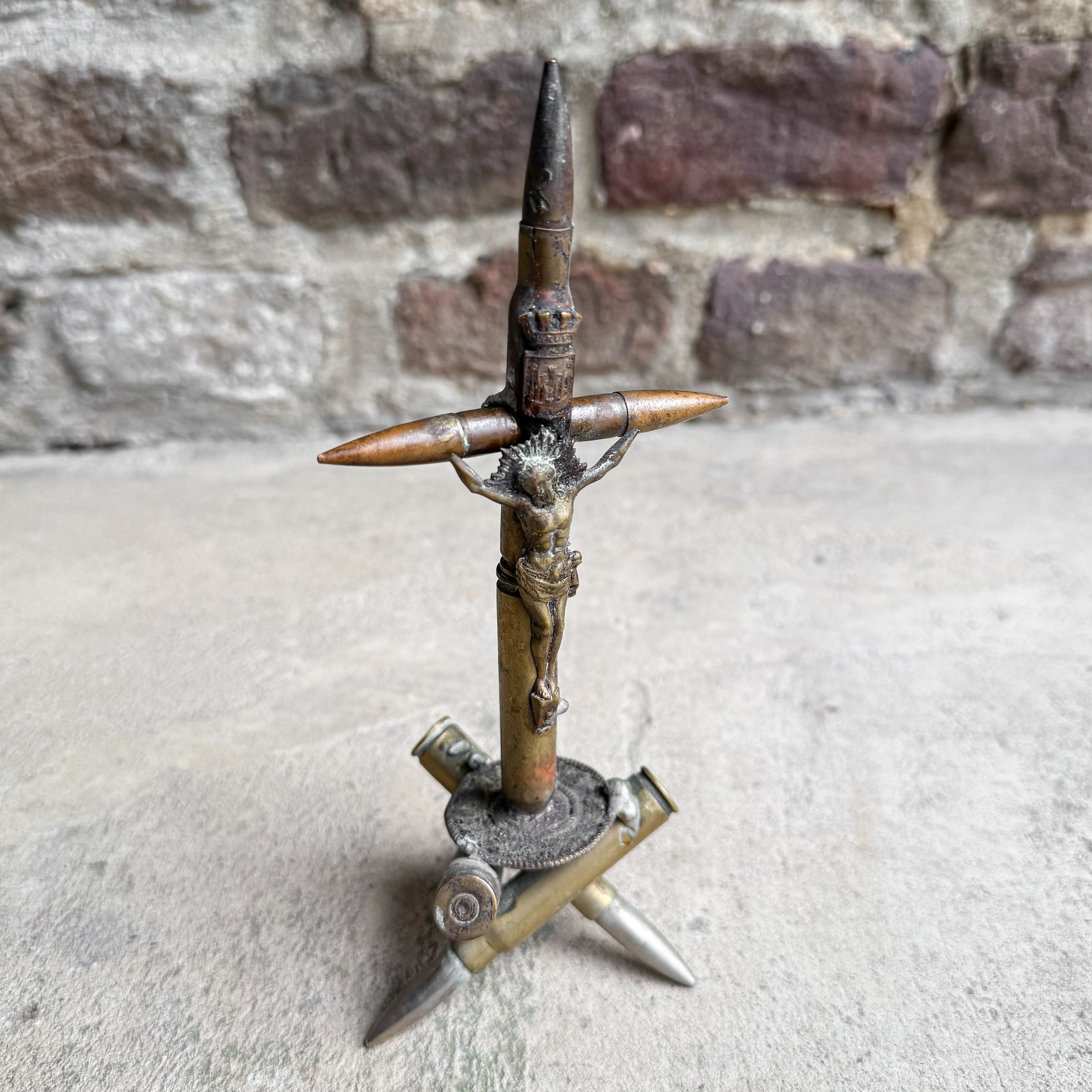
This remarkable crucifix dates from the First World War and was crafted from spent bullets and shell casings. It stands as a poignant reminder of the conflict and reflects the personal expressions that emerged from the hardships of war.
To cope with the relentless stress and monotony of trench warfare, soldiers often turned to creativity, transforming remnants of the battlefield into expressive handmade objects. Today known as trench art, these pieces were fashioned from discarded military materials such as shell casings, bullets, and other metal fragments. Working with only simple tools, soldiers relied on ingenuity and patience, giving each object a raw and deeply human character.
This unique artifact carries a strong historical presence and would make a striking addition to a World War I or military collection.
Despite being over a century old, the crucifix remains in worn condition and shows signs of age and handling. Over time, it has developed an oxidised patina that enhances its historic character. The surface has been carefully treated with antique wax to help preserve the metal and provide a subtle protective sheen.
This distinctive wall console was traditionally hand carved in the Black Forest region, renowned for its rich woodcarving heritage. It is a fine example of the craftsmanship that made the area internationally recognised, featuring the carved head of a roe deer. The upper surface forms a small shelf suitable for displaying a decorative object.
Its expressive character and authentic finish make it well suited for display in a cabinet of curiosities, as part of a folk art collection, or as a striking wall accent.
After more than a century, the console shows only minor signs of age and wear. Over time, it has developed a natural patina that enhances its character and authenticity. On the right side one of the hand carved leaves shows an old repair.
Measurements:
Heigth: 29 cm
Width: 25.5 cm
Length: 14.5 cm