Vintage 1942 Swiss Army cowhide mountaineer’s rucksack – “Haaraffe Tornister”
This rare and iconic Swiss Army rucksack, nicknamed the Haaraffe Tornister (“hairy ape backpack”), was issued in 1942 and has since become a true classic in our collection.
Originally introduced in 1898, this model remained virtually unchanged until 1950 – testament to its practical and durable design.
The rucksack features multiple interior compartments that unfold for easy access, as well as a small external pocket on the front. The exterior is made of genuine cowhide, which gives the bag its distinctive look and German nickname. The interior is lined with sturdy canvas for extra durability.
Whether you’re a collector of military gear or simply appreciate vintage craftsmanship, this Haaraffe Tornister is a striking and storied piece of alpine history.
After more than 80 years, this piece has stood the test of time. It shows visible signs of age and use, consistent with its history.
The rucksack has lost some of its hair but it has been treated and is completely free of any insect activity.
Measurements:
Height: 46 cm
Width: 27 cm
Depth: 13 cm
This pocket sized compass dates back to the World War II era and was likely military issued. It features a solid brass case with a glass cover and is equipped with a side mounted transit lock.
Still fully functional, it can accompany you on new adventures or be worn as a unique and characterful pendant.
After more than 80 years, the compass remains in good condition, showing light, age-appropriate wear. Over time, it has developed a subtle patina that enhances its character and authentic vintage appeal.
This pocket sized compass dates back to the World War II era and was likely military issued. It features a solid brass case with a glass cover and is equipped with a side mounted transit lock.
Still fully functional, it can accompany you on new adventures or be worn as a unique and characterful pendant.
After more than 80 years, the compass remains in good condition, showing light, age-appropriate wear. Over time, it has developed a subtle patina that enhances its character and authentic vintage appeal.
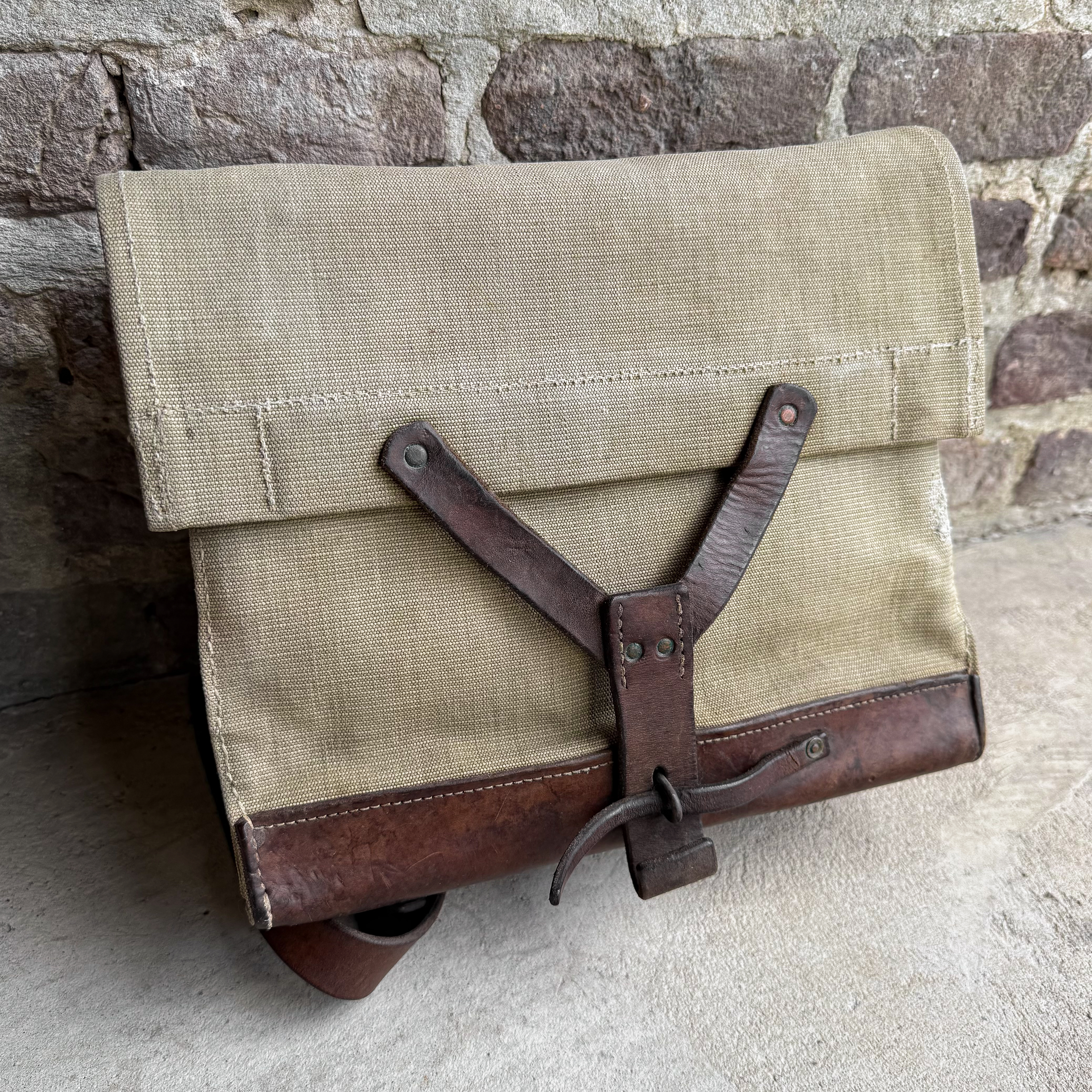
This rucksack was issued by the Swiss Army around World War II and is a fine example of early military field gear.
The bag features one large main compartment, two shoulder straps, and a sturdy top handle. It is made from durable canvas, while the base and fastening straps are crafted from thick saddle leather.
This rucksack would still make an excellent everyday bag and is also well-suited for day hikes or outdoor use.
After around a century, the bag remains in used but solid condition and shows clear signs of age and wear. Both the canvas and leather have developed a beautiful patina over time, adding to its authentic character. Built to withstand years of use, this piece still has plenty of life left.
The canvas has been carefully cleaned, and the leather parts have been treated with saddle soap and leather grease to keep them supple.
Measurements:
Height: 27 cm
Width: 30 cm
Depth: 17 cm
This charming vintage pocket compass features a solid brass case and was made in West Germany in the 1950s.
Still fully functional, it can accompany you on new adventures or be worn as a unique pendant.
After more than 70 years, the compass remains in good condition. It has developed a light patina over time, adding to its character and vintage appeal.
These iconic “bear paw” snowshoes were handmade by Snocraft Inc. in Norway, Maine. They were issued by the U.S. Army during the Second World War to the 10th Mountain Division, which fought in the Italian Alps.
Their design was inspired by traditional Native American craftsmanship and features classic rawhide latticework stretched over wooden frames.
These snowshoes would make striking decorative pieces above a fireplace or displayed on the wall of a cabin, lodge, or man cave.
After more than 70 years, they remain in worn condition, showing clear signs of age and use. One of the snowshoes has a small crack in the upper right corner. They have been carefully cleaned and treated with antique wax, providing a protective layer and a subtle, soft sheen. All leather components have been conditioned with grease to help preserve their suppleness and durability.
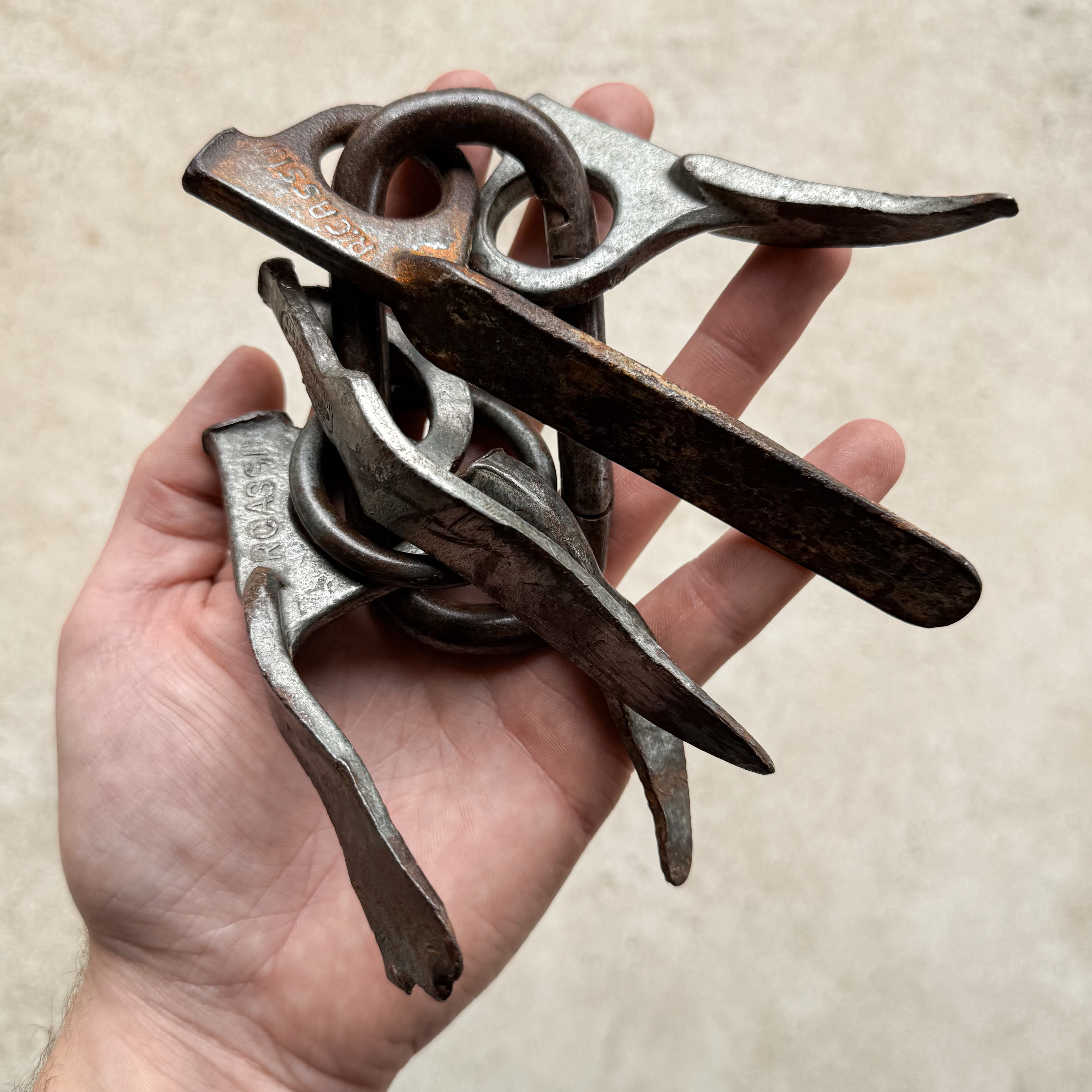
These authentic glacier crampons were used by mountaineers to provide grip on ice and snow, with sharp spikes preventing slips during alpine climbs. Worn beneath sturdy boots, they were essential equipment for navigating glaciers and steep terrain.
Hand-forged in Chamonix during the 1950s, this pair was crafted by the renowned French mountaineer and equipment maker Claudius Simond – a highly respected figure in the Mont Blanc region and a pioneer in early alpine gear.
Today, these vintage crampons make striking decorative pieces, perfect for adding character to a cabin, lodge, or mountain inspired interior.
After more than 70 years, they remain in good condition and have developed a beautiful, authentic patina that enhances their historical appeal. The metal has been carefully treated with antique wax, providing a protective layer and a subtle, refined sheen.
Size 40 – 41
Measurements:
Length: 6 cm
Width: 11.5 cm
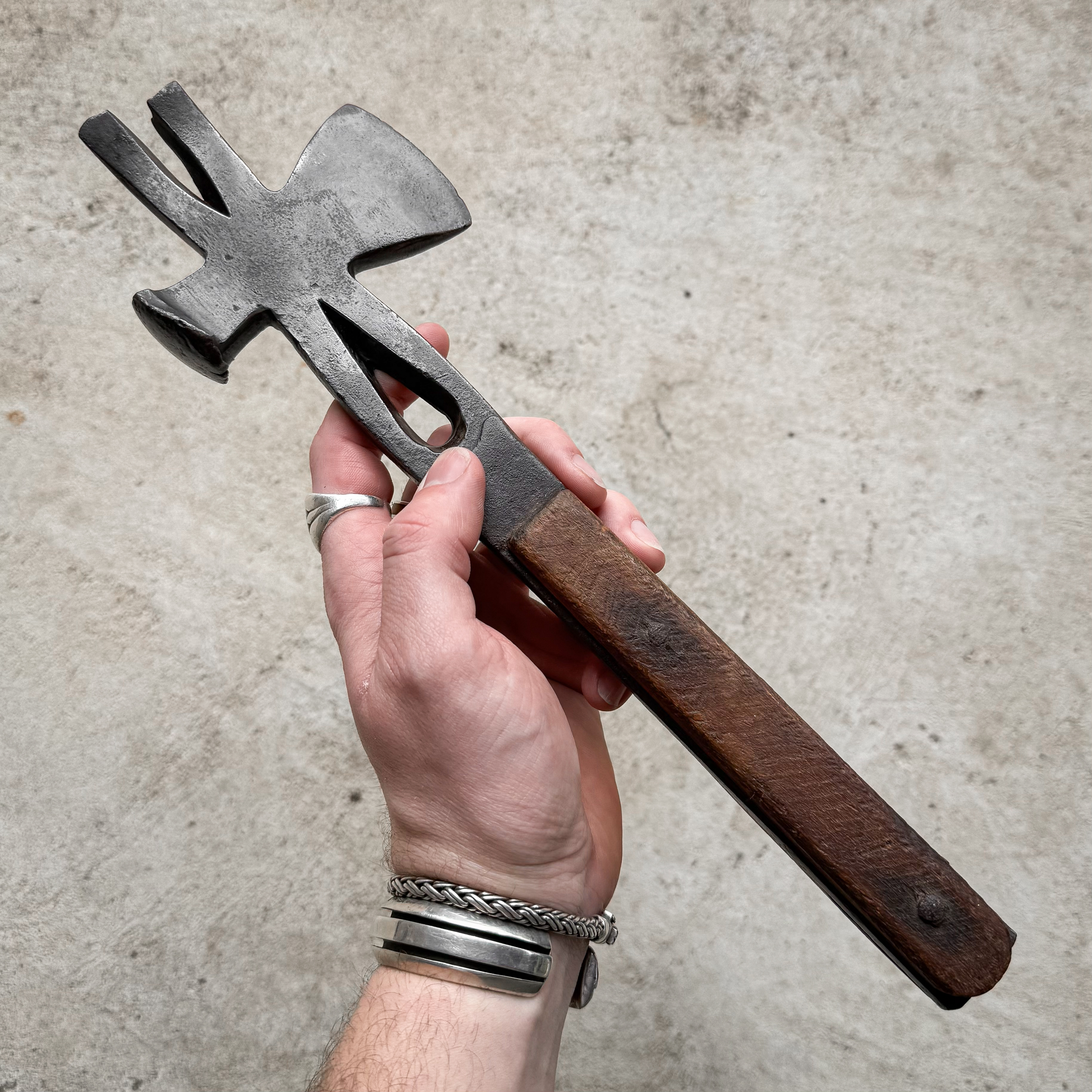
This ingenious German tool from the 1950s combines multiple functions in a single compact design – it serves as a hammer, hatchet, and crowbar, making it a versatile addition to any toolkit.
Whether you’re into bushcraft, camping, or simply appreciate vintage tools with character, this piece would make a practical and collectible companion.
After nearly a century, the tool remains in solid, fully functional condition, displaying signs of wear consistent with its age and long-term use. Over time, it has developed a rich patina that enhances its authentic vintage character. One half of the wooden handle has been replaced and does not match the original half – a contrast that now adds to its individual charm.
This vintage sailor’s knife was crafted by Rich. A. Herder in Solingen, Germany, a city world renowned for its high quality blades. The knife features a folding steel blade and an oak handle with a characteristic anchor inlay, symbolizing its nautical heritage.
It’s the perfect pocket knife for everyday tasks or as a collectible piece for maritime enthusiasts.
After nearly a century, the knife remains in used condition, showing signs of age and wear consistent with its history. It has been carefully treated with antique wax to protect the surface and provide a subtle, natural sheen.
Length with blade folded in: 10 cm
Length with blade folded open: 18 cm
This original U.S. Army tool kit was issued to Signal Corps linemen, who used it for small field repairs on telephone and communication lines.
The set includes a CS-34 leather belt pouch with its original pliers, along with a folding pocket knife (a later replacement).
This vintage kit would make a great collectible for any military enthusiast, or could still serve as a practical companion on camping or hiking trips!
After around 70 years, all pieces remain in good condition, showing expected signs of age and use that add to their authentic character.
Measurements:
Length sheath: 21 cm
Width sheath: 7.5 cm
Vintage 50s Herder & Co Solingen sailers rope knife
This vintage sailor’s knife was crafted by Herder & Co in Solingen, Germany, a city world renowned for its high quality blades. The knife features a folding steel blade and an oak handle with a characteristic anchor inlay, symbolizing its nautical heritage.
It’s the perfect pocket knife for everyday tasks or as a collectible piece for maritime enthusiasts.
After nearly a century, the knife remains in used but solid condition, showing signs of age and wear consistent with its history. It has been carefully treated with antique wax to protect the surface and provide a subtle, natural sheen.
Length with blade folded in: 9.5 cm
Length with blade folded open: 16 cm
This unique walking stick was crafted in Switzerland in the 1950s and features a beautifully hand-carved handle in the shape of a Saint Bernard dog, a true tribute to the iconic alpine rescue breed.
Whether you’re an avid hiker or a collector of vintage outdoor gear, this piece is both functional and decorative. It would make a charming companion on mountain walks or serve as a rustic statement piece in a cabin, lodge, or vintage-themed interior.
Despite its age of over 70 years, the walking stick remains in good condition. It shows signs of use, consistent with its history, and has developed a lovely natural patina that adds to its character and charm.