This beautiful steel engraving originates from a mid 19th century edition of “Oeuvres Complètes de Buffon.” It depicts a hand coloured Arctic scene featuring a polar bear and its prey, a seal. The piece is presented in a classic 1930s frame.
The print would make a decorative addition to the wall of a traditional interior or a cabinet of curiosities.
After approximately 175 years, the engraving remains in good condition. The frame shows some signs of wear consistent with age.
These impressive horns were taken in Germany in the 1930s. The horns are still attached to the top of its skulls and are presented on a traditional wooden shield plaque,
A striking focal point above a fireplace or as part of a rustic interior, hunting lodge, or trophy collection.
After approximately 30 years, the mount is in a vintage condition and shows expected signs of age and display.
Measurements:
Heigth: 30 cm
Width: 41 cm
Depth: 16 cm
Antique early 1900s charivari bird’s talon pendant
Traditionally, charivari charms like this one were worn by Bavarian hunters as talismans believed to bring good fortune during the hunt. These small ornaments were often crafted from roe deer antler tips and attached to a hunting hat, bag, or watch chain. This unique pendant, however, is made from a large bird’s talon and features an eagle-shaped metal mount.
This particular piece would make a distinctive item of jewellery – still perfect to wear for good luck on a hunting trip, or as a fascinating addition to a cabinet of curiosities.
After more than a century, the pendant remains in good condition, showing light signs of age and wear consistent with its history. Over time, it has developed a beautiful natural patina that enhances its character and charm.
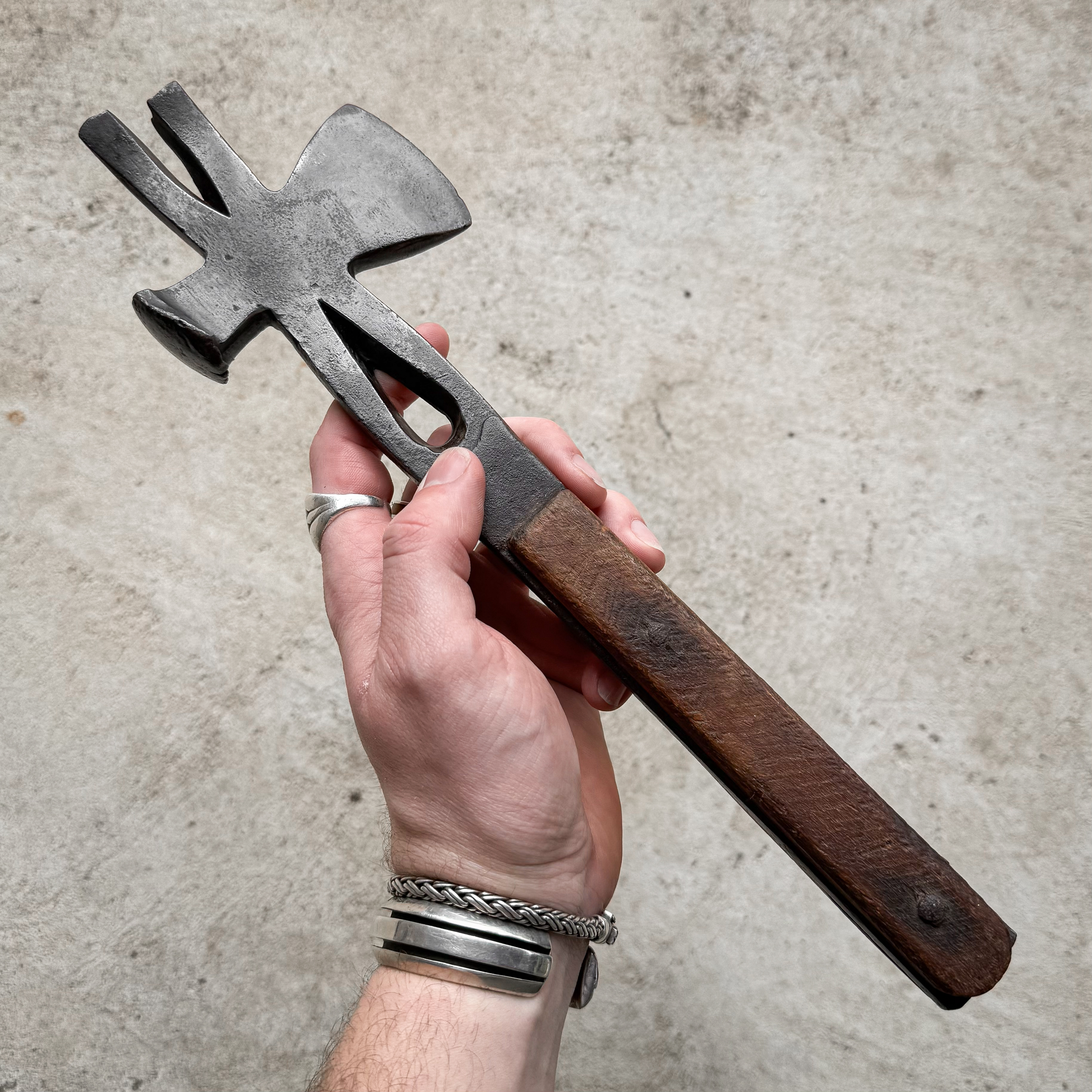
This ingenious German tool from the 1950s combines multiple functions in a single compact design – it serves as a hammer, hatchet, and crowbar, making it a versatile addition to any toolkit.
Whether you’re into bushcraft, camping, or simply appreciate vintage tools with character, this piece would make a practical and collectible companion.
After nearly a century, the tool remains in solid, fully functional condition, displaying signs of wear consistent with its age and long-term use. Over time, it has developed a rich patina that enhances its authentic vintage character. One half of the wooden handle has been replaced and does not match the original half – a contrast that now adds to its individual charm.
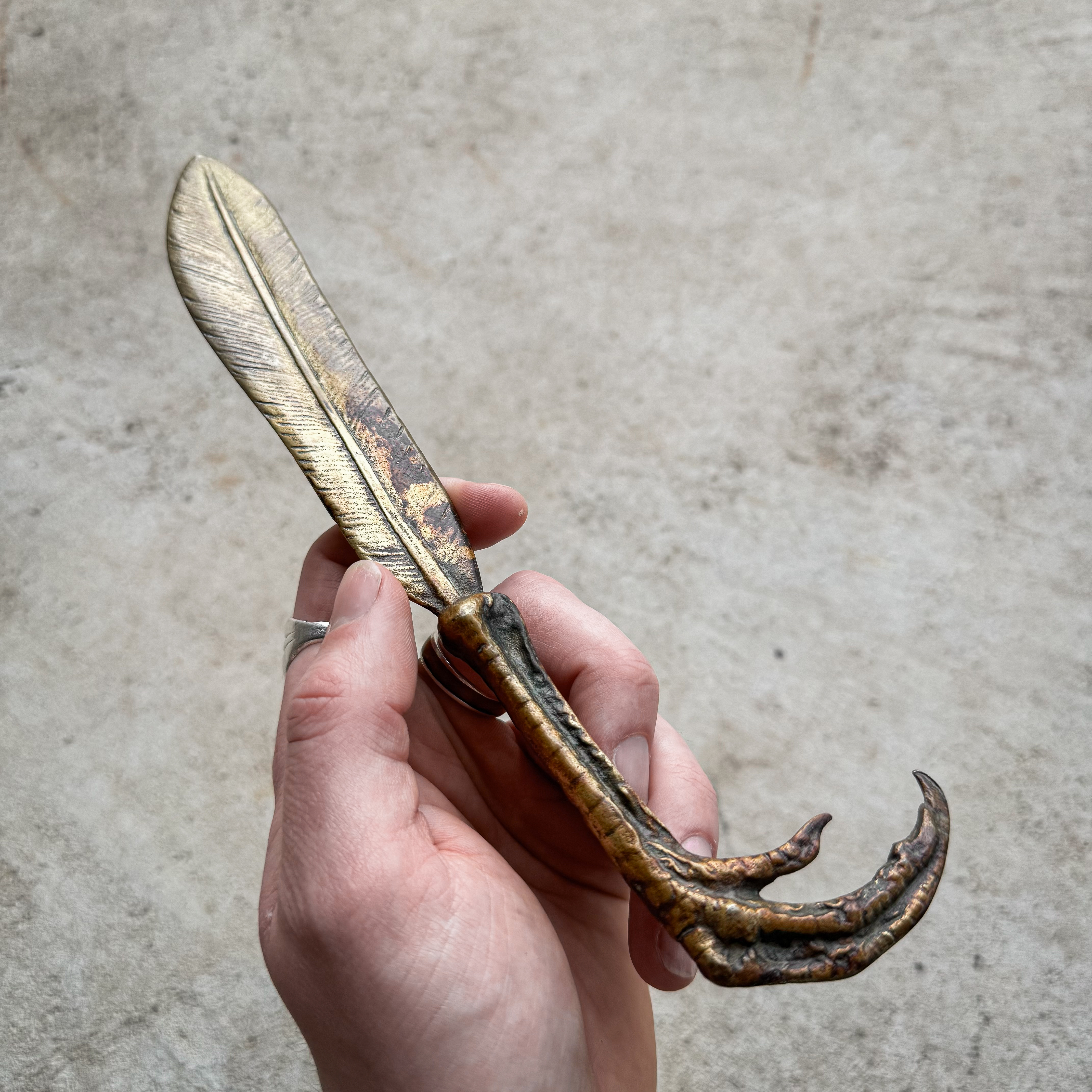
This elegant brass letter opener features an Art Nouveau style design, beautifully shaped like a feather with a birds talon at its base. Its refined craftsmanship and flowing lines make it a charming relic of early 20th century design.
It would be the perfect decorative piece to display on your writing desk or to use as a functional vintage accessory.
Even after nearly a century, the letter opener remains in good vintage condition. Over the years, it has developed a warm aged patina that only enhances its character and charm.
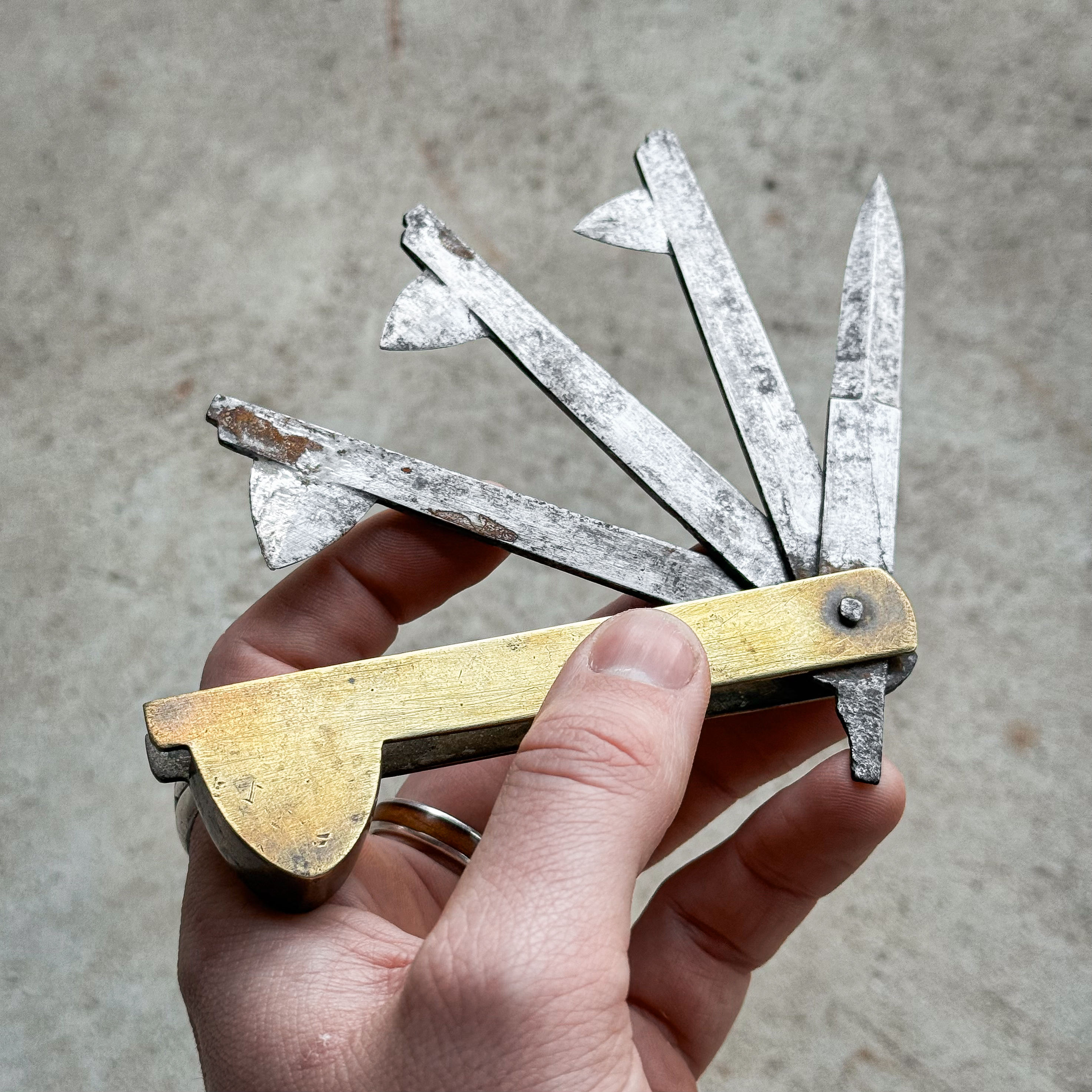
This rare medical instrument was crafted in the late 1800s in France. Fleam knives were commonly used by physicians and barbers for bloodletting, a now-obsolete practice once believed to “relieve stress from the heart” and treat various ailments.
Today, it stands as a fascinating relic of medical history – a tangible reminder of how different healthcare once was. It would make a remarkable addition to any medical collection, museum display, or cabinet of curiosities.
Despite being over a century old, this fleam remains in good condition. It shows light signs of wear consistent with age, and over the years it has developed a subtle oxidized patina that enhances its character and authenticity.
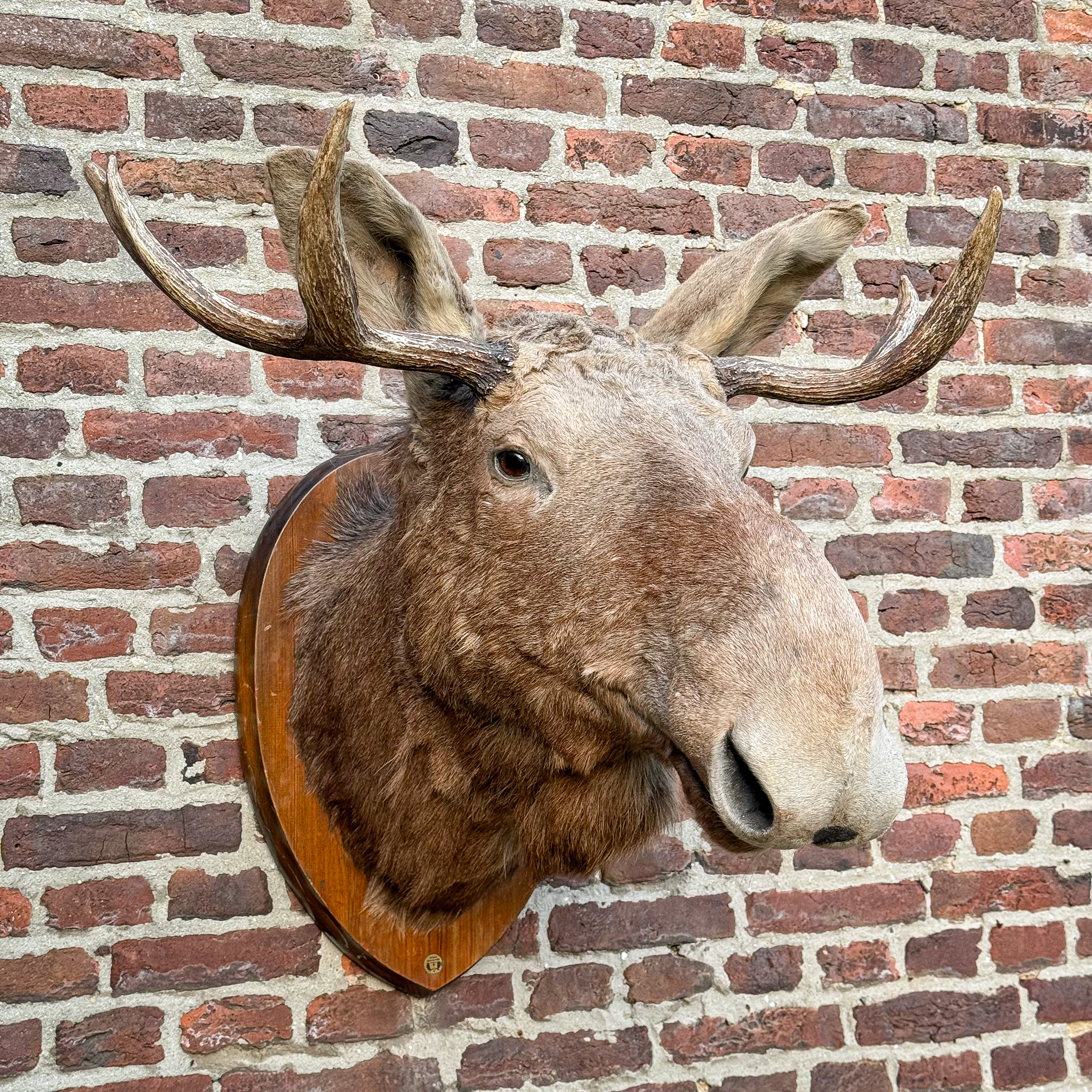
This impressive moose was taken in Sweden and professionally mounted in the city of Uppsala. The head is presented on a traditional wooden shield plaque, with a small engraved brass plate at the base bearing the taxidermy company’s name.
A striking focal point above a fireplace or as part of a rustic interior, hunting lodge, or trophy collection.
After approximately 30 years, the mount remains in good vintage condition and shows only expected signs of age and display. There are small fur restorations underneath and on the tip of the right ear; however, both repairs are discreet and hardly noticeable when the piece is mounted on the wall.
Measurements:
Heigth: 78 cm
Width: 89 cm
Depth: 90 cm
This unique walking stick was hand carved by a French soldier during the First World War. Coiling around the shaft is a finely carved snake, a powerful symbol often associated with vigilance, danger, and survival.
To escape the relentless stress and monotony of wartime life, soldiers often turned to creativity, repurposing available materials into what is now known as trench art. These deeply personal objects were made using limited tools and resources, resulting in raw, expressive works that reflect both hardship and resilience. Each piece tells a human story shaped by uncertainty, longing, and endurance.
This cane carries a tangible sense of history and would make a striking centerpiece in any World War I or military collection.
After more than a century, the cane remains in good condition and shows only minor signs of use. Over time, it has developed a beautiful natural patina that enhances its character and authenticity. The surface has been treated with antique wax, providing a protective layer and a subtle, soft sheen.
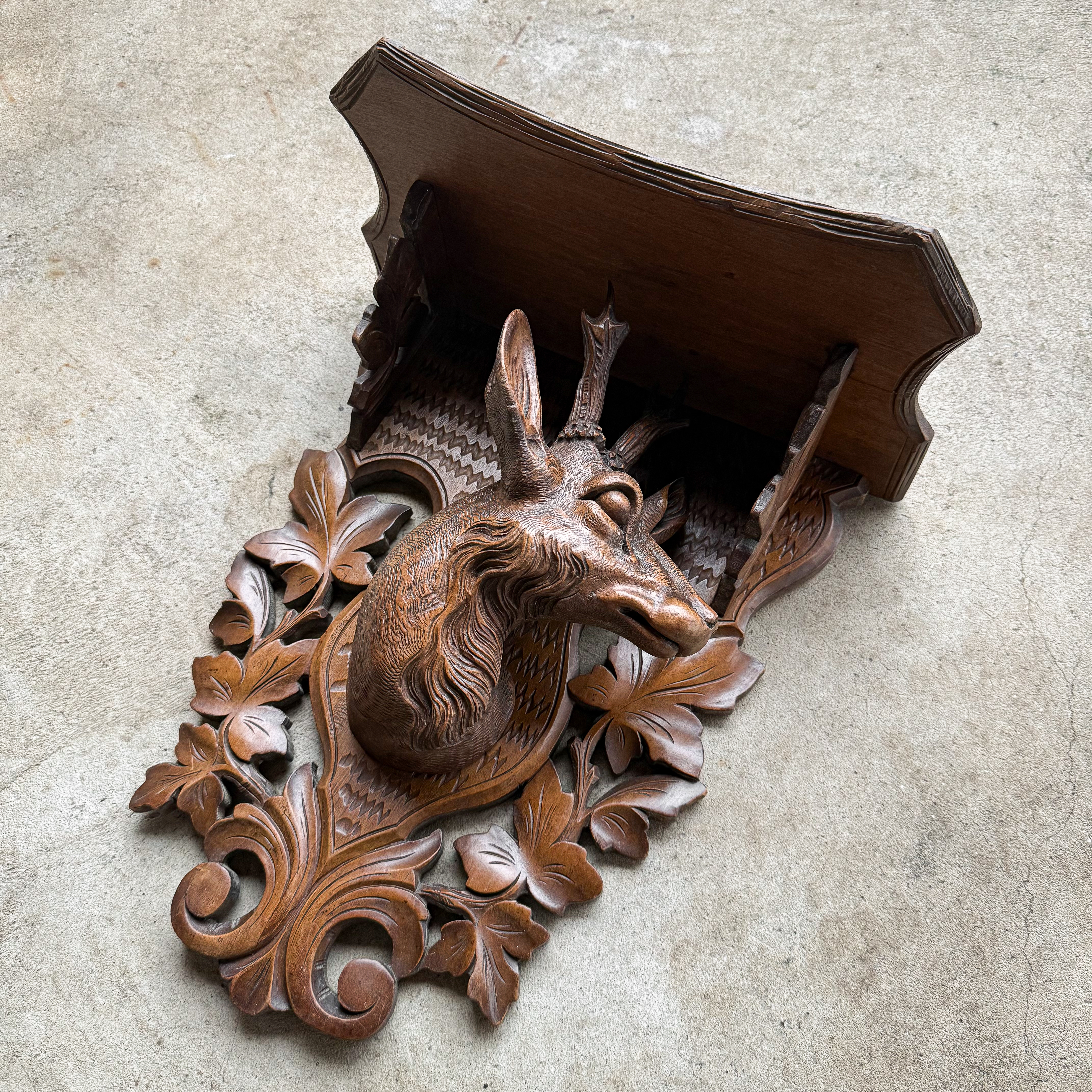
This distinctive wall console was traditionally hand carved in the Black Forest region, renowned for its rich woodcarving heritage. It is a fine example of the craftsmanship that made the area internationally recognised, featuring the carved head of a roe deer. The upper surface forms a small shelf suitable for displaying a decorative object.
Its expressive character and authentic finish make it well suited for display in a cabinet of curiosities, as part of a folk art collection, or as a striking wall accent.
After more than a century, the console shows only minor signs of age and wear. Over time, it has developed a natural patina that enhances its character and authenticity.
Measurements:
Heigth: 38.5 cm
Width: 35 cm
Length: 19 cm
Vintage Iberian ibex shoulder mount – ‘Capra pyrenaica’
This impressive Iberian ibex was taken in the Spanish mountains and is professionally mounted on a traditional wooden shield plaque. At the base, a small brass plate is engraved with the inscription: “Collao del Alcázar, 23-XII-98.”
The Iberian ibex is native to the mountainous regions of Spain and is known for its powerful build and distinctive, backward curving horns. This example displays a well formed pair of horns with strong character and natural texture.
The mount would make a striking focal point above a fireplace or as part of a rustic interior, hunting lodge, or trophy collection.
After nearly 30 years, the mount remains in good condition and shows signs of age and display. Over time, the fur has undergone slight natural colour changes, consistent with its age.
Measurements:
Heigth: 78 cm
Width: 45 cm
Depth: 52.5 cm
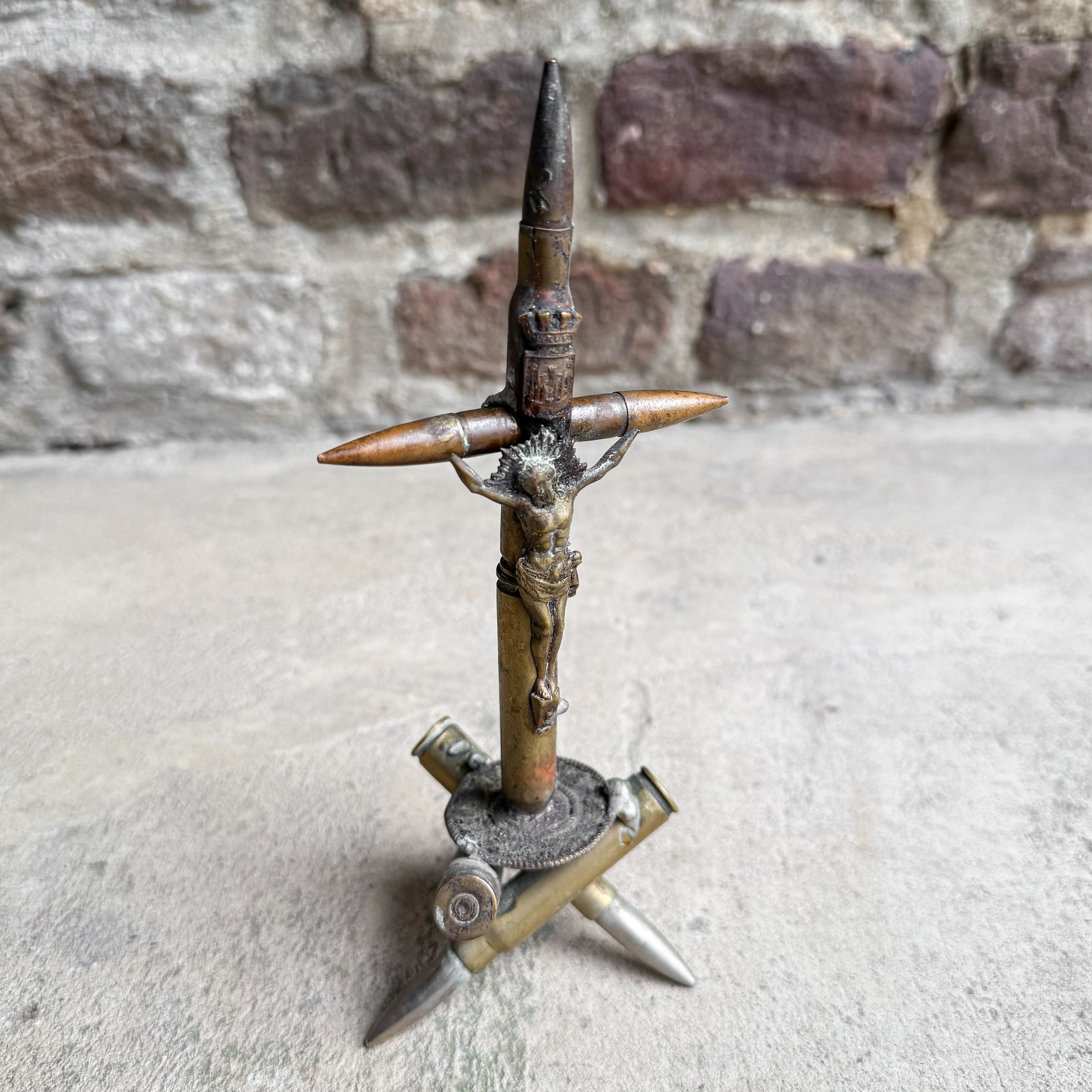
This remarkable crucifix dates from the First World War and was crafted from spent bullets and shell casings. It stands as a poignant reminder of the conflict and reflects the personal expressions that emerged from the hardships of war.
To cope with the relentless stress and monotony of trench warfare, soldiers often turned to creativity, transforming remnants of the battlefield into expressive handmade objects. Today known as trench art, these pieces were fashioned from discarded military materials such as shell casings, bullets, and other metal fragments. Working with only simple tools, soldiers relied on ingenuity and patience, giving each object a raw and deeply human character.
This unique artifact carries a strong historical presence and would make a striking addition to a World War I or military collection.
Despite being over a century old, the crucifix remains in worn condition and shows signs of age and handling. Over time, it has developed an oxidised patina that enhances its historic character. The surface has been carefully treated with antique wax to help preserve the metal and provide a subtle protective sheen.
This charming haberdashery cabinet was made in France in the 1930s by Thiriez & Cartier-Bresson, a well known manufacturer of sewing thread and textile goods. It features three drawers, originally intended for storing spools of thread, reflecting its practical commercial use.
Compact and characterful, it offers both a functional way to store small items and an attractive decorative accent for an interior. It would suit a sewing room, atelier, kitchen, or cabinet of curiosities alike.
After almost a century, the cabinet remains in good condition and shows signs of age and use consistent with its history. Over time, it has developed a natural patina that enhances its charm and authenticity. The surface has been treated with antique wax, providing a protective layer and a subtle sheen.
Measurements:
Width: 31.5 cm
Height: 17.5 cm
Length: 36 cm